
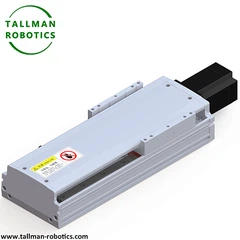


Cryogenic Planetary Gear Reducer,as a precision transmission device that can reduce speed and increase torque in extreme temperature environments (usually ranging from -60 ℃ to+200 ℃, and some special models, can cover from -196 ℃ to+300 ℃). High and low temperature planetary reducers have become the "bridge" connecting power sources and actuators. On the basis of retaining the advantages of compact structure and high torque density of traditional planetary reducers, it breaks through the limitations of high and low temperature environments on transmission systems through material innovation, structural optimization, and process upgrades, providing reliable power solutions for equipment under extreme working conditions.
Cryogenic Planetary Gear Reducer is precision power transmission cores in extreme environments. In high-end fields such as industrial automation, aerospace, and new energy, equipment often needs to operate stably under temperature conditions far beyond conventional environments.
High and Low Temperature Planetary Reducer is a planetary gear transmission device designed specifically for extreme temperature environments. Its core function is to convert high-speed low torque input from power sources such as motors into low-speed high torque output through gear meshing, while ensuring transmission accuracy, efficiency, and lifespan under alternating high and low temperatures or continuous extreme temperatures.
The basic structure of Cryogenic Planetary Gear Reducer is consistent with traditional planetary gearboxes, consisting of four core components: the sun gear, planet gears, ring gears, and planet carrier. The central sun gear receives power input and drives the evenly distributed planet gears (usually 3-6) to revolve around it. The planet gears simultaneously mesh with the fixed or rotating ring gears on the outer side, and ultimately output power through the planet carrier that carries the planet gears. This "multi tooth meshing" structure ensures even power distribution, naturally possessing high load-bearing capacity and compactness, while its high and low temperature adaptability is the core upgrade point that distinguishes it from ordinary reducers.
Here In this page, we introduce our serial Cryogenic Planetary Gear Reducer, you will see ranges,finished gearboxes,videos of test as follows:
Also You are welcome to watch more projects or visit our video gallery by Youtube: https://www.youtube.com/@tallmanrobotics
|
-196°C-+200°C Cryogenic Planetary Gear Reducer |
|
|
|


To cope with extreme temperature challenges, targeted innovations have been made in the design, materials, and processes of high and low temperature planetary gearboxes, with core technologies focused on the following areas:
|
Selection of high and low temperature resistant materials |
Materials are the foundation of high and low temperature adaptability, and core materials with performance matching need to be selected according to the target temperature range |
Gear and shaft components |
Titanium alloys (TC4) and nickel based alloys (Inconel 718) are commonly used in low-temperature environments, which can maintain good toughness and strength below -200 ℃; For high-temperature environments, high-temperature alloys (GH4169) and ceramic composite materials (such as SiC reinforced ceramics) are selected, which can withstand temperatures above 300 ℃ and have excellent oxidation resistance. |
|
Planetary carrier and shell |
Precipitation hardened stainless steel (17-4PH) or cast titanium alloy are commonly used to balance strength, corrosion resistance, and thermal stability, reducing structural deformation caused by temperature changes. |
||
|
Sealing and auxiliary components |
The sealing components are selected from perfluoroether rubber (FFKM) or metal bellows sealing. The former can withstand -20 ℃ to+260 ℃, while the latter can maintain sealing performance at ultra-high temperatures; The bearing cage is made of polyimide (PI) or metal material to avoid low-temperature embrittlement or high-temperature aging. |
||
|
Special design of lubrication system |
Lubrication is the lifeline of high and low temperature transmission, and a customized lubrication plan should be developed based on the temperature range |
Low temperature lubrication |
using synthetic poly (alpha olefin) (PAO) based lubricating oil or silicon-based lubricating grease, which has a low freezing point (can be as low as -60 ℃ or below), good low-temperature fluidity, and can form a stable oil film in extremely cold environments. |
|
High temperature lubrication |
Choose polytetrafluoroethylene (PTFE) based solid lubricants or molybdenum disulfide (MoS ₂) dry film lubricants. Solid lubricants do not evaporate or decompose at high temperatures, and can maintain lubrication effects for a long time; Some extreme high temperature scenarios may also use "self-lubricating bearings+gear surface sulfurization treatment" to reduce friction through surface modification. |
||
|
Wide temperature range adaptation |
For reducers that need to work in alternating high and low temperature environments, ester synthetic lubricants are commonly used, with a suitable temperature range of -40 ℃ to+150 ℃, balancing high and low temperature performance. |
||
|
Optimization of structure and process |
Offset the effects of temperature changes through structural design |
Thermal compensation structure |
"Elastic pins" or "clearance adjustment rings" are used at the joint between the gear and the shaft, allowing the components to freely expand and contract when the temperature changes, avoiding jamming or loosening. |
|
Symmetrical Layout |
The planetary gears are evenly distributed and adopt a symmetrical structure to reduce force deviation caused by uneven temperature and ensure smooth transmission. |
||
|
Precision machining technology |
using "low-temperature aging treatment" to eliminate internal stress in materials and reduce deformation at low temperatures; The gear surface is treated with "nitriding" or "carbonitriding" to improve wear resistance and fatigue strength at high and low temperatures. |
Compared to ordinary planetary gearboxes, high and low temperature planetary gearboxes exhibit significant advantages in extreme environments:
|
Wide temperature range adaptability |
It can work stably from -60 ℃ to+200 ℃ (special models cover from -196 ℃ to+300 ℃), meeting the needs of extreme scenarios such as aerospace and cryogenic equipment. |
|
High transmission accuracy |
Through material stability optimization and structural compensation design, the transmission clearance can still be controlled within 0.1 arc minutes even under severe temperature changes, ensuring the positioning accuracy of the actuator. |
|
High reliability and long lifespan |
The high and low temperature resistant materials and special lubrication system significantly reduce the risk of wear and failure in extreme environments, with an average time between failures (MTBF) of over 10000 hours. |
|
Compact and high torque density |
Inheriting the structural advantages of planetary transmission, the output torque is more than 30% higher than ordinary high and low temperature reducers under the same volume, suitable for extreme environmental equipment with limited space. |
|
Low noise and low vibration |
The symmetrical structure and precision machining process of multi tooth meshing enable it to operate with noise controlled below 65dB at high and low temperatures, reducing vibration interference to the equipment. |
The extreme environmental adaptability of Cryogenic Planetary Gear Reducer makes them indispensable in multiple high-end fields:
|
Aerospace |
Satellite attitude control systems, rocket propulsion mechanisms, aircraft landing gear transmissions, etc. need to withstand low temperatures of -150 ℃ in space or high temperature radiation near the engine. |
|
Cryogenic and Low Temperature Engineering |
LNG storage tank mixing device, low-temperature freezer transmission system, superconducting equipment cooling mechanism, etc., still need to operate stably in liquid nitrogen environment at -196 ℃. |
|
Industrial furnaces and high-temperature equipment |
Heat treatment furnace conveyors, glass forming equipment, photovoltaic silicon sintering machines, etc., need to maintain transmission accuracy in a high-temperature environment of 150-300 ℃. |
|
In the field of new energy |
there are yaw and pitch systems for wind power equipment (capable of withstanding low temperatures of -40 ℃ and strong wind loads) and photovoltaic tracking systems (capable of withstanding high temperature exposure and day night temperature differences). |
|
Special vehicles and equipment |
The drive system of polar research vehicles and desert off-road vehicles needs to adapt to extreme temperature differences of -50 ℃ to+80 ℃; Radar rotating mechanism, missile launcher transmission, etc. in military equipment. |
The following points should be noted when selecting and using high and low temperature planetary reducers:
|
Clarify temperature range |
Select the matching heat-resistant model based on the lowest and highest temperatures of the actual working conditions, avoiding "low-temperature models used in high-temperature environments" or "high-temperature models over designed". |
|
Matching load and reduction ratio |
Based on the power source, speed, and torque requirements of the actuator, calculate the appropriate reduction ratio to ensure that the output torque of the reducer has a safety margin of 1.2-1.5 times at high and low temperatures. |
|
Lubrication maintenance |
Regularly check the lubrication status, avoid lubricant solidification in low temperature environments, prevent lubricant evaporation in high temperature environments, and replace suitable special lubricants according to the working cycle. |
|
Installation and Protection |
Ensure that the coaxiality error is within 0.1mm/m during installation to reduce additional stress; High temperature environments require the installation of insulation covers, while low-temperature environments require consideration of insulation measures to reduce temperature fluctuations. |
The high and low temperature planetary gearbox is a product of the integration of mechanical transmission technology, materials science, and lubrication technology. It breaks through the limitations of extreme temperature on power transmission and provides core transmission support for high-end fields such as aerospace, new energy, and cryogenic engineering. With the increasing demand for adaptability to extreme environments in industrial equipment, Cryogenic Planetary Gear Reducer will continue to upgrade in material innovation (such as new ceramic composite materials), intelligent lubrication (such as adaptive temperature lubrication systems), and condition monitoring (integrated temperature sensor real-time warning), becoming the "standard core" of precision transmission under extreme working conditions.
Hot Tags: cryogenic planetary gear reducer, China cryogenic planetary gear reducer manufacturers, suppliers, factory, Epicyclic Power Gear Drive, Epicyclic Power Transmission, Planetary Gear Drive Unit, Planetary Gear Module, Planetary Gear System Assembly, Epicyclic Gear Assembly


