
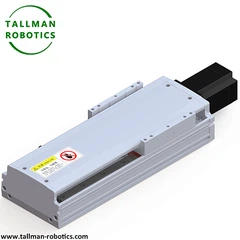


In the realm of industrial automation, cam actuated indexers play a pivotal role in achieving precise and efficient motion control. As a seasoned supplier of cam actuated indexers, I've witnessed firsthand the transformative impact these devices have on various manufacturing processes. Central to the functionality of a cam actuated indexer is the cam itself. In this blog, we'll delve into the crucial role of the cam in a cam actuated indexer, exploring its design, operation, and the benefits it brings to industrial applications.
Understanding the Basics of a Cam Actuated Indexer
Before we dive into the role of the cam, let's briefly understand what a cam actuated indexer is. A cam actuated indexer is a mechanical device that converts continuous rotary motion into intermittent or step-by-step motion. It is commonly used in applications where precise positioning and indexing are required, such as in packaging machines, assembly lines, and printing presses.
The basic components of a cam actuated indexer include a cam, a follower, and an output shaft. The cam is a specially shaped mechanical element that rotates about an axis. The follower, which is in contact with the cam surface, moves in response to the cam's rotation. As the cam rotates, the follower's motion is translated into the desired intermittent motion of the output shaft.
The Role of the Cam in a Cam Actuated Indexer
The cam is the heart of a cam actuated indexer, and its design and operation are critical to the overall performance of the indexer. Here are some of the key roles that the cam plays:
1. Motion Generation
The primary function of the cam is to generate the desired motion profile. By carefully designing the shape of the cam surface, engineers can control the speed, acceleration, and deceleration of the output shaft during each indexing cycle. For example, in a packaging machine, the cam can be designed to provide a smooth and rapid indexing motion to ensure efficient product handling.
The cam's shape determines the path that the follower will take as the cam rotates. This path can be linear, circular, or a combination of both, depending on the specific requirements of the application. Different cam profiles, such as the dwell-rise-dwell-fall profile, are commonly used to achieve specific motion patterns.
2. Precision Positioning
One of the most important advantages of a cam actuated indexer is its ability to provide precise positioning. The cam's design allows for accurate control of the output shaft's angular position at each indexing step. This precision is crucial in applications where parts need to be accurately aligned or assembled.
For instance, in an assembly line, the cam actuated indexer can position components with high accuracy, ensuring that they are properly mated and assembled. This level of precision helps to improve product quality and reduce manufacturing errors.
3. High-Speed Operation
Cams are designed to operate at high speeds, making cam actuated indexers suitable for high-volume production environments. The smooth and continuous motion of the cam allows for rapid indexing cycles, increasing the overall productivity of the manufacturing process.
In addition, the cam's design can minimize vibration and noise during operation, which is essential for maintaining a stable and reliable production environment. This is particularly important in applications where high-speed operation is required, such as in the automotive and electronics industries.
4. Torque Transmission
The cam also plays a role in transmitting torque from the input shaft to the output shaft. As the cam rotates, it exerts a force on the follower, which in turn transfers the torque to the output shaft. The design of the cam and the follower ensures that the torque is transmitted efficiently and smoothly.
This torque transmission capability is important for driving heavy loads or performing tasks that require a significant amount of force. For example, in a heavy-duty manufacturing application, the cam actuated indexer can provide the necessary torque to move large components or perform machining operations.
Types of Cams Used in Cam Actuated Indexers
There are several types of cams that can be used in cam actuated indexers, each with its own unique characteristics and advantages. Some of the most common types of cams include:
1. Disk Cams
Disk cams are the most basic type of cam used in cam actuated indexers. They are circular in shape and have a cam profile machined on their surface. Disk cams are relatively simple to manufacture and are suitable for applications where the motion requirements are not too complex.
2. Cylindrical Cams
Cylindrical cams have a cam profile machined on the surface of a cylinder. They are more complex than disk cams and can provide more sophisticated motion profiles. Cylindrical cams are often used in applications where a higher degree of precision and flexibility is required.


3. Globoidal Cams
Globoidal cams are a type of three-dimensional cam that is commonly used in high-performance cam actuated indexers. They have a complex shape that allows for smooth and efficient motion transfer. Globoidal cams are particularly suitable for applications where high-speed operation and precise positioning are required, such as in robotics and automation systems.
Benefits of Using Cam Actuated Indexers with Well-Designed Cams
Using a cam actuated indexer with a well-designed cam offers several benefits for industrial applications:
1. Improved Productivity
The high-speed operation and precise positioning capabilities of cam actuated indexers can significantly improve the productivity of manufacturing processes. By reducing the time required for each indexing cycle, more products can be produced in a given period of time.
2. Enhanced Quality
The precision positioning provided by cam actuated indexers helps to ensure that products are manufactured with high quality. This reduces the number of defective products and improves overall product consistency.
3. Reliability and Durability
Cams are designed to be robust and durable, ensuring long-term reliable operation. The use of high-quality materials and advanced manufacturing techniques further enhances the reliability and durability of cam actuated indexers.
4. Flexibility
Cam actuated indexers can be customized to meet the specific requirements of different applications. By changing the cam profile, the indexer can be adapted to provide different motion patterns and indexing intervals.
Different Types of Cam Actuated Indexers and Their Applications
As a supplier of cam actuated indexers, we offer a wide range of products to meet the diverse needs of our customers. Here are some of the different types of cam actuated indexers and their typical applications:
1. Conveyor Cam Indexing Mechanism
Conveyor cam indexing mechanisms are used in conveyor systems to provide intermittent motion for product handling. They are commonly used in industries such as food and beverage, pharmaceuticals, and automotive, where products need to be accurately positioned and transferred along the conveyor.
2. Heavy Duty Cam Indexer
Heavy duty cam indexers are designed to handle large loads and high torques. They are typically used in heavy manufacturing applications, such as metalworking and machining, where the indexer needs to provide precise positioning and reliable operation under demanding conditions.
3. DS Cam Indexer
DS cam indexers are known for their high-speed operation and precision positioning. They are commonly used in applications where rapid indexing and accurate part handling are required, such as in electronics assembly and packaging.
Contact Us for Your Cam Actuated Indexer Needs
If you're looking for a reliable and high-performance cam actuated indexer for your industrial application, we're here to help. As a leading supplier of cam actuated indexers, we have the expertise and experience to provide you with the right solution for your specific needs.
Our team of engineers can work with you to understand your requirements and design a custom cam actuated indexer that meets your exact specifications. We use the latest manufacturing technologies and high-quality materials to ensure that our indexers are of the highest quality and reliability.
Whether you need a conveyor cam indexing mechanism, a heavy duty cam indexer, or a DS cam indexer, we have the products and services to support your business. Contact us today to learn more about our cam actuated indexers and how they can benefit your manufacturing processes.
References
- Norton, Robert L. "Machine Design: An Integrated Approach." Pearson, 2012.
- Shigley, Joseph E., and Charles R. Mischke. "Mechanical Engineering Design." McGraw-Hill, 2003.
- Spotts, Milton F., Timothy G. Shoup, and William A. Adams. "Design of Machine Elements." Prentice Hall, 2004.


