
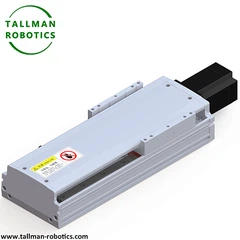


What is Conveyor Cam Indexing Mechanism?
Conveyor Cam Indexing Mechanism is a Step-Feed Motion Core for Conveyor Automation
A conveyor cam indexing mechanism is a dedicated mechanical motion component for conveyor automation systems. It converts continuous rotary power into linear intermittent step feeding for conveyor lines. It realizes accurate start-stop conveying for workpiece transfer and positioning. It acts as the core motion control unit for step-type conveyor equipment.
Besides, it adopts pure mechanical cam conjugate transmission. It matches the rhythmic working logic of automated conveying workflows. It delivers stable intermittent feeding without electronic signal intervention.
Core Mechanical Structure of Conveyor Cam Indexing Mechanism
First, a precision globoidal cam forms the driving core of the whole mechanism. It defines fixed indexing and dwell motion tracks for conveyor operation. Second, multi-group roller followers mesh tightly with cam curved surfaces.
Moreover, a matched output turret connects with conveyor transmission parts. It converts rotary indexing into linear conveyor movement. Lastly, built-in mechanical locks stabilize conveyor static positioning status.
Here In this page, we introduce 450 DT Cam Indexers from TallMan Robotics.
Also You are welcome to watch more projects or visit our video gallery by Youtube: https://www.youtube.com/@tallmanrobotics


Technical Features & Performance Comparison
This mechanism features precise step feeding and consistent conveying rhythm. It adapts to intermittent material transfer demands of automated conveyor lines. It offers more reliable rhythmic control than ordinary conveyor drive parts.
|
Feature Item |
Conveyor Cam Indexing Mechanism |
Ordinary Conveyor Drive Structure |
|
Motion Mode
|
Fixed intermittent step feeding |
Sustained continuous conveying |
|
Positioning Performance |
Accurate static dwell positioning |
No fixed stop positioning function |
|
Workflow Adaptation |
Matching staged processing procedures |
Suitable for non-stop material transfer |
Frequently Asked Questions
Q1: What is the core function of a conveyor cam indexing mechanism?
It converts continuous rotation into intermittent step conveying movement. It makes conveyor lines complete fixed-distance feeding and stable static stop to match staged automated processing steps.
Q2: How does this mechanism optimize conveyor line operation?
It adopts pure mechanical cam motion control. It unifies conveyor feeding rhythm and avoids irregular material movement to support orderly assembly and detection work.
Q3: What conveyor equipment uses this indexing mechanism?
It applies to step-type assembly conveyor lines, detection transfer conveyors, precision sorting conveyors and automated workpiece feeding equipment.
Q4: Does the mechanism support long-term continuous cyclic work?
Yes. Its wear-resistant cam and follower structure maintains stable meshing operation. It keeps consistent step feeding accuracy in long-cycle conveyor line operation.
Q5: What differs it from standard rotary cam indexers?
It focuses on converting rotary indexing into linear conveyor step motion. Standard indexers only output rotary movement. It targets the unique working demands of conveyor automation scenarios.
Hot Tags: conveyor cam indexing mechanism, China conveyor cam indexing mechanism manufacturers, suppliers, factory, Cam Indexing Device for Conveyor Systems, Cam operated Indexing and Positioning Device, Positioning focused Cam Indexing System, Mechanical Cam Indexer, Cam Actuated Multi position Indexer, Shaft with flange Cam Positioning Indexer


