
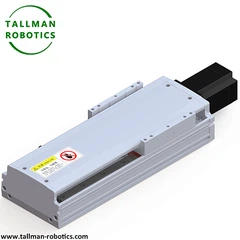


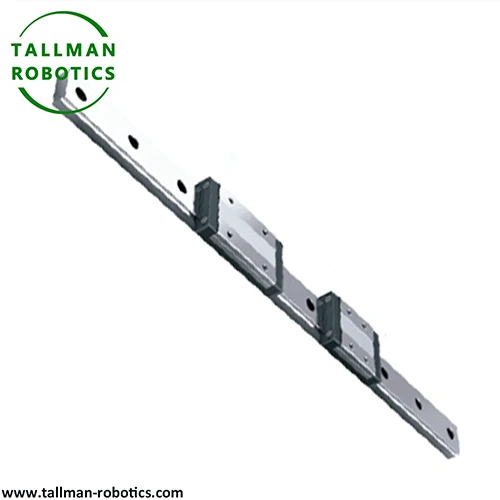
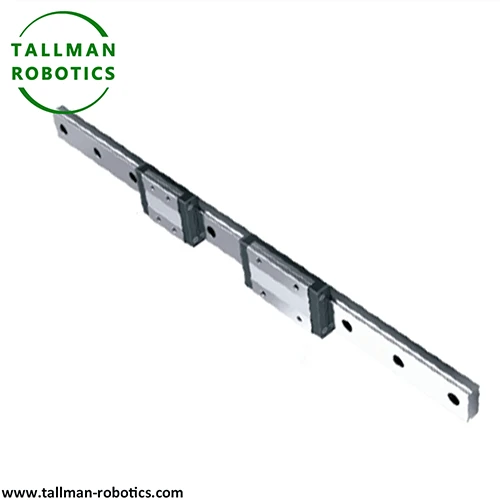

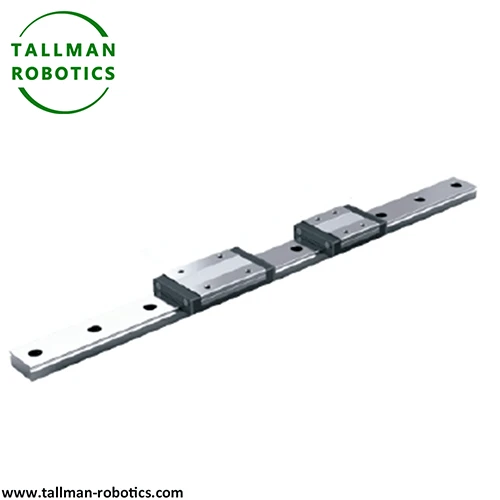

What is Linear Motion Guide?
A linear motion guide is a precision guiding component built for industrial‑automation machinery. It constrains travel along a fixed straight path and defines consistent linear trajectories for moving assemblies. It delivers directional support for repeated automated positioning tasks.
As a critical linear guiding component, it offsets lateral drift that occurs with unconstrained sliding assemblies. It satisfies precision requirements across modern intelligent manufacturing stations.
For this reason, it forms the mechanical foundation for automated sliding‑positioning systems. It keeps repeatable travel paths under cyclic workshop operating conditions.
Core Structural Composition of Linear Motion Guide
Industrial‑grade linear motion guide uses a load‑optimized modular build. Every component works together to sustain reliable guiding performance over long operational cycles.
The high‑rigidity guide rail forms the stationary base unit. Its precision‑machined raceways deliver defined rolling tracks for the full assembly.
The mating guide carriage carries applied loads and executes physical displacement. It rides along the rail to transfer linear movement to machine sub‑assemblies.
Internal rolling elements sit between rail and carriage. They lower frictional resistance and enable smooth low‑drag travel during movement.
Meanwhile, end retainers hold rolling elements in proper alignment. They stop component shift when assemblies run through rapid reciprocating strokes.
Additionally, sealing accessories block airborne workshop contaminants. They help preserve consistent linear guiding accuracy within dusty production environments.
Here In this page, we introduce series of Linear Guideways, you will see data sheet, production pictures,vedios of test as follows:
Also You are welcome to watch more projects or visit our video gallery by Youtube: https://www.youtube.com/@tallmanrobotics
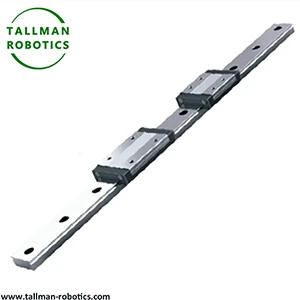
1.Categories of Linear Guideways:
|
Series |
HGH High Assembly |
|
Block |
H Square Type |
|
Size |
15,20,25,30,35,45,55,65 |
|
Pictures |
|
|
Remark |
Heavy Load Ball Type |
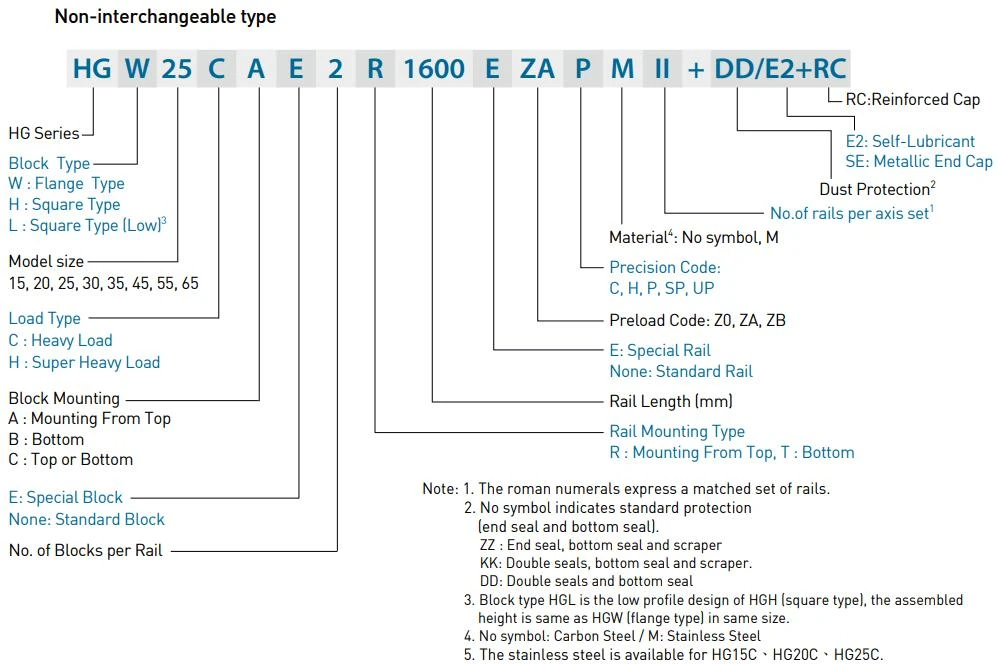
2.Model Selction Guide, Drawing and Data Sheet of Linear Guideways.
HGH High Assembly: Heavy Load Ball Type


Core Technical Features & Functions
Linear motion guide carries distinct structural strengths for industrial linear‑control work. The table below outlines key technical traits and real‑automation application value.
|
Technical Item |
Performance Trait |
Industrial Application Value |
|
Motion Accuracy |
Physically constrained straight‑line travel |
Delivers dependable linear motion for positioning‑focused machine tasks |
|
Load Performance |
Multi‑directional shared‑load capacity |
Supports stable operation for medium‑to‑heavy‑duty automation units |
|
Motion Smoothness |
Low‑resistance rolling‑contact movement |
Reduces stutter during continuous cyclic linear travel |
|
Environmental Robustness |
Contaminant‑blocking sealing hardware |
Maintains guiding function inside typical manufacturing‑workshop conditions |
FAQ for Linear Motion Guide
Q1: Where does a rolling‑type linear motion guide outperform basic sliding‑style guide hardware?
Rolling‑type linear motion guide relies on rolling‑element contact rather than surface‑on‑surface sliding. It holds tighter travel‑path consistency through repeated cycles. Basic sliding guides suffer from higher friction and gradual path drift under continuous industrial use.
Q2: Which parts directly shape real‑world guiding performance on linear motion guide?
Guide rail, load‑bearing guide carriage, rolling elements, end retainers and sealing hardware work as one group. These parts define travel geometry, lower movement drag and block external contamination to sustain stable linear guiding output.
Q3: Can linear motion guide hardware sustain long‑run high‑cycle production‑floor work?
Yes. Its rolling‑contact design lowers mechanical wear during repeated travel. It maintains predictable slide behaviour across high‑cycle operation, matching non‑stop industrial‑production requirements within its rated operating bounds.
Q4: What categories of automation machinery integrate linear motion guide hardware?
It fits any machine needing repeatable constrained linear displacement. Typical examples include CNC machine tools, robot linear axes, automated sorting‑and‑assembly equipment and metrology‑focused test instruments.
Q5: What practical value does consistent linear guiding accuracy bring to automation‑line hardware?
Reliable linear guiding accuracy eliminates random travel‑path offset. It ensures every repeated mechanical stroke follows matching physical geometry. This consistency supports stable machine behaviour and uniform part‑processing outcomes across production batches.
Hot Tags: linear motion guide, China linear motion guide manufacturers, suppliers, factory, Guide Rails for Linear Motion, Linear Guide Rail Assembly, Bearing Track for Linear Motion, Guideway for Linear Motion, Linear Motion Guide Rails, Linear Bearing Rails


