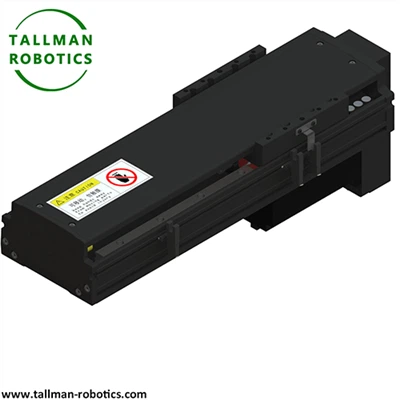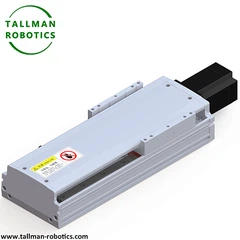


Linear Guide System is a core foundational component in the fields of industrial automation and precision machinery. By converting the linear motion of moving parts into low friction, high-precision guiding trajectories, it provides stable rigid support and precise displacement control for equipment, and is a key technical carrier for achieving precision positioning and high-speed motion.
Linear Guide System is a core basic component in mechanical engineering, and its fundamental task is to constrain the moving parts to perform precise, smooth, and low friction reciprocating motion strictly along a predetermined straight line or circular arc trajectory. It is not only the "track" of motion, but also the "cornerstone" for bearing loads, ensuring accuracy, and transmitting force. Its performance directly determines the accuracy, speed, rigidity, and lifespan of the entire equipment or device. From tiny microscope focusing to giant gantry machine tools, almost all equipment involving precision motion cannot do without guidance systems.
Linear Guide System is a precision functional component used to constrain mechanical moving parts, enabling them to achieve high-precision, high rigidity, and low friction linear reciprocating motion in a given direction. It is the cornerstone of modern high-end equipment manufacturing industry, and its performance directly determines the positioning accuracy, operating speed, load-bearing capacity, and overall stability of key equipment such as CNC machine tools, industrial robots, precision measuring instruments, and semiconductor equipment. It is known as the "limbs of machinery" and the "blood vessels of precision motion".
The basic components of Linear Guide System mainly include two core parts: rails and sliders/blocks. The guide rail is a fixed component that has undergone precision grinding and hardening treatment, providing a high straightness reference path for motion; The slider is a motion unit installed on a moving part, with a circulating raceway embedded inside. By implanting balls or rollers as rolling elements in the raceway between the guide rail and the slider, traditional sliding friction is successfully transformed into rolling friction, which is the fundamental principle for achieving excellent performance.
Linear Guide System is mainly divided into two types: ball bearing and roller bearing. The ball type has the smallest friction coefficient and is suitable for high-speed light loads; Roller type, due to its large contact area, has higher rigidity and load-bearing capacity, making it suitable for heavy-duty cutting machines and other applications.
Basic Specification of Linear Guide Systems
|
Model No |
Max Payload(kgs) |
Max Stroke(mm) |
Repeatability(mm) |
Drive Solution |
Motor Power (W) |
|
TMS30 |
4 |
400 |
±0.01/±0.005 |
screw |
30 |
|
TMS45 |
10 |
800 |
±0.01/±0.005 |
screw |
50/100 |
|
TMB45 |
4 |
800 |
±0.04 |
belt |
50/100 |
|
TMS62 |
20 |
1050 |
±0.01/±0.005 |
screw |
100/200/400 |
|
TMB62 |
16 |
2000 |
±0.04 |
belt |
100/200/400 |
|
TMS65 |
30 |
800 |
±0.01/±0.005 |
screw |
50/100 |
|
TMB65 |
4 |
800 |
±0.04 |
belt |
50/100 |
|
TMS85 |
50 |
1050 |
±0.01/±0.005 |
screw |
100/200/400 |
|
TMB85 |
16 |
2000 |
±0.04 |
belt |
100/200/400 |
|
TMS100 |
65 |
1050 |
±0.01/±0.005 |
screw |
100/200/400 |
|
TMB100 |
40 |
3500 |
±0.04 |
belt |
100/200/400 |
|
TMS135 |
110 |
1250 |
±0.01/±0.005 |
screw |
200/400/750 |
|
TMB135 |
42 |
3500 |
±0.04 |
belt |
200/400 |
|
TMS150 |
120 |
1500 |
±0.01/±0.005 |
screw |
400/750 |
|
TMB150 |
75 |
3500 |
±0.04 |
belt |
400/750 |
|
TMS170 |
130 |
1500 |
±0.01/±0.005 |
screw |
400/750 |
|
TMB170 |
75 |
3500 |
±0.04 |
belt |
400/750 |
|
TMS220 |
150 |
1500 |
±0.01/±0.005 |
screw |
750 |
|
TMB220 |
75 |
3500 |
±0.04 |
belt |
750 |
You are welcome to watch more projects or visit our video gallery by Youtube: https://www.youtube.com/@tallmanrobotics


Hot Tags: linear guide system, China linear guide system manufacturers, suppliers, factory, Automated Linear System, Crossed Roller Stage, Linear Indexing Table, Linear Sliding Table, Mechanical Stage, High dynamic Linear System