
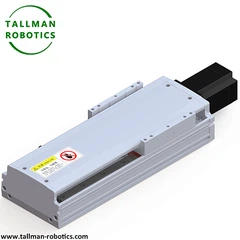


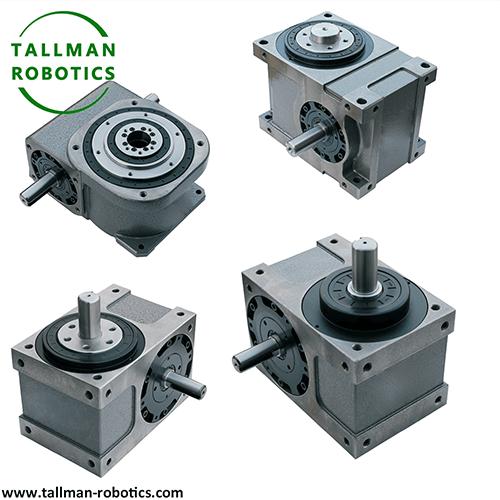

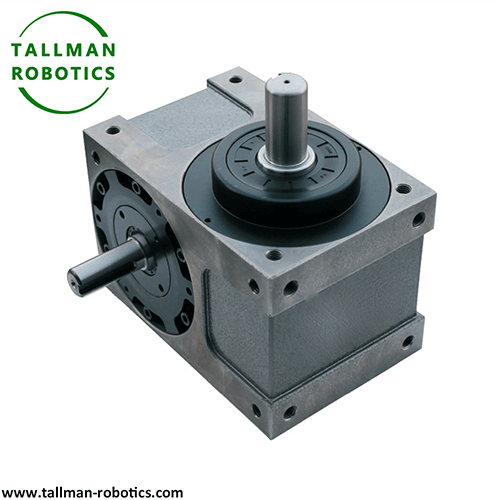


Cam indexer is an intermittent motion mechanism that converts the continuous rotational motion of the input shaft into precise indexing positioning or intermittent rotational motion of the output shaft through the mechanical meshing of the cam and the follower.
Cam Indexer | Precision Intermittent Motion Drive for Industrial Automation
1. Working Principle of Cam Indexer
Cam indexer serves as a core intermittent motion drive component for automated stations. First, the driving motor powers the internal globoidal cam for continuous rotation. Then, the precision cam profile pushes evenly distributed roller followers. Thus, the cam indexer converts constant rotation into fixed intermittent indexing motion. Meanwhile, it builds stable index-dwell cycle for multi-station automated operation. This pure mechanical cam drive structure delivers steady and repeatable motion output.
2. Core Technical Features of Cam Indexer
Mechanical cam indexer owns rigid integrated locking structure for stationary positioning. Besides, high-precision cam indexer maintains consistent indexing accuracy in long-term operation. Furthermore, roller turret cam indexer adopts multi-point contact to reduce motion impact. In addition, standardized cam indexer modules support diverse station angle configurations. Compact cam indexing drive units fit various automated assembly and inspection lines perfectly.
3. Practical Industrial Application Case
A food packaging automation station installs standard cam indexer for station switching. The mechanical cam indexer executes stable intermittent rotation for filling and sealing procedures. It keeps fixed dwell time to ensure accurate manual and mechanical matching. Moreover, the cam indexer avoids position offset from frequent cyclic movement. It sustains stable and orderly operation of multi-station packaging automation processes.


Here In this page, we introduce series of Cam Indexers from TallMan Robotics,you will see data sheet, production pictures,videos as follows:
Also You are welcome to watch more projects or visit our video gallery by Youtube: https://www.youtube.com/@tallmanrobotics
|
Type |
Model |
Allowable Output Radial Load (kgf) |
Allowable Output Axial Load (kgf) |
Indexing Accuracy(Arc sec) |
Weight |
|
DS Type Shaft Output Cam Indexing Drives
|
45DS |
80 |
72.5 |
±30 |
7.0 |
|
60DS |
180 |
150 |
±30 |
13.0 |
|
|
63DS |
180 |
150 |
±30 |
15.0 |
|
|
70DS |
220 |
220 |
±30 |
18.0 |
|
|
80DS |
220 |
220 |
±30 |
32.0 |
|
|
83DS |
330 |
420 |
±30 |
26.5 |
|
|
100DS |
400 |
450 |
±30 |
50.0 |
|
|
110DS |
500 |
550 |
±30 |
65.0 |
|
|
125DS |
600 |
630 |
±30 |
75.0 |
|
|
140DS |
730 |
860 |
±30 |
90.0 |
|
|
180DS |
1200 |
1500 |
±30 |
220.0 |
|
|
DF Type Flange Output Cam Indexer
|
45DF |
130 |
140 |
±30 |
7.0 |
|
60DF |
140 |
142 |
±30 |
13.0 |
|
|
70DF |
220 |
300 |
±30 |
18.0 |
|
|
80DF |
330 |
420 |
±30 |
32.0 |
|
|
110DF |
560 |
700 |
±30 |
65.0 |
|
|
140DF |
760 |
1000 |
±30 |
90.0 |
|
|
180DF |
1200 |
1500 |
±30 |
220.0 |
|
|
250DF |
3200 |
4150 |
±30 |
685.0 |
|
|
DE Type Flange & Shaft Output Indexing Drive
|
45DE |
130 |
140 |
±30 |
7.0 |
|
60DE |
140 |
142 |
±30 |
13.0 |
|
|
70DE |
220 |
300 |
±30 |
18.0 |
|
|
80DE |
330 |
420 |
±30 |
32.0 |
|
|
110DE |
560 |
700 |
±30 |
65.0 |
|
|
140DE |
760 |
1000 |
±30 |
90.0 |
|
|
180DE |
1200 |
1500 |
±30 |
220.0 |
|
|
Indexing Options for DS/ DF/ DE Model: |
|||||
|
Type |
Model |
Allowable Output Radial Load (kgf) |
Allowable Output Axial Load (kgf) |
Indexing Accuracy(Arc sec) |
Weight |
|
DT Type Table Type Cam Indexer
|
80DT |
520 |
220 |
±30 |
20.0 |
|
110DT |
860 |
420 |
±30 |
50.0 |
|
|
140DT |
1050 |
720 |
±30 |
85.0 |
|
|
180DT |
1500 |
1100 |
±30 |
190.0 |
|
|
210DT |
1950 |
1520 |
±30 |
450.0 |
|
|
250DT |
2500 |
1800 |
±30 |
500.0 |
|
|
350DT |
4500 |
3300 |
±30 |
1200.0 |
|
|
450DT |
6500 |
4500 |
±30 |
2240 |
|
|
Type |
Model |
Allowable Output Axial Load C1 (kgf) |
Allowable Output Axial Load C2 (kgf) |
Repeatability |
Weight |
|
DA Type Ultrathin Table Cam Indexer
|
70DA |
316 |
142 |
±30 |
15.0 |
|
90DA |
500 |
215 |
±30 |
28.0 |
|
|
110DA |
700 |
350 |
±30 |
42.0 |
|
|
150DA |
1200 |
700 |
±30 |
86.0 |
|
|
190DA |
1840 |
920 |
±30 |
185 |
|
|
230DA |
2800 |
1300 |
±30 |
285 |
|
|
330DA |
3560 |
3430 |
±30 |
1000 |
|
|
450DA |
4850 |
4160 |
±30 |
1600 |
|
|
Indexing Options for DT, DA Model: |
|||||
|
Type |
Model |
Allowable Output Axial Force (kgf) |
Allowable Output Radial Force (kgf) |
Repeatability |
Weight |
|
PU Type Parallel Cam Indexing Drive
|
PU50 |
130 |
100 |
60 |
7.5 |
|
PU65 |
250 |
160 |
60 |
15.0 |
|
|
PU80 |
360 |
250 |
60 |
20.0 |
|
|
PU100 |
480 |
400 |
60 |
38.0 |
|
|
PU125 |
520 |
630 |
60 |
65.0 |
|
|
PU150 |
750 |
860 |
60 |
100.0 |
|
|
PU175 |
920 |
1000 |
60 |
160.0 |
|
|
PU225 |
1435 |
1470 |
60 |
285.0 |
|
|
PU250 |
1550 |
1560 |
60 |
388.0 |
|
|
PU320 |
2300 |
2400 |
60 |
750.0 |
|
|
Multiple Options for Motor & Indexer Whole Solutions |
|||||
|
|
|||||


FAQ:
1. What specifically does the "speed ratio" of a Cam Indexer refer to? What is the connection with the division number?
In a Cam Indexer, the speed ratio refers to the relationship where the input shaft rotates a fixed number of turns for each complete output revolution. Specifically, the input shaft must rotate exactly "N" turns for the output shaft to complete one full 360° rotation, where N equals the division number. The division number represents the number of stops or workstations per output revolution.
The connection is direct and mathematical. The output shaft rotates 360°/N per input shaft revolution. For an 8-station splitter (N=8), the input rotates 8 times while the output turns once. Each input turn advances the output by exactly 45°. This relationship remains fixed regardless of operating speed.
2. What are the commonly used speed ratios? How to choose the appropriate speed ratio based on equipment operating conditions?
Common division numbers (which directly determine the speed ratio) include 2, 3, 4, 6, 8, 12, 16, and 24 stations. These correspond to speed ratios of 2:1, 3:1, 4:1, and so on up to 24:1.
To choose the appropriate speed ratio, first determine the required number of workstations for your process. Calculate the load torque by considering inertia and friction forces. Match the output speed to your production rate needs using the formula: output speed = input speed / N. Consider the dynamic-static ratio, which affects motion versus dwell time allocation. Select a ratio where the splitter's rated torque exceeds your calculated load by 20-30% margin. For high-speed applications exceeding 200 RPM input, choose precision-ground cam profiles.
3. The larger the speed ratio, the faster or slower the running speed of Cam Indexer? What is the range of selectable degrees (number of jobs)? Can non-standard division numbers be customized?
The larger the speed ratio (division number), the slower the output runs for a given input speed. With a fixed input speed, increasing N reduces output rotational speed proportionally. For example, at 120 RPM input, an 8-station splitter yields 15 RPM output, while a 12-station splitter yields only 10 RPM output.
The range of selectable division numbers typically spans from 2 to 24 stations, with common values including 4, 6, 8, 12, and 16. Some manufacturers offer up to 24 or more stations. Yes, manufacturers can customize non-standard division numbers. However, non-standard units require special design and tooling. They may have longer lead times and higher costs. Consult the manufacturer for custom division requirements.
4. Can the same Cam Indexer adjust the degree of division or speed ratio? Do you need to replace the parts?
The same splitter cannot adjust the division number or speed ratio without replacing parts. The cam profile and the internal gear ratio are fixed during manufacturing. Manufacturers assemble and adjust these precision components before leaving the factory.
Changing the division number requires replacing the internal cam and the indexing wheel assembly. This essentially constitutes rebuilding the unit with new parts. Some models allow limited adjustment of the input shaft eccentric sleeves to eliminate wear-related backlash. However, this adjustment does not change the division number. Users should not attempt to modify these parameters privately, as improper adjustment can damage the splitter and void the warranty.
5. What is the relationship between speed ratio and output torque of Cam Indexer? Does the higher speed ratio, the greater the torque?
Yes, higher speed ratio produces greater output torque, following the principle of torque multiplication. The output torque equals the input torque multiplied by the speed ratio, minus efficiency losses. For a given input motor torque, an 8:1 ratio yields eight times the input torque at the output.
However, this relationship has practical limits. Cam Indexer has a maximum allowable output torque rating based on its mechanical construction. Exceeding this rating causes premature wear or failure. When selecting a splitter, calculate the required output torque from your load and acceleration requirements. Then ensure Cam Indexer's rated torque exceeds this value by a 20-30% safety margin. Higher speed ratios allow using smaller motors for the same output torque, but require careful consideration of Cam Indexer's mechanical limits.
Hot Tags: cam indexer, China cam indexer manufacturers, suppliers, factory, Cam Indexing Device for Conveyor Systems, Cam operated Indexing and Positioning Device, Positioning focused Cam Indexing System, Mechanical Cam Indexer, Cam Actuated Multi position Indexer, Shaft with flange Cam Positioning Indexer


