
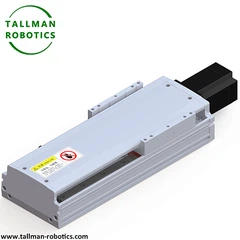


Parallel Type Cam Indexer is a cam indexing device that adopts a parallel axis transmission architecture. Its core feature is that the power input shaft and indexing output shaft are arranged in parallel, and motion transmission is achieved through precision gear sets or synchronous belts. This structure breaks through the spatial limitations of traditional coaxial dividers and provides a revolutionary solution for the layout of automation equipment.
Parallel Type Cam Indexer refers to a parallel cam indexer, also known as a parallel indexing cam mechanism. It is a type of intermittent indexing cam mechanism that uses a cam to drive an indexing turntable with rollers to perform intermittent motion, converting the continuous rotation of the cam into intermittent motion of the indexing turntable.
Working principle of Parallel Type Cam Indexer is that, The parallel cam splitter converts uniform input motion into intermittent output motion through precision machined planar cams. The cam and cam follower undergo flame quenching treatment, which can improve system accuracy and component service life.
Parallel Type Cam Indexer's Features goes like this, It has a compact design and high torque capability, can be equipped with dual input and output shafts, can perform swing indexing operations, and is easy to synchronize with other mechanical equipment. Its shell has been processed on all four sides and can be used in any installation position. It has high operating speed, large indexing angle, high efficiency, internal components immersed in oil bath, output flange without gap, high indexing accuracy, and smooth acceleration and deceleration.
Parallel Type Cam Indexer is commonly used in conveyor divider systems, vertical indexing applications, as well as lifting and handling equipment, suitable for situations that require high-speed indexing, with up to 1000 graduations per minute.
Here In this page, we introduce PU225DS Cam Indexers from TallMan Robotics, which is the top leading manufacturer of Cam Indexer, you will see data sheet, production pictures,vedios as follows:
Also You are welcome to watch more projects or visit our video gallery by Youtube: https://www.youtube.com/@tallmanrobotics


Parallel Type Cam Indexer, with its parallel axis layout and planar cam transmission characteristics, occupies specific application scenarios in automation equipment, but also has certain limitations. The following provides a detailed analysis from both advantages and disadvantages:
Core advantages
|
Compact structure, high space utilization rate |
The input shaft and output shaft are arranged in parallel, without the need for a vertical or cross axis three-dimensional transmission structure. The axial size is small, especially suitable for horizontal installation or equipment with narrow space (such as small packaging machines, precision conveyor lines). Compared to vertical axis cam indexer (such as curved cam dividers), Parallel Type Cam Indexer can reduce the space occupation of equipment in the height direction and simplify the overall layout. |
|
Strong installation and adaptability |
The output end is usually designed with standardized flanges or shaft holes, which can be directly connected to loads such as turntables and conveyor belts in parallel directions without the need for additional steering components (such as bevel gears and commutators), reducing installation complexity and debugging costs. The shell is mostly designed with four sided processing, supporting multi angle installation (horizontal, vertical, inclined), and adapting to different equipment structural requirements. |
|
High precision positioning and low clearance |
The rigid meshing between the planar cam and the roller has no transmission clearance, and the positioning accuracy can reach ± 0.02~± 0.1mm, with a repeat positioning accuracy of ≤ 0.005mm, meeting the requirements for intermittent motion consistency in fields such as electronics and light industry. There is no cumulative error during the transmission process, ensuring long-term stability during operation. |
|
Excellent high-speed performance and smooth movement |
Optimized cam curves (such as modified sine curves, equal acceleration and deceleration curves) can reduce inertial impact during start-up and stop, with low vibration and noise (usually ≤ 70dB) during high-speed operation. The highest division frequency can reach 1000 times/minute, suitable for high cycle production line requirements. |
|
Easy maintenance and long lifespan |
The core components (cam, roller) are made of high-strength alloy steel that has undergone quenching treatment, with strong wear resistance. The interior is mostly lubricated with oil bath or long-lasting grease, and daily maintenance only requires regular replenishment of grease. The average time between failures (MTBF) can reach 10000-30000 hours. |
Main drawbacks
|
Limited load capacity and limited adaptability to different scenarios |
Due to the limited meshing area of the planar cam and the parallel axis force structure, the load capacity of Parallel Type Cam Indexer is usually "light to medium load" (output torque mostly ≤ 500N · m), which cannot withstand heavy equipment loads or impact loads (such as large turntables on automotive chassis assembly lines). Heavy load scenarios rely on curved cam or heavy-duty indexers. |
|
Low flexibility in division angle |
The indexing angles of cam curves (such as 30 °, 45 °, 60 °) need to be preset during the design phase. If there are subsequent changes in production requirements (such as adjusting the number of workstations), the cam or overall equipment needs to be replaced. The degree of flexibility is lower than that of servo motor-driven indexing systems, and it is not suitable for production scenarios with multiple varieties, small batches, and frequent model changes. |
|
High requirements for installation accuracy |
The parallelism error of the parallel axis and the meshing clearance between the cam and the roller will directly affect the transmission accuracy and service life. During installation, it is necessary to strictly calibrate the parallelism between the input shaft and the output shaft (usually with an error of ≤ 0.1mm/m), otherwise it may cause abnormal wear of the cam or roller, increasing maintenance costs. |
|
High heat dissipation pressure at high speeds |
The contact area between the planar cam and the roller is relatively small, and frictional heat generation is concentrated during high-speed operation. If the lubrication is poor or the heat dissipation conditions are poor, it may cause local temperature rise, affecting material strength and lubrication effect. Additional heat dissipation structures (such as heat dissipation fins and forced air cooling) need to be designed. |
|
Cost higher than simple intermittent mechanism |
Compared to low-cost solutions such as pneumatic indexing discs and groove wheel mechanisms, the precision machining (cam grinding, roller assembly) cost of Parallel Type Cam Indexer is higher, with larger initial investment, making them more suitable for scenarios with high precision and stability requirements. Low precision and low energy equipment have insufficient cost-effectiveness. |
The core advantages of Parallel Type Cam Indexer lie in their compact structure, high precision, high stability, and high-speed performance, making them suitable for automation scenarios with light to medium loads, high cycle times, and limited space (such as electronic assembly and small packaging); However, its limited load capacity, fixed indexing angle, and high installation accuracy requirements make it limited in heavy-duty and flexible production scenarios. In actual selection, a comprehensive judgment should be made based on load size, accuracy requirements, space conditions, and production flexibility requirements to balance performance and cost.
Hot Tags: parallel type cam indexer, China parallel type cam indexer manufacturers, suppliers, factory, Cam Actuated Multi position Indexer, Flange attached Cam Positioning Indexer, Heavy duty Cam Indexing Mechanism, Indexing Rotary Cam Unit, Parallel mounted Cam Indexing System, Parallel shaft Cam Indexing Mechanism

