
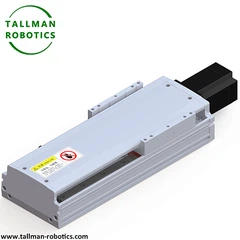


What is Intermittent Positioning Cam Indexer?
An intermittent positioning cam indexer is a mechanical motion control device that converts continuous rotary input into precisely timed stop-and-move (intermittent) output motion, using a rigid cam profile to define exact positioning stations without relying on electronic feedback control. It delivers highly repeatable, mechanically constrained positioning accuracy suited to high-speed automated processes requiring consistent station-to-station indexing.
Structure
The device comprises a precision-machined cam (disc, cylindrical, or globoidal type) mounted on the input shaft, an output turret equipped with cam-follower rollers or bearings that trace the cam's contoured profile, and a rigid housing supporting both shafts on high-precision bearings. As the input shaft rotates continuously, the cam profile drives the follower through defined dwell (stationary) and index (motion) segments within each rotation, producing precise, repeatable intermittent output positioning.
Selection Considerations
Key factors include number of index stations, index angle, dwell-to-motion time ratio, positioning accuracy and repeatability, output torque and load inertia capacity, motion curve type (modified sine, trapezoidal) for smooth acceleration/deceleration, and maximum permissible input speed. Load characteristics and required cycle rate must be carefully matched to cam design to avoid excessive vibration, noise, or premature wear.
Applications
Intermittent positioning cam indexers are used in packaging machinery, assembly automation lines, bottling and labeling systems, rotary transfer equipment, and pick-and-place stations where precise, repeatable intermittent positioning is required at consistent, high-speed cycle rates.
Installation Considerations
Proper alignment between the cam input shaft and output turret is critical to maintain follower engagement accuracy and prevent premature wear. The mounting base must be rigid and vibration-free to preserve indexing precision. Lubrication should be verified before startup, and follower preload/backlash should be checked and adjusted per manufacturer specification during commissioning to ensure smooth, accurate positioning.
Here In this page, we introduce 63 DS Cam Indexers from TallMan Robotics,
you will see data sheet, production pictures,vedios as follows:
Also You are welcome to watch more projects or visit our video gallery by Youtube: https://www.youtube.com/@tallmanrobotics


FAQ:
1. How to match the flange at the input end of the cam indexer and the flange at the output end of the motor?
You match them via a flexible coupling or a flange adapter. The motor flange (e.g., NEMA or IEC) connects to the indexer's input shaft. Do not connect flanges directly. Instead, use a coupling that compensates for minor misalignments. A flange adapter plate with a precision-machined pilot bore ensures coaxiality between the motor and indexer shafts. This protects the indexer's internal cam from stress.
2. Are the flange interface specifications of different brands of dividers universal?
No, they are not universal. Each manufacturer (e.g., Sankyo, Camco, TallMan Robotics, TechMan Automation) uses proprietary designs for bolt patterns, pilot diameters, and flange thicknesses. While some models may coincidentally match, you cannot assume compatibility. Always consult the specific dimensional drawings from each brand's datasheet. An adapter plate is necessary to mount components from different manufacturers onto one machine.
3. Will the flange thickness of the high torque splitter increase? How much increase?
Yes, flange thickness increases with torque rating to handle greater vertical and radial loads without flexing. While exact values vary by model, the thickness is proportional to the load capacity. For example, the flange on a heavy-duty 250DF model is significantly thicker than on a light-duty 60DF model. A precise figure requires checking the manufacturer's spec sheet.
4. Is the connection method between the flange and the output end of cam indexer welding or bolt fixing?
It is bolt fixing, not welding. The output flange is an integral part of the indexer's output shaft assembly. You bolt your turntable or load directly to this flange using the pre-drilled and tapped holes. Welding would distort the precision-ground flange, cause internal bearing damage, and make future disassembly impossible. Always use the manufacturer's recommended bolt torque.
5. Is the flange size of the ultra-thin cam indexer limited by the structure? What is the maximum specification?
Yes, the ultra-thin (DA type) design limits flange size. The model number (e.g., 70DA, 90DA) indicates the center distance between input and output shafts, which directly dictates the flange's maximum diameter. The maximum specification in common catalogs is the 450DA model. This model offers the largest load capacity within the ultra-thin, compact structural envelope designed for space-constrained applications.
Hot Tags: intermittent positioning cam indexer, China intermittent positioning cam indexer manufacturers, suppliers, factory, Cam Indexing Device for Conveyor Systems, Cam operated Indexing and Positioning Device, Positioning focused Cam Indexing System, Mechanical Cam Indexer, Cam Actuated Multi position Indexer, Shaft with flange Cam Positioning Indexer

