
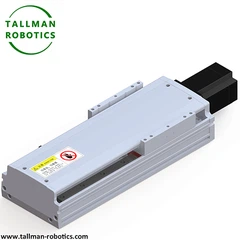


What is Printing Cam Indexing Device?
A printing cam indexing device is a specialized intermittent motion mechanism engineered for printing and converting machinery, using a precision cam profile to deliver highly accurate, repeatable indexing motion that synchronizes substrate feed, print cylinder rotation, or web transport with printing station cycles. Its mechanically constrained motion ensures consistent registration accuracy critical to multi-color and multi-station printing processes.
Structure
The device consists of a precision-machined cam (disc or globoidal type) coupled to the input drive shaft, an output turret or shaft fitted with cam-follower rollers that trace the cam profile, and a rigid housing supporting both shafts on high-precision bearings. As the cam rotates continuously, its contoured groove drives the follower through alternating dwell and index phases, producing precisely timed intermittent motion synchronized with upstream and downstream printing station operations.
Selection Considerations
Key factors include number of index stations, index angle, dwell-to-motion ratio, positioning accuracy and repeatability (critical for print registration), permissible output torque and load inertia, motion curve type for smooth acceleration/deceleration, and maximum input speed to match press line speed requirements. Synchronization accuracy across multiple printing stations should be verified during specification.
Applications
Printing cam indexing devices are used in flexographic and rotary printing presses, label printing and converting lines, packaging printing equipment, and multi-color print registration systems where precise, repeatable, high-speed intermittent motion is essential for print quality and registration accuracy.
Installation Considerations
Proper alignment between the cam input shaft and output turret is essential to maintain print registration accuracy. The mounting base must be rigid and vibration-isolated to prevent print misalignment. Lubrication should be verified before startup, and follower preload/backlash should be checked and precisely adjusted per manufacturer specification to ensure consistent registration during high-speed operation.
Here In this page, we introduce 180 DS Cam Indexers,
you will see data sheet, production pictures,vedios as follows:
Also You are welcome to watch more projects or visit our video gallery by Youtube: https://www.youtube.com/@tallmanrobotics


FAQ:
1. What are the common specifications for the flange size of a flange type cam indexer? Can it be customized?
Flange type cam indexers typically have diameters from 50 mm to 300 mm. Common sizes include 80, 110, 140, 180, and 250 mm. Manufacturers offer full customization for bolt holes, diameter, and thickness.
2. What are the installation accuracy requirements for flanges? What is the allowable error for flatness and coaxiality?
Flange flatness error must stay within 0.02 mm per 100 mm. Coaxiality between flange and output shaft should not exceed 0.03 mm. Use a dial indicator to check both values.
3. Will the installation of a flange adapter plate on the spindle type cam indexer affect the transmission accuracy?
Yes, a flange adapter plate affects transmission accuracy. The extra interface introduces alignment errors and reduces stiffness. This degrades accuracy, especially at high speeds or under heavy loads.
4. What are the materials of flanges? How to match the material of the equipment rack?
Flanges use hardened steel (e.g., 40Cr, 45# steel) or cast iron (HT250). Match the equipment rack material to prevent galvanic corrosion. Choose similar materials for consistent thermal expansion.
5. What are the bolt specifications and torque requirements for flange connections? How to prevent loosening?
Use metric grade 10.9 or 12.9 bolts, sizes M6 to M20. Torque values follow standard charts (e.g., M10 needs 50–70 Nm). Apply thread locker (Loctite) or spring washers to prevent loosening.
Hot Tags: printing cam indexing device, China printing cam indexing device manufacturers, suppliers, factory, Cam Indexing Device for Conveyor Systems, Cam operated Indexing and Positioning Device, Positioning focused Cam Indexing System, Mechanical Cam Indexer, Cam Actuated Multi position Indexer, Shaft with flange Cam Positioning Indexer

