




What Is a Modular Cam Indexing Unit?
A modular cam indexing unit is a rotary motion device built around a standardized base platform and interchangeable cam modules. It converts continuous input rotation into intermittent, step-based output motion. A cam cartridge drives this motion, and engineers can swap this cartridge without replacing the entire unit. Therefore, a single base platform supports several index angle configurations across its service life. Manufacturers design this modularity around a common mounting interface, a common input shaft diameter, and a common output plate bolt pattern.
Engineers select a modular cam indexing unit for production lines needing frequent reconfiguration. A product changeover may require a different station count. A different index angle then follows directly from this new station count. Consequently, a modular platform lets the integration team adjust the machine without redesigning the base structure. This article covers the definition, structural design, and selection criteria of modular cam indexing units from a pure engineering standpoint.
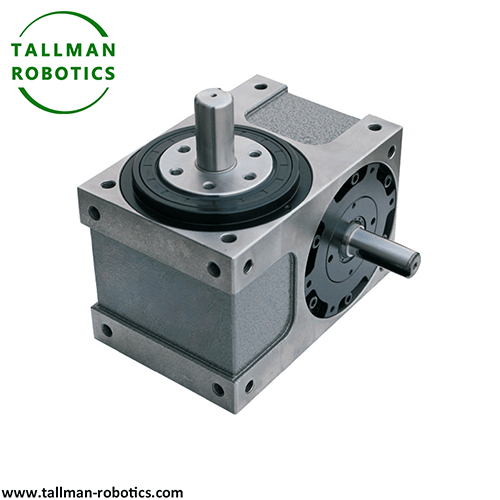
Here In this page, we introduce 140 DE Cam Indexers from TallMan Robotics.
Also You are welcome to watch more projects or visit our video gallery by Youtube: https://www.youtube.com/@tallmanrobotics


Structural Design and Core Components
A modular cam indexing unit combines a base platform, a removable cam cartridge, an output plate, and a standardized mounting interface. The base platform houses the input shaft bearing and the primary structural frame. Meanwhile, the cam cartridge contains the barrel cam, the cam follower array, and the internal drive gearing as a single removable assembly.
Each cam cartridge ships as a sealed, pre-aligned unit. Technicians remove the worn or mismatched cartridge and install a replacement without disturbing the base platform alignment. In addition, the output plate connects to the cartridge through a standardized bolt pattern, and this pattern stays constant across every cartridge variant offered for a given frame size. Consequently, tooling plates designed for one index angle transfer directly to a new cartridge with a different angle.
The mounting interface itself uses a common pilot register and bolt circle across the full product family. This consistency lets engineers design a fixture plate once. Then, they reuse this same fixture across multiple frame sizes within the family. Sealed bearings and a compact labyrinth seal protect the internal cam groove from dust and coolant intrusion inside each removable cartridge.
Cam Cartridge Interchangeability
Cartridge interchangeability defines the core advantage of a modular cam indexing unit. Each cartridge arrives factory-calibrated to a specific index angle, such as 60, 90, or 120 degrees. Therefore, a station count change no longer requires a full indexer replacement. Instead, the integration team swaps the cartridge and retains the base platform, the input drive, and the surrounding machine structure.
This interchangeability also simplifies spare parts management. A single base platform accepts several cartridge variants. As a result, a facility stocks fewer unique base units and still covers a wide range of index angle requirements. Meanwhile, a damaged cartridge comes out for repair or replacement without pulling the entire indexer off the machine. As a result, downtime during a cartridge swap stays limited to the disconnection and reconnection of a single subassembly.
Configuration Flexibility for Reconfigurable Lines
A reconfigurable production line benefits directly from a modular cam indexing unit. Engineers add or remove stations by selecting a cartridge with the matching index angle for the new station count. Then, they bolt the new cartridge onto the existing base platform using the standardized mounting interface. Consequently, machine builders shorten the redesign cycle between product generations running on the same platform.
Multi-model production also benefits from this flexibility. A facility running two product variants can dedicate separate cartridges to each variant and swap between them during changeover. Otherwise, the facility would need two complete indexer units occupying separate floor space. Therefore, a modular platform reduces the equipment footprint required to support multiple product configurations on one line.
Application Scenarios in Industrial Automation
Modular cam indexing units appear on machines running multiple product variants. They also suit machines expecting future station additions. Contract manufacturing cells use modular platforms to switch between customer programs without a full machine rebuild. Electronics assembly lines apply modular cartridges for this reason. A new connector or component family often requires a different index angle.
Automotive sub-assembly lines mount modular units on transitional stations. These stations migrate between vehicle platforms during a model changeover. Meanwhile, packaging lines use modular cartridges to adjust station count as pack formats change across seasonal production runs. In each case, the standardized base platform and interchangeable cartridge reduce the engineering effort required for each transition.
Alignment and Repeatability Across Cartridge Swaps
Alignment repeatability matters most whenever a cartridge changes on a modular cam indexing unit. Each cartridge locates against the base platform through a precision pilot register and dowel pin pair. Therefore, a replacement cartridge returns to the same rotational and axial position as the original, without a manual realignment step. Factory calibration on each cartridge confirms this repeatability. This calibration happens prior to shipment.
Runout at the output plate stays within a defined tolerance across every cartridge variant in the family. As a result, downstream tooling references the same datum surface. This datum stays constant across every cartridge installed in the base platform. This consistency matters most on stations performing vision inspection or precision fastening. Output plate position directly affects process accuracy at these stations. Technicians confirm runout with a dial indicator following any cartridge swap on a high-precision station.
Drive Compatibility Across the Cartridge Family
Input drive compatibility also stays constant across a modular cam indexing unit family. The base platform accepts a single motor mounting standard, regardless of the cartridge installed. Consequently, engineers select a servo motor once during the initial machine design. Then, they reuse this same motor across every future cartridge change. Gear ratio and torque transfer values differ slightly between cartridge variants. Therefore, engineers confirm each cartridge datasheet prior to final motor sizing.
Quick-Change Servicing and Downtime Reduction
Quick-change servicing sets a modular cam indexing unit apart from a fixed-configuration design. A quick-change cartridge disconnects from the base platform through a small bolt set and a single drive coupling. Therefore, a trained technician completes a full cartridge swap in a fraction of the time a complete indexer replacement would require. This quick-change capability shortens unplanned downtime. Early wear signs discovered during routine inspection trigger a fast, planned swap instead.
Preventive maintenance planning also benefits from quick-change servicing. A facility can stock a spare cartridge on the shelf and rotate it into service during a scheduled maintenance window. Meanwhile, the worn cartridge goes out for refurbishment without idling the host machine for an extended period. As a result, a modular platform keeps production running. Individual cam modules cycle through routine service without stopping the full line.
Technical Reference Table
The table below summarizes core structural attributes of a modular cam indexing unit against a fixed-configuration cam indexer for direct comparison.
|
Parameter |
Modular Cam Indexing Unit |
Fixed-Configuration Cam Indexer |
|
Index angle change |
Swap cam cartridge on shared base platform |
Requires full indexer replacement |
|
Mounting interface |
Common pilot register and bolt circle across family |
Fixed to single frame design |
|
Output plate compatibility |
Shared bolt pattern across cartridge variants |
Specific to one configuration |
|
Drive/motor compatibility |
Single motor standard across cartridge changes |
Motor sizing tied to fixed unit |
|
Service approach |
Quick-change cartridge swap |
Full unit removal and replacement |
|
Common index angles |
30 to 180 degrees, cartridge dependent |
30 to 180 degrees, fixed at build |
|
Best application fit |
Reconfigurable lines, multi-model production, contract manufacturing |
Single-purpose, fixed-configuration stations |
|
TallMan Robotics Modular Cam Indexing Unit Series |
Precision pilot register, factory-calibrated cartridges, shared output plate bolt pattern, sealed cartridge housing |
- |
Selection Considerations for Modular Cam Indexing Units
Engineers begin selection by confirming the range of index angles the cartridge family covers. A base platform only supports the angles offered within its product line. Next, they check output plate compatibility across the planned cartridge variants. This check confirms existing fixture plates transfer without modification.
Torque and inertia requirements still apply per cartridge, so engineers verify each cartridge variant against its own load rating rather than assuming uniform capacity across the family. Finally, engineers confirm cartridge lead time and spare parts availability. A reconfigurable line depends on quick cartridge turnaround to realize its full flexibility advantage.
Frequently Asked Questions
What makes a cam indexing unit 'modular' compared with a fixed-configuration design?
A modular cam indexing unit separates the base platform from the cam mechanism, which lives inside a removable cartridge. Engineers swap this cartridge to change the index angle, while the base platform, mounting interface, and input drive stay the same across every configuration.
Does changing a cam cartridge affect output plate alignment?
No. Each cartridge locates against the base platform through a precision pilot register and dowel pin pair, and factory calibration confirms repeatability before shipment. A replacement cartridge returns to the same rotational and axial position as the original, so downstream tooling references the same datum surface.
Can the same fixture plate work across different cartridge configurations?
Yes, in most cases. The output plate uses a standardized bolt pattern that stays constant across cartridge variants within a given frame size, so fixture plates designed for one index angle typically transfer to a new cartridge with a different angle without modification.
How does a modular platform reduce downtime during maintenance?
A quick-change cartridge disconnects from the base platform through a small bolt set and a single drive coupling. A facility can stock a spare cartridge and rotate it into service during a scheduled maintenance window, while the worn cartridge goes out for refurbishment without idling the host machine.
What production environments benefit most from a modular cam indexing unit?
Reconfigurable lines, multi-model production cells, and contract manufacturing operations benefit most. These environments need frequent station count or index angle changes, and a shared base platform with interchangeable cartridges shortens the redesign cycle between product generations.
Hot Tags: modular cam indexing unit, China modular cam indexing unit manufacturers, suppliers, factory, Cam Indexing Device for Conveyor Systems, Cam operated Indexing and Positioning Device, Positioning focused Cam Indexing System, Mechanical Cam Indexer, Cam Actuated Multi position Indexer, Shaft with flange Cam Positioning Indexer


