
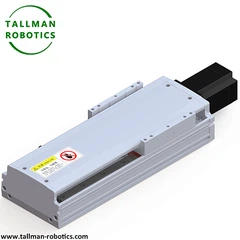


Hey there, fellow automation enthusiasts! As a supplier of Cam Actuated Indexers, I've seen firsthand the incredible impact these components can have on manufacturing processes. In this blog, I'll walk you through the process of designing a multi - station indexing system with a Cam Actuated Indexer.
Understanding the Basics of Cam Actuated Indexers
First things first, let's talk a bit about what Cam Actuated Indexers are. These bad boys are mechanical devices that convert continuous rotary motion into precise intermittent motion. They're used in all sorts of industries, from automotive to food packaging, to perform tasks like part assembly, inspection, and machining at multiple stations.
There are different types of Cam Actuated Indexers out there. For example, the Assembly Line Cam Indexer is specifically designed for high - speed assembly lines. It can handle a large number of indexing stations, making it ideal for mass - production scenarios. The Indexer Cam Assembly is another important part. It consists of a cam and followers, and the motion profile of the cam determines how the indexer moves. And then there's the Parallel Axis Cam Indexer, which has its input and output shafts parallel to each other, offering a compact and efficient design.


Step 1: Define Your Requirements
The very first step in designing a multi - station indexing system is to clearly define your requirements. You need to ask yourself some important questions. How many stations do you need? What's the required indexing interval? What kind of load will the indexer need to handle? The number of stations is crucial as it will determine the size and complexity of the indexer. For instance, if you're setting up a small - scale assembly process, you might only need 4 - 6 stations. But for a large - scale manufacturing line, you could be looking at 20 or more stations.
The indexing interval refers to the time it takes for the indexer to move from one station to the next. This is often determined by the cycle time of the overall process. If you have a high - speed process, you'll need an indexer that can move quickly between stations. And when it comes to load, you need to consider both the weight of the parts being moved and any additional forces that might be acting on the indexer, such as cutting forces during machining operations.
Step 2: Select the Right Cam Actuated Indexer
Once you've defined your requirements, it's time to select the right Cam Actuated Indexer. This is where my experience as a supplier comes in handy. You'll want to look at factors like the indexer's torque capacity, speed range, and accuracy.
Torque capacity is important because it determines how much load the indexer can handle without stalling. If you're moving heavy parts or applying significant forces, you'll need an indexer with a high torque capacity. The speed range is also crucial. You need an indexer that can operate at the required indexing speed for your process. And accuracy is key, especially if you're performing tasks like precision assembly or inspection.
When choosing an indexer, it's also a good idea to consider the type of cam profile. Different cam profiles offer different motion characteristics, such as smooth acceleration and deceleration, which can be important for reducing wear and tear on the system.
Step 3: Design the Station Layout
Now that you've got your indexer selected, it's time to design the station layout. This involves deciding where each station will be located around the indexer. You want to make sure that the layout is efficient and that there's enough space for the operations to take place at each station.
Consider the flow of the parts through the system. You'll want to arrange the stations in a logical sequence so that the parts move smoothly from one operation to the next. For example, if you're assembling a product, you might start with the base part at one station, then add components at subsequent stations.
Also, think about the access to each station. Operators or automated equipment need to be able to reach each station easily for maintenance, loading, and unloading. You might want to leave some extra space around the stations to allow for any necessary adjustments or troubleshooting.
Step 4: Integrate the Indexer with the System
Once you have the station layout designed, it's time to integrate the Cam Actuated Indexer with the rest of the system. This includes connecting the indexer to the power source, which is usually an electric motor. You'll need to ensure that the motor has the right power and speed characteristics to drive the indexer properly.
You'll also need to set up any control systems. This could involve using programmable logic controllers (PLCs) to control the indexing sequence and the timing of the operations at each station. The control system should be able to communicate with the indexer and other components of the system to ensure smooth and coordinated operation.
In addition, you'll need to install any sensors or feedback devices. These can be used to monitor the position of the indexer, the presence of parts at each station, and other important variables. For example, sensors can be used to detect if a part is misaligned or if there's a jam in the system, allowing for quick corrective action.
Step 5: Test and Optimize the System
After the system is integrated, it's time to test it. Start with some basic tests to make sure that the indexer is moving smoothly between stations and that the operations at each station are working as intended. You can run some trial cycles with dummy parts to check for any issues.
During the testing phase, you might notice some areas that need improvement. For example, the indexing speed might be too slow or the alignment at a particular station might be off. Make the necessary adjustments to optimize the performance of the system. This could involve tweaking the control settings, adjusting the mechanical components, or making changes to the station layout.
Step 6: Maintenance and Support
Once the system is up and running, don't forget about maintenance and support. Cam Actuated Indexers are mechanical devices, and like any machinery, they need regular maintenance to ensure long - term reliability. You should follow the manufacturer's recommended maintenance schedule, which might include tasks like lubrication, inspection of the cam and followers, and checking for any signs of wear.
If you run into any problems with the indexer or the overall system, make sure you have access to support. As a supplier, I'm always here to offer technical advice and help you troubleshoot any issues you might encounter.
Wrapping Up and the Call to Action
Designing a multi - station indexing system with a Cam Actuated Indexer can seem like a daunting task, but with the right approach, it can be a rewarding and successful project. Whether you're in the early stages of planning or you're facing some challenges with an existing system, I'm here to help.
If you're interested in learning more about our Cam Actuated Indexers or need assistance with your indexing system design, don't hesitate to reach out. We can discuss your specific requirements, provide you with detailed product information, and work together to come up with the best solution for your manufacturing process.
References
- Machinery's Handbook: A comprehensive reference for mechanical engineering and manufacturing.
- Cam-Driven Mechanisms: Design, Analysis, and Applications by G. M. Reuleaux. This book offers in - depth knowledge about cam - driven systems.
- Industry - specific trade journals, which often feature case studies and technical articles on indexing systems and Cam Actuated Indexers.


