
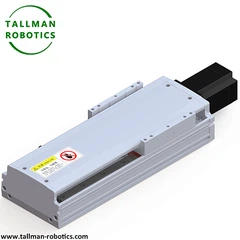


Hey there! As a ball screws supplier, I often get asked about the common materials for ball nuts. Ball nuts are a crucial part of ball screw systems, which are used in a wide range of applications, from industrial machinery to aerospace. So, let's dive into the materials that are commonly used to make these important components.
Steel
Steel is hands - down one of the most popular materials for ball nuts. It's got a bunch of great properties that make it a top choice. First off, steel is incredibly strong. This strength allows ball nuts made from steel to handle high loads without deforming. In industrial settings where heavy machinery is in use, such as in manufacturing plants or construction equipment, steel ball nuts can withstand the pressure and keep the ball screw system running smoothly.
There are different types of steel used for ball nuts. For example, carbon steel is relatively inexpensive and offers good strength. It's often used in general - purpose ball screw applications where high - precision isn't the primary concern. On the other hand, alloy steel is a step up. It contains additional elements like chromium, nickel, or molybdenum, which enhance its strength, hardness, and corrosion resistance. Alloy steel ball nuts are commonly found in more demanding applications, such as in the automotive industry for steering systems or in high - speed machining centers.
Another advantage of steel is its durability. It can resist wear and tear over a long period, even when the ball nut is constantly in motion. This means less frequent replacement, which can save a lot of money in the long run. You can learn more about the applications of ball screw systems on this Ball Screw Drive page.
Brass
Brass is another material that's frequently used for ball nuts. One of the main reasons for its popularity is its excellent machinability. Brass can be easily shaped and formed into the precise dimensions required for ball nuts. This makes it a cost - effective option for manufacturing, especially when producing ball nuts in large quantities.
Brass also has good corrosion resistance, which is important in environments where the ball nut may be exposed to moisture or chemicals. For example, in marine applications or in some food processing industries, brass ball nuts can resist rust and other forms of corrosion better than some other materials.
In addition, brass has a relatively low coefficient of friction. This means that when the ball nut moves along the ball screw, there's less resistance, which can improve the efficiency of the system. It also helps to reduce heat generation, which is beneficial for the overall performance and lifespan of the ball screw system. If you're interested in linear actuation systems that often use ball nuts, check out this Linear Actuation Ball Screw link.
Aluminum
Aluminum is a lightweight material that's becoming increasingly popular for ball nuts. In applications where weight is a critical factor, such as in aerospace or robotics, aluminum ball nuts can offer significant advantages. The lower weight reduces the overall mass of the system, which can lead to lower energy consumption and faster operation.
Aluminum also has good thermal conductivity. This means that it can dissipate heat quickly, which is important when the ball nut is operating at high speeds or under heavy loads. Heat can cause components to expand and wear out faster, but with aluminum's ability to transfer heat away, the ball nut can maintain its performance and durability.
However, aluminum is not as strong as steel. So, it's typically used in applications where the loads are relatively low. But with advancements in alloy technology, aluminum alloys are being developed that offer improved strength while still retaining the lightweight properties. You can find more information about linear ball screw systems on this Linear Ball Screw page.
Plastic
Plastic ball nuts are a more recent addition to the market, but they're gaining popularity for certain applications. One of the biggest advantages of plastic is its low cost. It's much cheaper to produce plastic ball nuts compared to metal ones, which makes them an attractive option for budget - conscious projects.
Plastic also has excellent self - lubricating properties. This means that it doesn't require external lubrication in many cases, which can simplify the maintenance of the ball screw system. In addition, plastic is resistant to corrosion and can be used in environments where metal ball nuts would rust or corrode.
However, plastic ball nuts have some limitations. They're not as strong as metal ball nuts, so they're usually used in low - load applications. They also have a lower temperature resistance, so they may not be suitable for high - temperature environments.
Choosing the Right Material
When it comes to choosing the right material for a ball nut, there are several factors to consider. The first is the load requirements. If the application involves high loads, then steel or a high - strength alloy might be the best choice. For low - load applications, plastic or aluminum could be sufficient.


The operating environment is also important. If the ball nut will be exposed to moisture, chemicals, or high temperatures, then materials with good corrosion resistance and high - temperature tolerance, such as brass or certain steel alloys, should be considered.
Cost is another factor. If budget is a concern, then plastic or carbon steel might be more suitable. But if performance and durability are the top priorities, then it might be worth investing in a more expensive material like alloy steel.
Conclusion
In conclusion, there are several common materials for ball nuts, each with its own set of advantages and disadvantages. Steel offers strength and durability, brass provides good machinability and corrosion resistance, aluminum is lightweight, and plastic is cost - effective and self - lubricating. As a ball screws supplier, I can help you choose the right material for your specific application.
If you're in the market for ball screws or ball nuts and want to discuss your requirements, feel free to reach out. We can have a detailed chat about your project and find the best solution for you. Whether it's a high - precision application or a budget - friendly option, we've got you covered.
References
- Machinery's Handbook, 31st Edition
- ASME Standards for Mechanical Components
- Industry research reports on ball screw systems


