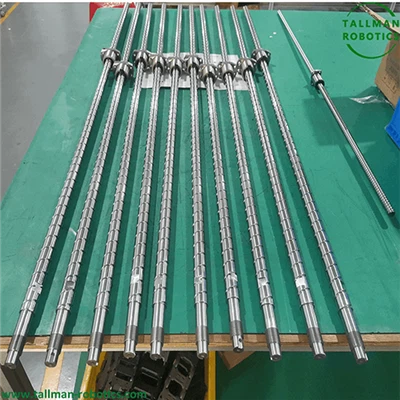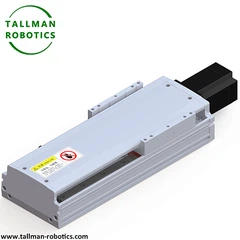


In the realm of industrial automation, linear electric cylinders have emerged as indispensable components, offering precision, efficiency, and reliability. As a leading supplier of linear electric cylinders, I understand the critical role that feedback devices play in optimizing the performance of these systems. In this blog post, I will delve into the various feedback devices used in linear electric cylinders, exploring their functions, advantages, and applications.
Encoders
Encoders are perhaps the most commonly used feedback devices in linear electric cylinders. They provide precise position feedback by converting mechanical motion into electrical signals. There are two main types of encoders: incremental and absolute.
Incremental Encoders
Incremental encoders generate a series of pulses as the cylinder moves. These pulses are counted to determine the relative position of the cylinder. Incremental encoders are relatively simple and cost-effective, making them a popular choice for many applications. However, they do not provide absolute position information, which means that the system must be homed or calibrated at startup to establish a reference point.


Absolute Encoders
Absolute encoders, on the other hand, provide a unique digital code for each position of the cylinder. This means that the system can immediately determine the absolute position of the cylinder without the need for homing or calibration. Absolute encoders are more expensive than incremental encoders, but they offer higher accuracy and reliability, especially in applications where precise positioning is critical.
Linear Variable Differential Transformers (LVDTs)
LVDTs are another type of feedback device commonly used in linear electric cylinders. They work by measuring the change in inductance of a coil as a result of the movement of a ferromagnetic core. LVDTs provide high accuracy and linearity, making them suitable for applications where precise position measurement is required.
One of the main advantages of LVDTs is their non-contact operation, which means that there is no mechanical wear or friction, resulting in a longer lifespan and higher reliability. LVDTs are also immune to electromagnetic interference, making them suitable for use in harsh industrial environments.
Potentiometers
Potentiometers are simple and inexpensive feedback devices that work by measuring the change in resistance as a result of the movement of a wiper along a resistive element. Potentiometers provide analog position feedback, which can be easily converted into a digital signal using an analog-to-digital converter.
While potentiometers are relatively simple and cost-effective, they have some limitations. They are subject to mechanical wear and friction, which can affect their accuracy and lifespan. They are also sensitive to environmental factors such as temperature and humidity, which can cause drift in the output signal.
Hall Effect Sensors
Hall effect sensors are based on the principle of the Hall effect, which states that when a magnetic field is applied perpendicular to a current-carrying conductor, a voltage is generated perpendicular to both the magnetic field and the current. Hall effect sensors can be used to detect the position of a magnet attached to the moving part of the linear electric cylinder.
Hall effect sensors are non-contact devices, which means that there is no mechanical wear or friction, resulting in a longer lifespan and higher reliability. They are also immune to electromagnetic interference, making them suitable for use in harsh industrial environments. However, Hall effect sensors have a limited range and accuracy compared to other feedback devices such as encoders and LVDTs.
Choosing the Right Feedback Device
When choosing a feedback device for a linear electric cylinder, several factors need to be considered, including accuracy, resolution, reliability, cost, and environmental conditions. The following are some guidelines to help you choose the right feedback device for your application:
- Accuracy and Resolution: The accuracy and resolution of the feedback device will depend on the specific requirements of your application. If precise positioning is critical, you may need to choose a high-accuracy feedback device such as an absolute encoder or an LVDT.
- Reliability: The reliability of the feedback device is also an important consideration. You should choose a feedback device that is designed to operate in the specific environmental conditions of your application. For example, if your application is subject to high levels of vibration or shock, you may need to choose a feedback device that is rugged and durable.
- Cost: The cost of the feedback device will also be a factor in your decision. You should choose a feedback device that provides the required accuracy and reliability at a reasonable cost.
- Environmental Conditions: The environmental conditions of your application will also affect the choice of feedback device. For example, if your application is subject to high levels of dust or moisture, you may need to choose a feedback device that is sealed and protected against these elements.
Applications of Feedback Devices in Linear Electric Cylinders
Feedback devices play a crucial role in a wide range of applications of linear electric cylinders, including:
- Automotive Manufacturing: In automotive manufacturing, linear electric cylinders are used for a variety of tasks such as assembly, welding, and painting. Feedback devices are used to ensure precise positioning and control of the cylinders, resulting in high-quality products and increased productivity.
- Semiconductor Manufacturing: In semiconductor manufacturing, linear electric cylinders are used for tasks such as wafer handling and inspection. Feedback devices are used to ensure precise positioning and control of the cylinders, resulting in high yields and reduced production costs.
- Medical Equipment: In medical equipment, linear electric cylinders are used for tasks such as patient positioning and drug delivery. Feedback devices are used to ensure precise positioning and control of the cylinders, resulting in safe and effective treatment.
- Packaging and Material Handling: In packaging and material handling, linear electric cylinders are used for tasks such as sorting, stacking, and palletizing. Feedback devices are used to ensure precise positioning and control of the cylinders, resulting in efficient and reliable operation.
Conclusion
Feedback devices are essential components of linear electric cylinders, providing precise position feedback and control. There are several types of feedback devices available, each with its own advantages and limitations. When choosing a feedback device for a linear electric cylinder, several factors need to be considered, including accuracy, resolution, reliability, cost, and environmental conditions.
As a supplier of linear electric cylinders, I offer a wide range of feedback devices to meet the specific requirements of your application. Whether you need an encoder, an LVDT, a potentiometer, or a Hall effect sensor, I can help you choose the right feedback device for your needs.
If you are interested in learning more about our Servo Electric Cylinder, Electric Cylinder, or Electric Linear Cylinder, or if you have any questions about feedback devices for linear electric cylinders, please feel free to contact me. I look forward to working with you to find the best solution for your application.
References
- "Linear Electric Cylinders: A Comprehensive Guide." Motion Control Tips.
- "Feedback Devices for Linear Motion Systems." Automation World.
- "Encoder Basics: Incremental vs. Absolute." Control Engineering.