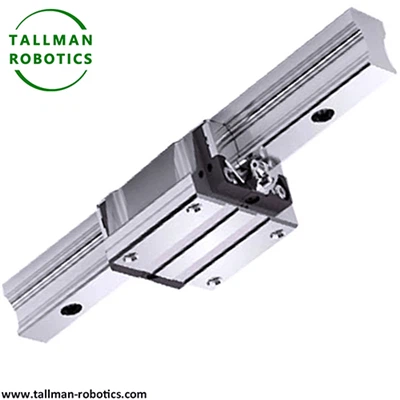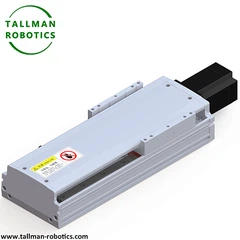


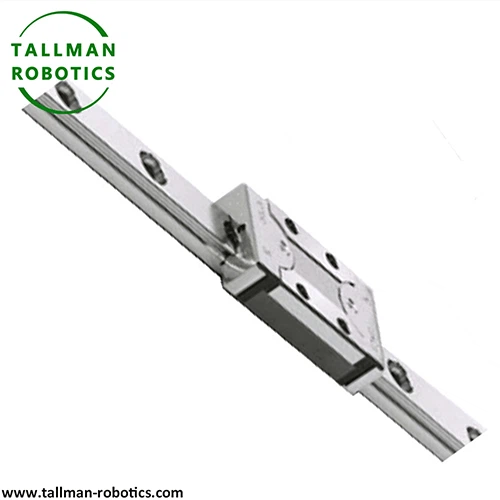


What is Linear Bearing Rail?
A linear bearing rail is a core motion component for industrial automation machinery. It delivers stable, straight linear movement for moving mechanical parts. Unlike basic sliding rails, this unit integrates bearing and rail structures for rolling motion. It also maintains consistent precision during repeated mechanical operation. Notably, it adapts to continuous working conditions of automated production equipment.
Core Structural Composition of Linear Bearing Rail of Linear Bearing Rail
First, the precision profiled rail acts as the fixed mounting base. It uses hardened bearing steel to resist deformation and abrasion. Second, the sliding bearing block matches the rail for movable connection. It carries dynamic loads during equipment operation. Third, internal rolling elements support low-friction movement. Meanwhile, built-in sealing parts block external industrial pollutants.
Finally, embedded lubrication channels sustain smooth long-term operation. Each structure works in coordination to stabilize overall motion performance. This modular layout also simplifies daily equipment assembly and maintenance.
Here In this page, we introduce series of Linear Guideways, you will see data sheet, production pictures,videos of test as follows:
Also You are welcome to watch more projects or visit our video gallery by Youtube: https://www.youtube.com/@tallmanrobotics
1.Categories of Linear Guideways:
|
Series |
MGN Miniature |
|
Block |
N Narraow Guide |
|
Size |
7, 9, 12, 15 |
|
Pictures |
|
|
Remark |
Miniature Type |

2.Model Selction Guide, Drawing and Data Sheet of Linear Guideways.
MGN Miniature: Narrow Guide Type


Frequently Asked Questions
Q1: What core role does a linear bearing rail play in automation equipment?
It provides standardized linear motion support. It stabilizes positioning accuracy and dynamic operation for all automated moving parts.
Q2: What structural design ensures its long-term industrial stability?
Hardened steel rail, enclosed rolling elements and integrated seals form a stable structure. It resists abrasion and industrial environmental interference.
Q3: Which automation equipment matches this rail most suitably?
It fits assembly machinery, packaging lines, robotic auxiliary devices and precision detection equipment for general industrial scenarios.
Q4: What motion advantages does rolling structure bring?
It reduces motion friction. It also delivers smoother linear movement and more stable repeated positioning.
Q5: Does this rail support continuous high-frequency industrial operation?
Yes. Its optimized structural and lubrication design adapts long-term, high-cycle continuous industrial automation operation.
Hot Tags: linear bearing rail, China linear bearing rail manufacturers, suppliers, factory, Guide Rails for Linear Motion, Linear Guide Rail Assembly, Bearing Track for Linear Motion, Guideway for Linear Motion, Linear Motion Guide Rails, Linear Bearing Rails