

What Is a Linear Guide?
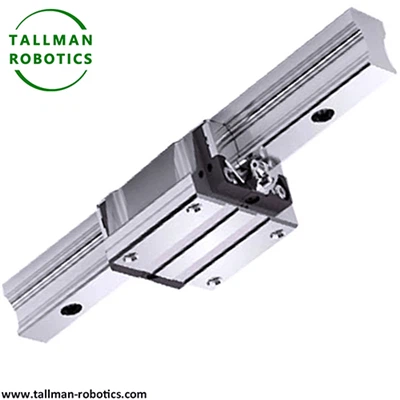
A linear guide is a standardized rolling motion component designed to support, constrain, and guide mechanical parts for accurate straight-line reciprocating movement. Different from low-precision civilian slide rails, industrial LM guides adopt a precision-matched rail-slider structure with built-in circulating rolling elements, achieving low-friction, high-rigidity, and long-cycle stable operation under complex load conditions.
Its core practical value in industrial scenarios lies in solving two major pain points of traditional sliding rails: large frictional wear and poor repeated positioning accuracy. Traditional sliding friction causes continuous metal loss and precision attenuation during long-term operation, while rolling friction linear guides maintain stable micron-level precision even after tens of thousands of hours of high-frequency operation.
How Does a Linear Guide Work? Rolling Friction & Preload Mechanism
The working principle of industrial linear guides relies on two core mechanical designs: circulating rolling friction and preload gap elimination, which fundamentally distinguish them from ordinary linear motion components.
1, Circulating Rolling Motion
Inside each guide slider, precision balls or rollers form a closed circulating system. When the slider moves along the profiled rail, rolling elements bear equipment loads and roll stably along the quenched raceway. After passing the effective stroke area, the elements return to the idle circulation zone through built-in recirculation caps, realizing unlimited continuous linear movement. This structure reduces friction resistance by more than 90% compared with traditional sliding structures, effectively cutting heat generation and component wear.
2,Preload Stiffening Mechanism
High-precision linear guides adopt a preload design to eliminate tiny assembly gaps between rolling elements and raceways. For high-speed alternating load and vibration-prone scenarios such as CNC cutting and electronic assembly, zero-gap contact effectively avoids motion jitter and positioning offset. On-site engineering experience shows that most precision instability issues in mid-to-high-end automation equipment are caused by unpreloaded guides applied in vibration working conditions.
Here In this page, we introduce series of Linear Guideways, you will see data sheet, production pictures,vedios of test as follows:
Also You are welcome to watch more projects or visit our video gallery by Youtube: https://www.youtube.com/@tallmanrobotics
1.Categories of Linear Guideways:
|
Series |
EGW Low Assembly |
|
Block |
W Flange Type |
|
Size |
15,20,25,30,35 |
|
Pictures |
|
|
Remark |
Low Profile Ball Type |

2.Model Selction Guide, Drawing and Data Sheet of Linear Guideways.
EGW Low Assembly: Low Profile Ball Type


Core Components of Linear Guide & On-Site Functional Analysis
A complete linear guide system consists of load-bearing main components and protective auxiliary parts. Each component's working state directly affects the overall operating stability, and auxiliary parts are the most overlooked cause of premature failure in actual production.
1, Profiled Rail & Bearing Block
The profiled rail serves as the fixed reference benchmark, made of high-hardness quenched steel to ensure overall rigidity and straightness. The bearing block (slider) is the moving execution unit, rigidly connected to equipment moving parts and bearing multi-directional dynamic loads. The parallelism and flatness of rail installation determine the ultimate operating accuracy of the entire equipment, which is the key acceptance index for on-site installation.
2, Rolling Elements: Balls vs Rollers
Rolling elements are the core determinants of guide load capacity and operating performance. Ball elements adopt point contact for ultra-low friction and smooth high-speed operation, suitable for light and medium load scenarios. Roller elements adopt linear contact with larger bearing area and stronger impact resistance, designed for heavy-load and high-rigidity industrial equipment.
3, Auxiliary Components (Seals & Lubrication System)
End seals prevent dust, metal debris, and moisture from invading the internal circulation structure, while integrated lubrication channels ensure continuous oil supply for rolling elements. In dusty machining and humid workshop environments, aging and failure of sealing parts are the top cause of guide noise and stuck movement, far exceeding component wear failure rates.
Frequently Asked Questions
Q1: Can different brands of linear guides be interchanged?
Not recommended. Different brands have differences in raceway tolerance, preload standards, and structural fine dimensions. Blind interchange will cause poor fitting, unsmooth operation, and accelerated wear. It is recommended to use matching models of the same brand for replacement and installation.
Q2: How to effectively extend linear guide service life?
The core lies in three points: scientific load selection to avoid long-term overload operation, standardized installation to eliminate assembly stress and deviation, and classified maintenance according to working conditions to reduce wear and corrosion. Reasonable matching and maintenance can extend the service life by more than 40% compared with random use.
Q3: What is the biggest difference between light preload and medium preload in actual use?
Light preload ensures smooth operation and zero gap without increasing excessive friction, suitable for most precision automation scenarios. Medium preload significantly improves structural rigidity and vibration resistance but increases operating resistance, only applicable to high-vibration and high-precision processing equipment.
Hot Tags: linear guide, China linear guide manufacturers, suppliers, factory, Guide Rails for Linear Motion, Linear Guide Rail Assembly, Bearing Track for Linear Motion, Guideway for Linear Motion, Linear Motion Guide Rails, Linear Bearing Rails