
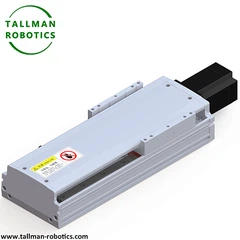


What is Linear Transfer Unit?
A linear transfer unit is a standardized modular motion device for industrial automation. It delivers accurate, straight-line material and component conveyance along fixed axes. Unlike single-purpose slides, this modular motion system unifies drive and guide structures. Thus it supports stable, continuous linear transfer for automated production workflows.
Core Structural Composition
This industrial unit adopts a compact integrated structure with key functional parts. First, rigid aluminum profile frames ensure overall structural stability. Second, precision linear guide rails guarantee smooth slider movement. Third, belt or screw drive assemblies provide steady transmission power. Fourth, movable load carriage carries workpieces and tooling. Finally, auxiliary limit components protect normal operational travel.
|
Characteristics |
Linear Transfer Unit |
Linear Module |
Conveyor Belt (Conveyor) |
|
Function focus |
precise positioning+transmission |
high-precision positioning |
continuous unidirectional conveying |
|
Speed |
High speed (0.1~5m/s) |
Low speed (≤ 1m/s) |
High speed (up to 10m/s) |
|
Load adaptability |
medium to heavy load (up to 500kg) |
light to medium load (≤ 100kg) |
light load (mainly loose materials) |
|
Control complexity |
Medium(requires positioning control) |
High (multi axis linkage) |
Low (start stop control) |
You are welcome to watch more projects or visit our video gallery by Youtube: https://www.youtube.com/@tallmanrobotics
Here, we introduce Linear Transfer Unit by Fully Sealed Screw drive linear Modules for Clean Environment from Tallman Robot,with following series TMS-CR.


Selection suggestions for Linear Transfer Unit
1). Transmission requirements:
High speed light load → synchronous belt LTU; Heavy load low-speed → Chain LTU; High precision → Screw LTU.
2). Environmental adaptability:
High dust/oil pollution → Closed chain drive; Clean environment → synchronous belt+aluminum alloy guide rail.
3). Scalability:
Need to expand workstations in the future → Choose modular design (such as Festo's electric slide system)
Frequently Asked Questions
Q1: What core advantages does a linear transfer unit have over traditional linear slides?
It features standardized modular design and excellent scalability. It also delivers more stable linear transfer and simpler on-site installation for automated production lines.
Q2: What drive types are available for linear transfer units?
It includes two mainstream drive types. Belt-driven models adapt to high-speed long-stroke transfer, while screw-driven models fit high-precision positioning transfer scenarios.
Q3: Can this unit work with industrial robots for collaborative operation?
Yes. It acts as an extended linear axis for robots. It expands robot working range and realizes automatic workpiece transfer and machine tending linkage.
Q4: What load conditions does the linear transfer unit adapt to?
It adapts to medium and light load industrial transfer scenarios. It stably carries electronic parts, packaging components and automotive small assembly parts.
Q5: Is secondary calibration required after long-term operation?
Minimal calibration is needed. Its high-rigidity frame and wear-resistant guide structure maintain long-term motion accuracy with simple daily maintenance.
Hot Tags: linear transfer unit, China linear transfer unit manufacturers, suppliers, factory, Precision Positioning, Cross Roller Stage, Linear Feed Platform, Miniature Linear Actuator, Ball Screw Driven Linear Stage, Linear Material Transfer Unit


