
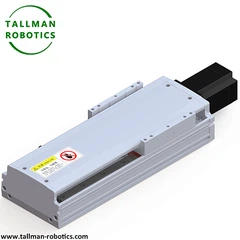


What is Multi-Axis Linear Robot?
A multi-axis linear robot is an automated positioning system that achieves programmable, multi-directional motion entirely through straight-line (translational) axes-typically X, Y, and Z, sometimes with additional linear travel axes-without relying on rotary joints. As a "robot" rather than a simple actuator assembly, it integrates a dedicated motion controller, programmability, and often an end-effector interface, functioning as a complete standalone unit for automated tasks within a rectangular work volume.
Structure
The robot comprises a base frame or structure supporting the primary linear axis, with additional axes mounted orthogonally-each carriage traversing the previous axis's rail to build up multi-directional coverage. Each axis is driven by ball screw, belt-drive, rack-and-pinion, or linear motor mechanisms paired with servo or stepper motors, guided by linear bearings or rails, with encoders on every axis providing closed-loop feedback to a central multi-axis controller that coordinates simultaneous, programmed motion paths.
Selection Considerations
Key factors include number and travel range of axes, payload capacity, positioning accuracy and repeatability, maximum speed/acceleration, drive type per axis matched to precision or speed requirements, end-effector mounting interface, and controller programmability for point-to-point or continuous-path motion.
Applications
Multi-axis linear robots are used in pick-and-place assembly, dispensing and coating, 3D printing, CNC machining support, palletizing, and material handling where precise, repeatable positioning within a rectangular work volume is required without the complexity of rotary-jointed motion.
Installation Considerations
The base structure must be installed level, square, and rigidly anchored to support combined multi-axis loads without deflection. Perpendicularity between all axes should be verified during commissioning. Cable management must accommodate simultaneous multi-axis travel without interference, and full-envelope motion accuracy should be tested and calibrated before production use.
Here, we introduce the combination options of Muti Axis Linear Modules in applications with code as follows for you to select for your projects:
You are welcome to watch more projects or visit our video gallery by Youtube: https://www.youtube.com/@tallmanrobotics
|
|
|
|
|
|
TM-FA |
TM-FB |
TM-FB2Z2 |
TM-FBZ2 |
|
|
|
|
|
|
TM-FC |
TM-FCZ |
TM-FD |
TM-FDZ |
|
|
|
|
|
|
TM-FE |
TM-FEZ |
TM-FF |
TM-FFZ |
|
|
|
|
|
|
TM-FG |
TM-FF2 |
TM-FGZ |
TM-FBZ2 |


|
Model of Each Axis |
Model of Each Axis |
Model of Each Axis |
||||||
|
X Axis |
Y Axis |
Z Axis |
X Axis |
Y Axis |
Z Axis |
X Axis |
Y Axis |
Z Axis |
|
TM100 |
TM45 |
TM135 |
TM100 |
TM100 |
TM150 |
TM135 |
TM135 |
|
|
TM100 |
TM62 |
TM135 |
TM135 |
TM100 |
TM200 |
TM100 |
TM62 |
|
|
TM100 |
TM100 |
TM45 |
TM135 |
TM135 |
TM135 |
TM200 |
TM100 |
TM100 |
|
TM100 |
TM100 |
TM62 |
TM150 |
TM62 |
TM200 |
TM135 |
TM100 |
|
|
TM100 |
TM100 |
TM100 |
TM150 |
TM100 |
TM62 |
TM200 |
TM150 |
TM100 |
|
TM135 |
TM62 |
TM150 |
TM100 |
TM100 |
TM200 |
TM150 |
TM135 |
|
|
TM135 |
TM100 |
TM62 |
TM150 |
TM135 |
TM100 |
|||
|
Model of Each Axis |
Model of Each Axis |
Model of Each Axis |
|||||||
|
X Axis |
Y Axis |
Z Axis |
X Axis |
Y Axis |
Z Axis |
X Axis |
Y Axis |
Z Axis |
|
|
TM100 |
TM45 |
TM135 |
TM100 |
TM100 |
TM150 |
TM135 |
TM135 |
||
|
TM100 |
TM62 |
TM135 |
TM135 |
TM100 |
TM200 |
TM100 |
TM62 |
||
|
TM100 |
TM100 |
TM45 |
TM135 |
TM135 |
TM135 |
TM200 |
TM100 |
TM100 |
|
|
TM100 |
TM100 |
TM62 |
TM150 |
TM62 |
TM200 |
TM135 |
TM100 |
||
|
TM100 |
TM100 |
TM100 |
TM150 |
TM100 |
TM62 |
TM200 |
TM150 |
TM100 |
|
|
TM135 |
TM62 |
TM150 |
TM100 |
TM100 |
TM200 |
TM150 |
TM135 |
||


FAQ
What's the difference between a multi-axis linear robot and a multi-axis Cartesian robot?
The terms are largely interchangeable in most industry usage, though "Cartesian robot" more explicitly references the coordinate-system naming convention, while "linear robot" emphasizes the purely translational nature of its motion.
Does a multi-axis linear robot include any rotary motion?
Generally no-its core axes are all linear, though some configurations add a supplementary rotary axis at the tool point for part orientation while retaining a linear-dominant structure.
How many axes can a multi-axis linear robot have?
Most configurations range from 2 to 4 linear axes (X, Y, Z, plus an optional secondary linear axis), though highly specialized systems may include more for extended reach or dual-gantry configurations.
What drive technology is best for high-speed multi-axis linear robots?
Linear motors and belt-drive systems generally offer the best speed and acceleration performance, while ball screws are preferred when higher precision and load capacity take priority over raw speed.
What industries commonly use multi-axis linear robots?
They are widely used in electronics manufacturing, packaging, automotive component handling, 3D printing, and laboratory automation where precise, repeatable linear positioning is central to the process.
Hot Tags: multi axis linear robot, China multi axis linear robot manufacturers, suppliers, factory, Multi Axis Linear Motion Stage, Multi Axis Linear Platform System, 3 Axis Gantry Platform, Multi Axis Linear Positioning System, Multi Axis Linear Actuator Module, Triaxial Gantry Manipulator


