


Drone detection technology
With the rapid development of drone technology, drones are beginning to move towards miniaturization, low cavitation, simplification, low technology, and low cost. With advantages such as standing high, seeing far, flying fast, traveling unobstructed, strong adaptability, and easy modification, the use of drones is becoming increasingly common. However, the widespread use of drones has also raised a series of security and privacy issues. In order to maintain public safety and protect sensitive areas, even battlefield personnel, important targets, and military locations, unmanned aerial vehicle (UAV) countermeasure systems have been widely used. UAV countermeasure systems mainly include detection and interference. To successfully interfere, the first step is to successfully detect the drone target.
Drone detection technology
Unmanned aerial vehicle (UAV) detection technology is the comprehensive use of various sensors to "discover" or "find" threat targets, utilizing the different physical properties of the target UAV (such as optical, thermal, acoustic, and magnetic properties), and measuring certain characteristics to find and identify the target UAV. At present, common unmanned aerial vehicle (UAV) detection methods include radar detection, radio spectrum detection, electro-optical detection, and acoustic detection. These detection methods have their own characteristics and applicable scenarios, and when combined in practical applications, they can provide comprehensive and accurate UAV detection capabilities.
1.1 Radar Detection
Radar detection is a common technique for detecting unmanned aerial vehicles. Using radar technology to emit radio waves and receive reflected signals, and utilizing the principle of electromagnetic wave reflection on the drone body to detect and measure the drone's position. By analyzing the reflected radar wave data, the position, velocity, and flight trajectory of the drone target can be obtained. Radar systems are widely used in the field of drone countermeasures, providing important support for defending against drone violations and aerial surveillance. Radar has the advantages of long detection range, accurate positioning, fast response speed, less susceptibility to weather, and high technological maturity. When the detectability of drones meets the resolution of radar, using radar can achieve very good reconnaissance and detection results. However, there are close range blind spots in the use of radar detection technology, and it is difficult for radar detection technology to detect unmanned aerial vehicle targets made of non-conductive materials such as plastic or transparent metal materials. When the drone is hovering or moving slowly, due to the low Doppler frequency shift, the radar is also difficult to detect the drone target.
1.2 Radio spectrum detection
Radio spectrum detection is one of the commonly used methods for detecting unmanned aerial vehicles. By monitoring and analyzing radio signals in the spectrum, the presence and location of drones can be determined. Generally speaking, during the flight of a drone, the internal flight control system and image transmission system will emit radio communication signals, navigation signals, or other characteristic signals that can be captured and recognized by detection devices. Radio spectrum detection is achieved by monitoring the unencrypted control and image transmission signals to achieve precise positioning of the target drone. Radio spectrum detection technology can be applied to monitor unmanned aerial vehicle activities in both civilian and military fields, and provide important information for countermeasures. Compared with radar detection technology, radio spectrum detection equipment is more cost-effective and can meet a wide range of defense needs. However, radio spectrum detection technology requires a significant amount of time to crack encrypted signals, which is not conducive to improving tracking efficiency. Moreover, if the drone is in autonomous cruising mode or maintains silent navigation without transmitting signals, radio spectrum detection technology will not be effective.
1.3 Photoelectric detection
Optoelectronic detection equipment can use different frequency bands to capture images of target drones. Common frequency bands include visible light and infrared, as well as thermal infrared and laser infrared. Analyzing and processing the images of these bands can detect, recognize, and track unmanned aerial vehicle targets, obtaining information such as their type and location. There are two main types of photoelectric detection technologies: visible light detection and infrared detection.
Visible light detection is the use of various imaging devices operating in the visible light band to detect the video images of target drones, identify and confirm targets, and track them. This technology is suitable for use during the day, with low equipment costs, mature related technologies, and widespread applications. The detection effect of visible light is greatly affected by weather, and its detection effect is poor when visibility is low. Infrared detection is the use of the infrared radiation difference between the background and the drone target for target monitoring. First, the target and its background images are obtained, and then a series of image processing techniques are used to detect, recognize, and track the target. In fact, all objects with temperatures above absolute zero are emitting infrared radiation, and the batteries and motors of drones generate heat during flight, providing opportunities for the application of infrared detection technology. Infrared detection is susceptible to various heat sources and sunlight interference, making it more suitable for use at night. When the distance of the drone is far, it occupies very few pixels in the detection image, making it difficult to distinguish the drone pixels from noise points. Therefore, in actual detection, it is difficult to effectively balance the missed detection rate and false alarm rate. In addition, compared with visible light detection devices, infrared detection devices have higher costs and their applications are limited to a certain extent.
The optical monitoring unmanned aerial vehicle photoelectric monitoring equipment consists of a tracking turntable and an photoelectric cabin. The photoelectric cabin is equipped with an uncooled infrared focal plane detector, a high-definition visible light camera, and an image processing board. The photoelectric tracking system completes the initial alignment of the target based on the target position information provided by the search system, and then searches for the target near the initial alignment area. During the search process, suspicious targets can be identified through automatic recognition or manual designation, and then switched to the automatic target tracking mode, so that the photoelectric sensor's visual axis and the RF interference antenna installed on the tracking turntable can align with the target in real time. Optical sensors can monitor the activities of drones in real time, which is particularly effective for achieving close range detection and outdoor environment detection.
1.4 Acoustic Detection
During the navigation process, the power unit and propeller blades of the drone emit sound waves, which can be regarded as the "audio fingerprint" of the target drone. Each drone has its unique acoustic characteristics. Soundwave detection mainly collects sound signals and compares them with the acoustic characteristics of unmanned aerial vehicles in the database to identify the information of the target unmanned aerial vehicle. Acoustic detection only passively receives acoustic signals from the air, which are not easily detected by drones, making it highly safe and cost-effective. However, acoustic detection technology cannot meet the requirements of long-range target unmanned aerial vehicle detection in use, and its applicability is limited to low-noise environments.
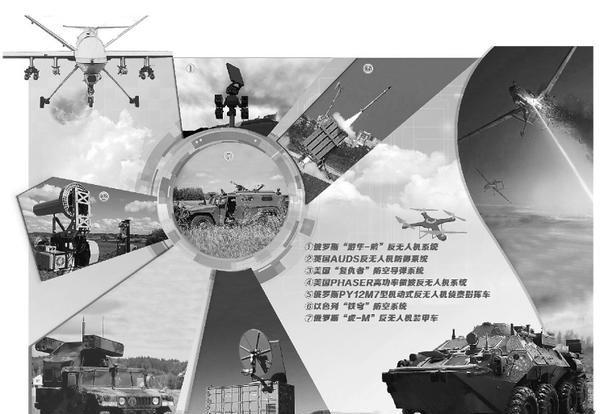
According to the analysis of the Unmanned Aerial Vehicle Research Center at Bard College in the United States, radio spectrum detection technology and radar detection technology are most commonly used, followed closely by visible light or infrared based optoelectronic detection technology, and the least used is acoustic detection technology. However, each technological means has its shortcomings, and the effect achieved by using any detection technology alone is limited. To enhance detection capability, two or more technologies can be integrated for joint detection. At present, some products or systems have integrated multiple detection technologies. For example, Israel has launched two anti drone systems, "Drone Guard" and "Drone Dome," which integrate photoelectric sensors, detection radars, and specialized electronic attack systems to detect, identify, and interfere with small drones. The "Drone Guard" system uses multiple 3D radars, including Elbit's ELM-2026D, ELM-2026B, and ELM-2026BF radars, which can detect drones at short, medium, and long distances and are supplemented by special reconnaissance and tracking algorithms; Using photoelectric sensors to identify targets; The Drone Dome is a drone detection, tracking, and jamming system equipped with RPS-42 airborne tactical surveillance radar and MEOS electro-optical sensors. It uses a C-Guard broadband signal jammer to interfere with GPS signals, preventing the drone from returning to the takeoff location. With the continuous development of drone technology, there is still an urgent need for continuous research and improvement of detection methods to address the constantly changing challenges posed by drone threats.
Bulat series unmanned aerial vehicle detectors that have been tested in the Russia Ukraine war
Russia started the research and development of unmanned aerial vehicle detection equipment earlier. For example, a detection system was proposed by Rosatom's Instrument Research Institute within the framework of the completed Army-2023 International Forum. The system was developed by NIIP experts and is known for its portability. It weighs only 2.4 kilograms and can detect drones at a distance of 4 kilometers, at all known frequencies of 600 to 6000 megahertz, and at any non-standard frequency. The 'detector' can quickly identify drone signals from various control frequencies within a distance of up to four kilometers. Built in 5000mAh battery system, capable of continuous scanning for at least four hours.
Experts from Moscow University of Communications and Information Technology have demonstrated a "pocket sized" device capable of detecting small unmanned aerial vehicles. The device weighs only 100 grams and is called Buttercup, capable of detecting drones at a distance of 100-150 meters.
According to recent reports from foreign media, on March 6, 2024, the Bulat drone detector has proven its effectiveness in the Northwest Military Region of Russia and received positive feedback from Russian soldiers. How to quickly detect and identify low, slow, and small targets like drones has become a hot issue on the battlefield. Therefore, the Russian military has been actively adopting the Bulat series drone detectors manufactured by 3mx company. These detectors are capable of promptly identifying airborne threats and taking necessary defensive measures.
At the end of March 2023, 3mx company announced the completion of the research and development of the Bulat drone detector. After rigorous testing and verification, the product fully meets military standards and is immediately put into production. The first batch of detectors were successfully produced at the end of spring of the same year and delivered to customers around the world in early June. In order to meet the needs of different customers, 3mx company will continue to conduct in-depth research and improvement on such products to ensure that it always maintains a leading position.
Last December, the third generation of Bulat drone detectors was launched. This upgrade comprehensively improved the circuit, deeply rewrote and upgraded the software, made the interface more user-friendly, and added multiple new functions. In addition, product verification services are provided to ensure that customers can purchase genuine products and avoid being harmed by counterfeit goods.
In February of this year, the fourth generation Bulat unmanned detector was developed and its performance was successfully verified in the Northwest Military Region of Russia in March. This detector can accurately detect enemy drones and issue timely warnings to Russian fighter jets, providing important intelligence support for battlefield commanders. In addition, the company has established close cooperation with the Russian Ministry of Defense, and the detector has undergone rigorous testing by the Ministry of Defense's Innovation and Development Directorate. The test results have highly satisfied the Russian military, but also pointed out the issue of its limited detection frequency range.
Although the Bulat system has not yet been officially adopted by the Russian military and has not received orders from the state for production and supply, the military has shown great interest in it and actively begun using this equipment. According to Russian media reports, as of now, the Russian military has received over 3000 Bulat drone detectors, and production is still ongoing. In order to meet the comprehensive needs of the armed forces, a large amount of similar equipment is also needed. For example, a military level formation may need to be equipped with about 20000 detectors. The first batch of fourth generation Bulat detectors will be shipped to the Northern Military Region of Russia in May this year, and the military is eagerly looking forward to it. We believe that this high-performance detector will further enhance the military's drone defense capabilities.
From the perspective of exterior design and ergonomics, the Bulat product series presents a typical walkie talkie form. It adopts a sturdy rectangular shell with precise size control of 120 x 60 x 34 millimeters, and the front panel integrates a high-definition display screen and a convenient keyboard. The whole machine weighs less than 300 grams, making it easy to carry and operate. During task execution, the detector is capable of automatically scanning designated airspace and accurately searching for wireless channels used by unmanned systems.
Once the target signal is captured, the detector can quickly identify the type of drone through its unique electromagnetic characteristics. Relevant information, including detected signal frequency, time gap, etc., will be displayed in real-time on the screen and synchronized with sound and light alarms. Additional modules are equally powerful, but easier to operate, and can work efficiently without the need for screen display.
The third-generation Bulat drone detector has diverse operating modes, which can comprehensively track and detect various drone activities, as well as focus on searching for FPV drones for precise strikes. In the latter mode, the detector can not only quickly lock onto airborne targets, but also accurately assess potential threats and take corresponding measures to ensure successful mission execution.
This detector is mainly used to detect popular models of drones produced abroad, with a maximum detection range of up to 1.5 kilometers. It is worth mentioning that this device is only used to receive electromagnetic wave signals and will not expose its position due to external radiation signals, thus ensuring the concealment and safety of the operation.
Bulat is equipped with two large capacity batteries, each with a capacity of up to 9200 mW. Each battery can provide continuous power for 5 hours, and the replacement process is fast and convenient, ensuring that the equipment can operate stably for a long time. For optional modules, although smaller capacity batteries are used, they can still provide up to 8 hours of usage time, meeting different task requirements.
According to a representative from 3mx company, the key improvement of the latest version of the Bulat drone detector is the significant expansion of the operating frequency range, from the original 300 MHz to 6200 MHz. In addition, compared to the third-generation product, the fourth generation Bulat drone detector can work independently without relying on additional functional modules. The detector operates in passive mode, capable of scanning designated airspace and searching for radio channels used by enemy equipment, effectively detecting and identifying various types of drones including FPVs. Its detection distance is affected by terrain conditions, reaching up to 1.5 kilometers in open areas, and can also maintain a detection distance of 600-800 meters in complex environments such as cities or forests.
The future value of drone detectors
As a highly mobile and unpredictable tactical threat, drones have gained widespread recognition on the modern battlefield, making the construction of an efficient drone defense system particularly crucial. Especially in the special operations environment, the large-scale and broad-spectrum application of unmanned aerial vehicle detection, interception, and suppression methods has become the only way to reduce known risks and ensure combat victory.
In the process of building an anti drone defense system, the reconnaissance and detection of aerial targets are crucial. Represented by the Bulat series products launched by 3mx company, this drone detection tool is carefully crafted to meet this demand.
Faced with the increasingly severe threat of drones, the Russian defense industry has attached great importance to and actively carried out related research and development work. Many industry leaders and emerging companies have invested heavily in developing a series of countermeasures, suppression, and interception systems. These systems have undergone rigorous testing and evaluation, and have gradually been put into mass production and equipped for the military, providing strong support for enhancing the anti drone capabilities of the troops.
The widespread adoption of anti drone protection systems has become an inevitable trend in response to the specific characteristics of current hostile actions. As a leading player in the industry, Russia's 3mx company has provided strong drone defense capabilities for the Russian military through the widespread application of its Bulat series detectors and other products. At the same time, other organizations around the world are constantly innovating and breaking through, jointly promoting the development and practical application of anti drone detection technology.


