
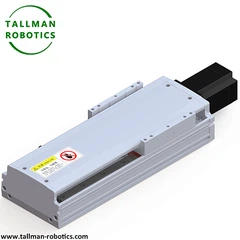


Hollow Rotary Bearing Table is a core component in the industrial field that enables stable rotation and precise positioning of workpieces. The bearing support system often uses cross roller bearings or precision ball bearings, which can simultaneously withstand axial, radial, and overturning moments, ensuring stable rotation of the table; The rotating table is made of metal material, with evenly distributed installation holes and positioning slots on the surface, which can directly fix workpieces or fixtures; The hollow channel runs through the center of the tabletop, with aperture ranging from tens of millimeters to hundreds of millimeters, and can accommodate cables, air pipes, loading and unloading mechanisms, etc., avoiding component interference during rotation.
Here In this page, we introduce series of Hollow Drive Rotary Table,
you will see data sheet, production pictures,videos of test as follows:
Also You are welcome to watch more projects or visit our video gallery by Youtube: https://www.youtube.com/@tallmanrobotics


FAQ:
1. What are the differences in load capacity between Hollow Rotary Bearing Table of different specifications?
Larger specification tables use bigger crossed roller bearings. They have thicker output tables and larger rollers. This allows higher radial, axial, and moment loads. Smaller tables suit light-duty applications only. Manufacturers provide load rating charts for each size. The chart lists static and dynamic capacities. Larger tables also exhibit higher rigidity, meaning less deflection under load. Always match the specification to your peak load, not average load. Do not extrapolate between sizes.
2. What damage does long-term overloaded operation cause to Hollow Rotary Bearing Table?
Overloading permanently deforms the bearing raceways, creating indentations (brinelling). This causes vibration and noise. Overload increases friction and heat, degrading the lubricant. The bearing develops excessive play (backlash). Positioning accuracy drops significantly. In severe cases, rollers crack or the bearing cage breaks. Seals fail due to housing distortion. The table may jam or fail catastrophically.
3. Will the load capacity of the hollow rotating platform decrease when installed vertically?
Yes, vertical installation reduces effective axial load capacity. Gravity adds a constant preload on the bearing. The upper half of the bearing carries most of the load, creating uneven distribution. Derating factors typically range from 0.7 to 0.9. The overturning moment capacity may also decrease. Check the manufacturer's manual for vertical load ratings. For heavy vertical loads, select a larger table or a bearing with a split inner ring. Do not assume horizontal ratings apply.
4. What is the difference in the impact of intermittent load and continuous load on selection?
Intermittent loads allow higher peak values because rest periods dissipate heat. You can select a smaller table if peak loads are brief. Use RMS (root mean square) load over the cycle for selection. Continuous loads require staying within rated capacity at all times. Heat builds up continuously, degrading lubricant faster.
5. What is the impact of load inertia on the start and stop of a rotating platform?
Higher inertia requires more torque for acceleration and deceleration. This increases cycle time because ramps need to be longer. High inertia causes overshoot and positioning errors. It can damage gears, couplings, or the cam indexer. Calculate the inertia ratio: load inertia divided by motor rotor inertia. Keep this ratio below 10:1 for standard servos, or below 5:1 for high precision. Use a larger motor or a gearbox to reduce effective inertia.
Hot Tags: hollow rotary bearing table, China hollow rotary bearing table manufacturers, suppliers, factory, Cam Roller Transmission Hollow Rotating Tables, Electric Rotary Stage, Electric Driven Rotating Table, Heavy Duty Hollow Shaft Rotary Platform, Hypoid Gear Hollow Shaft Actuator, Rugged Hollow Rotary Tables

