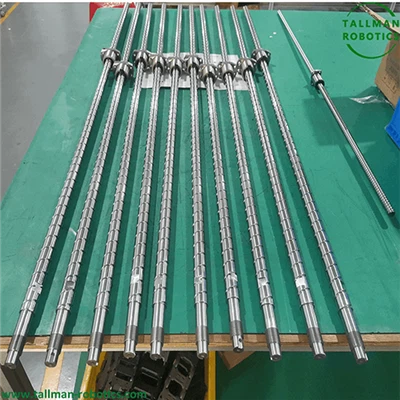


Hey there! As a ball screws supplier, I've seen firsthand how crucial it is to understand the dynamic characteristics of these nifty components. Ball screws are everywhere, from industrial machinery to high - tech aerospace applications. So, let's dive into how we can analyze their dynamic characteristics.
Why Analyzing Dynamic Characteristics Matters
Before we jump into the analysis methods, let's talk about why it's so important. Understanding the dynamic characteristics of ball screws helps in predicting their performance under different operating conditions. This means we can avoid issues like excessive vibration, premature wear, and even system failures. For example, in a high - speed CNC machine, a ball screw with poor dynamic characteristics can lead to inaccurate machining, which is a big no - no!
Key Dynamic Characteristics to Analyze
1. Natural Frequency
The natural frequency of a ball screw is like its "sweet spot" or "resonance point." When the operating frequency of the system approaches the natural frequency of the ball screw, resonance occurs. Resonance can cause excessive vibration, which not only affects the accuracy of the machine but also shortens the lifespan of the ball screw.
To analyze the natural frequency, we can use experimental methods or numerical simulations. In experimental testing, we can use a vibration sensor to measure the vibration response of the ball screw when it's excited by a known force. By analyzing the frequency spectrum of the vibration signal, we can identify the natural frequency. On the other hand, numerical simulations, such as finite element analysis (FEA), can be used to model the ball screw and calculate its natural frequency based on its material properties, geometry, and boundary conditions. You can learn more about ball screw fundamentals at Ball Screw Transmission.
2. Damping Ratio
The damping ratio is a measure of how quickly the vibrations of the ball screw decay. A higher damping ratio means that the vibrations will die out faster, which is generally desirable. Damping can come from various sources, such as the material of the ball screw, the lubrication, and the contact between the balls and the raceways.
To determine the damping ratio, we can use the logarithmic decrement method. This involves measuring the amplitude of the vibration at two consecutive peaks and then using a formula to calculate the damping ratio. Another approach is to use FEA to model the damping effects and estimate the damping ratio. A well - damped ball screw is essential for smooth and stable operation, especially in applications where precision is key, like Linear Ball Screw systems.
3. Stiffness
Stiffness is a measure of how much a ball screw resists deformation under load. A high - stiffness ball screw is less likely to deflect under load, which means better positioning accuracy. The stiffness of a ball screw depends on factors such as its diameter, lead, and the number of balls.
We can analyze the stiffness of a ball screw through theoretical calculations or experimental testing. The theoretical approach involves using equations based on the mechanics of materials to calculate the stiffness. Experimental testing, on the other hand, involves applying a known load to the ball screw and measuring the resulting deflection. This data can then be used to determine the stiffness. In Linear Actuation Ball Screw applications, high stiffness is often required to ensure precise linear motion.
Factors Affecting Dynamic Characteristics
1. Material Properties
The material of the ball screw plays a significant role in its dynamic characteristics. For example, a ball screw made of high - strength steel will have different stiffness and damping properties compared to one made of aluminum. The material's modulus of elasticity affects the stiffness, while its internal damping affects the damping ratio.
2. Geometry
The geometry of the ball screw, such as its diameter, lead, and pitch, also affects its dynamic behavior. A larger diameter ball screw generally has higher stiffness, while a smaller lead can result in higher positioning accuracy. The pitch of the ball screw affects the speed and torque requirements of the system.


3. Lubrication
Proper lubrication is crucial for the dynamic performance of ball screws. Lubrication reduces friction between the balls and the raceways, which in turn affects the damping and wear characteristics. Different types of lubricants, such as grease or oil, can have different effects on the dynamic behavior of the ball screw.
Tools and Techniques for Analysis
1. Vibration Testing Equipment
Vibration sensors, such as accelerometers, are commonly used to measure the vibration response of ball screws. These sensors can be attached to the ball screw or the machine structure, and the data they collect can be analyzed using software to determine the natural frequency, damping ratio, and other dynamic parameters.
2. Finite Element Analysis (FEA) Software
FEA software allows us to create detailed models of ball screws and simulate their dynamic behavior under different conditions. We can input the material properties, geometry, and boundary conditions of the ball screw into the software, and it will calculate the natural frequencies, mode shapes, and stress distributions. This helps us to optimize the design of the ball screw and predict its performance before it's manufactured.
Real - World Applications
Let's take a look at some real - world applications where analyzing the dynamic characteristics of ball screws is essential.
1. CNC Machining
In CNC machining, ball screws are used to control the movement of the cutting tool. Accurate positioning and smooth motion are crucial for producing high - quality parts. By analyzing the dynamic characteristics of the ball screws, we can ensure that the machine operates with minimal vibration and maximum accuracy.
2. Aerospace Industry
In the aerospace industry, ball screws are used in various applications, such as aircraft landing gear and flight control systems. The dynamic performance of these ball screws is critical for the safety and reliability of the aircraft. Analyzing their dynamic characteristics helps to ensure that they can withstand the high - speed and high - load conditions encountered in flight.
Conclusion
Analyzing the dynamic characteristics of ball screws is a complex but essential task. By understanding the key dynamic parameters, such as natural frequency, damping ratio, and stiffness, and the factors that affect them, we can optimize the design and performance of ball screws. Whether you're in the CNC machining, aerospace, or any other industry that uses ball screws, having a good grasp of their dynamic behavior can save you time, money, and headaches.
If you're in the market for high - quality ball screws or need more information about their dynamic characteristics, don't hesitate to reach out. We're here to help you find the perfect ball screw solution for your application. Let's start a conversation about your needs and see how we can work together to improve your machinery's performance.
References
- "Mechanical Design of Machine Elements and Machines: A Failure Prevention Perspective" by Robert L. Norton
- "Vibration Analysis for Engineers" by J. P. Den Hartog