

Hey there! As a supplier of Three Axis Gantries, I often get asked about the maximum load capacity of these bad boys. It's a crucial question because understanding the load capacity helps in choosing the right equipment for your specific applications. So, let's dive right in and break down what determines the maximum load capacity of a three - axis gantry.
What is a Three Axis Gantry?
First things first, for those who might not be super familiar, a Three Axis Gantry is a type of robotic system that can move in three directions - typically the X, Y, and Z axes. This allows it to perform a wide range of tasks, from pick - and - place operations in manufacturing to precise positioning in 3D printing. It's a pretty versatile piece of machinery that combines the functionality of multiple linear motion components to achieve complex movements.
Factors Affecting Load Capacity
Structural Design
The structural design of the three - axis gantry plays a huge role in determining its load capacity. The materials used for the frame, such as aluminum or steel, have different strength properties. Steel is generally stronger and can handle heavier loads, but it's also heavier. Aluminum, on the other hand, is lighter, which can be an advantage in some applications where speed is a priority, but it has a lower load - bearing capacity compared to steel.
The cross - sectional area of the frame members also matters. Larger cross - sectional areas can distribute the load more evenly, reducing stress concentrations and allowing the gantry to handle heavier loads. For example, a gantry with thick, well - designed beams will be able to support more weight than one with thin, flimsy beams.
Linear Motion Components
The linear motion components, like linear guides and ball screws, are another key factor. High - quality linear guides with a large contact area can provide better support for the load. The preload of the linear guides also affects the load capacity. A properly preloaded linear guide can handle more load without excessive deflection.
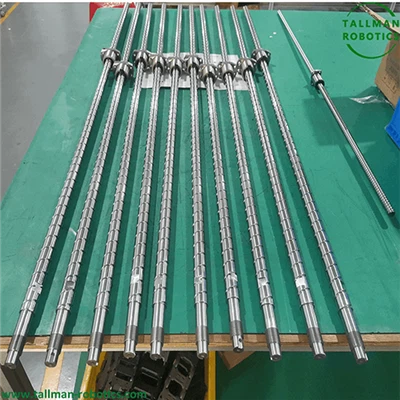
Ball screws, which are used to convert rotary motion into linear motion, have a rated load capacity. The lead of the ball screw (how far it moves per revolution) and its diameter can influence how much load it can carry. A larger - diameter ball screw with a smaller lead is generally capable of handling heavier loads.
Motor and Drive System
The motor and drive system power the movement of the three - axis gantry. The torque output of the motor determines how much force it can apply to move the load. A more powerful motor can handle heavier loads, but it also consumes more energy.
The drive system, such as a servo drive or a stepper drive, needs to be properly matched to the motor and the load. A well - tuned drive system can ensure smooth and efficient operation, even when carrying heavy loads.


Calculating the Maximum Load Capacity
Calculating the maximum load capacity of a three - axis gantry is not an exact science, but there are some general guidelines. First, you need to consider the static load capacity, which is the maximum load the gantry can support when it's not moving. This is mainly determined by the structural integrity of the frame and the linear motion components.
The dynamic load capacity, on the other hand, takes into account the forces that occur when the gantry is in motion. Acceleration, deceleration, and the inertia of the load all add to the stress on the gantry. To calculate the dynamic load capacity, you need to consider the mass of the load, the acceleration and deceleration rates, and the friction in the system.
Most manufacturers provide load capacity charts for their three - axis gantries. These charts are based on extensive testing and can give you a good starting point for determining if a particular gantry can handle your load. However, it's always a good idea to consult with an engineer or the manufacturer directly, especially if you have a unique or demanding application.
Applications and Load Capacity Requirements
Manufacturing
In manufacturing, three - axis gantries are often used for pick - and - place operations, assembly, and machining. For example, in an automotive assembly line, a gantry might be used to pick up heavy engine components and place them into the car frame. In this case, the gantry needs to have a high load capacity to handle the weight of the engine parts.
On the other hand, in a small electronics manufacturing facility, the loads might be much lighter, such as circuit boards. Here, the gantry can be designed with a lower load capacity but might focus more on speed and precision.
3D Printing
In 3D printing, the load capacity requirements are usually lower. The gantry mainly needs to move the print head and any associated equipment with precision. However, as 3D printing technology advances and larger - scale printers are developed, the load capacity requirements might increase.
Warehousing and Logistics
In warehousing and logistics, three - axis gantries are used for tasks like moving pallets of goods. These pallets can be quite heavy, so the gantry needs to have a high load capacity. Additionally, the gantry needs to be able to move quickly and efficiently to keep up with the demands of a busy warehouse.
Related Products
If you're interested in three - axis gantries, you might also want to check out some related products like Multi Axis Linear Module, Multi Axis Electric Linear Robot Actuator, Multi Axis Cartesian Robot, and XY Cartesian Gantry System. These products offer similar functionality but might be better suited for different applications.
Conclusion and Call to Action
Understanding the maximum load capacity of a three - axis gantry is essential for getting the most out of your equipment. Whether you're in manufacturing, 3D printing, or warehousing and logistics, choosing a gantry with the right load capacity can improve efficiency, productivity, and overall performance.
If you have any questions about our three - axis gantries or need help determining the right load capacity for your application, feel free to reach out. We're always happy to assist you in finding the perfect solution for your needs.
References
- Linear Motion Technology Handbook
- Robotics and Automation Engineering Textbooks