
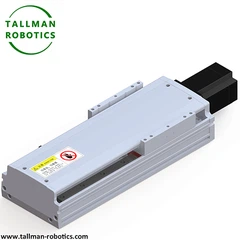


Hey there! As a supplier of Three Axis Gantries, I've seen my fair share of load - change challenges. In this blog, I'm gonna share some tips on how to deal with the load changes of a Three Axis Gantry.
Understanding Load Changes
First off, let's talk about what load changes are. Load changes in a Three Axis Gantry can happen for a variety of reasons. Maybe you're working with different sized products on the production line. For instance, one day you're handling small, light components, and the next, you've got large and heavy ones. Or perhaps there are variations in the speed at which the gantry is moving. Faster movements can sometimes result in additional dynamic loads.
It's crucial to understand that load changes can have a big impact on the performance of the Three Axis Gantry. If not properly managed, they can lead to issues like inaccurate positioning. The gantry might not reach the exact spot where it's supposed to, which can mess up the whole production process. It can also cause increased wear and tear on the components. More stress on the motors, belts, and other parts can shorten their lifespan, leading to higher maintenance costs in the long run.


Monitoring the Load
The first step in dealing with load changes is to monitor them. Installing load sensors on your Three Axis Gantry is a smart move. These sensors can provide real - time data on the amount of load the gantry is carrying. You can then use this data to make informed decisions.
There are different types of load sensors available. Strain - gauge sensors, for example, work by measuring the deformation of a material under load. They're pretty accurate and can be easily integrated into the gantry system. Another option is pressure sensors, which can be used in hydraulic or pneumatic systems if your gantry has those components.
Once you've got the sensors in place, you need to set up a monitoring system. This could be as simple as a basic data logger that records the load readings over time. Or, if you want a more advanced solution, you can use a software - based monitoring system that can analyze the data and provide alerts when the load exceeds certain thresholds. For more information on gantries and their components, you can check out Gantry Robot.
Adjusting the Control System
When you detect load changes, the next step is to adjust the control system of the Three Axis Gantry. The control system is like the brain of the gantry, and it needs to adapt to the new load conditions.
One way to do this is by adjusting the motor parameters. If the load has increased, you might need to increase the torque output of the motors. This can usually be done through the motor controller. Most modern motor controllers allow you to easily change parameters like torque limit, acceleration, and deceleration rates.
You can also adjust the motion profile of the gantry. For example, if you're carrying a heavier load, you might want to slow down the acceleration and deceleration phases. This reduces the stress on the gantry and helps maintain accuracy. Some advanced control systems can even automatically adjust the motion profile based on the load data they receive from the sensors.
For a better understanding of gantry linear motion and control systems, take a look at Gantry Linear Motion.
Choosing the Right Components
The components you use in your Three Axis Gantry play a huge role in how well it can handle load changes. When selecting motors, for example, you need to choose ones with enough power and torque to handle the maximum expected load. It's better to go a bit overboard than to have a motor that's constantly struggling under heavy loads.
Belt drives and ball screws are also important. High - quality belts with good tensile strength can withstand the additional forces caused by load changes. Similarly, precision ball screws can provide accurate and smooth linear motion even when the load varies. Make sure they are properly sized and rated for the expected loads.
Another crucial component is the frame of the gantry. A sturdy and rigid frame can help distribute the load evenly and prevent excessive vibrations. You might also consider using reinforced materials or adding additional supports if you anticipate significant load changes.
More details about Three Axis Gantries and their components can be found at Three Axis Gantry.
Maintenance and Upkeep
Regular maintenance is key to ensuring that your Three Axis Gantry can deal with load changes effectively. Make sure to lubricate the moving parts on a regular basis. This reduces friction and wear, allowing the gantry to operate smoothly even under varying loads.
Check the alignment of the components regularly. Misaligned belts, ball screws, or motors can cause uneven loads and lead to premature wear. You can use laser alignment tools to make sure everything is in the right place.
Replace worn - out components as soon as possible. A damaged belt or a worn - out bearing can have a huge impact on the performance of the gantry, especially when dealing with load changes.
Training the Operators
Your operators also play a vital role in dealing with load changes. They need to be trained to understand how load changes affect the gantry and what steps to take when they occur.
Train them on how to read the load data from the sensors and how to make simple adjustments to the control system if necessary. They should also know when to report any abnormal load conditions to the maintenance team.
Consider Upgrading to a Multi - Axis Solution
If your production processes involve frequent and significant load changes, you might want to consider upgrading to a Multi Axis Linear Robot or a Multi Axis Actuator. These systems offer more flexibility and can better handle complex load - change scenarios. They often come with advanced control systems that can automatically adjust to different loads, providing more accurate and efficient operation.
Time to Get in Touch
Dealing with load changes in a Three Axis Gantry is definitely a challenge, but with the right strategies, you can keep your gantry running smoothly. Whether you're looking for advice on component selection, need help with setting up a monitoring system, or are interested in upgrading to a multi - axis solution, we're here to help. If you're considering purchasing a Three Axis Gantry or need further assistance with your existing system, don't hesitate to reach out. Let's start a conversation and see how we can optimize your production process together.
References
- "Industrial Robotics: Theory, Modelling and Control" by Bruno Siciliano et al.
- "Linear Motion Technology Handbook"
- Technical documents and manuals from industry component manufacturers.


