
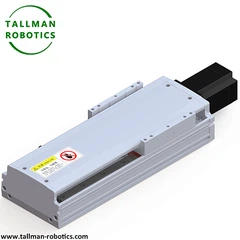


What is Multi-Axis Actuator?
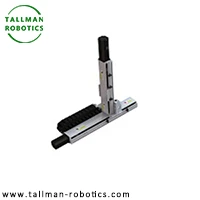
A multi-axis actuator is a motion device or assembly that provides controlled movement along or around more than one axis-combining linear and/or rotary motion capabilities within a single unit or coordinated module set-to position a payload with greater degrees of freedom than a single-axis actuator allows. It can refer to an integrated compact device (e.g., XY or XYZ stage) or a coordinated group of individual actuators working together under unified control.
Structure
The actuator typically integrates two or more motion stages-linear (ball screw, belt-drive, or linear motor) and/or rotary (servo motor with gearbox)-stacked or arranged orthogonally within a compact housing, each driven independently by its own motor and guided by linear rails, bearings, or rotary bearings. Position feedback is provided by encoders on each axis, with a central or distributed motion controller coordinating simultaneous, synchronized multi-axis movement.
Selection Considerations
Key factors include number and type of axes (linear vs. rotary), travel range or rotation angle per axis, payload capacity, positioning accuracy and repeatability, maximum speed and acceleration, drive technology per axis, and controller compatibility for coordinated multi-axis motion profiles. Combined load and moment ratings should be checked carefully since stacked axes often reduce the effective payload capacity of outer stages.
Applications
Multi-axis actuators are used in precision assembly, optical alignment, semiconductor wafer handling, robotic end-effector positioning, laboratory automation, and inspection systems where a payload must be moved or oriented across multiple degrees of freedom within a compact footprint.
Installation Considerations
The actuator assembly must be mounted on a flat, rigid, vibration-isolated surface appropriate to its precision class. Cable routing between stacked axes should accommodate full range of motion without strain or interference. Encoder calibration, backlash, and axis squareness (for orthogonal configurations) should be verified, and coordinated multi-axis motion should be tested across the full range before commissioning.
You are welcome to watch more projects or visit our video gallery by Youtube: https://www.youtube.com/@tallmanrobotics
|
|
|
|
|
|
TM-FA |
TM-FB |
TM-FB2Z2 |
TM-FBZ2 |
|
|
|
|
|
|
TM-FC |
TM-FCZ |
TM-FD |
TM-FDZ |
|
|
|
|
|
|
TM-FE |
TM-FEZ |
TM-FF |
TM-FFZ |
|
|
|
|
|
|
TM-FG |
TM-FF2 |
TM-FGZ |
TM-FBZ2 |




|
Model of Each Axis |
Model of Each Axis |
Model of Each Axis |
||||||
|
X Axis |
Y Axis |
Z Axis |
X Axis |
Y Axis |
Z Axis |
X Axis |
Y Axis |
Z Axis |
|
TM100 |
TM45 |
TM135 |
TM100 |
TM100 |
TM150 |
TM135 |
TM135 |
|
|
TM100 |
TM62 |
TM135 |
TM135 |
TM100 |
TM200 |
TM100 |
TM62 |
|
|
TM100 |
TM100 |
TM45 |
TM135 |
TM135 |
TM135 |
TM200 |
TM100 |
TM100 |
|
TM100 |
TM100 |
TM62 |
TM150 |
TM62 |
TM200 |
TM135 |
TM100 |
|
|
TM100 |
TM100 |
TM100 |
TM150 |
TM100 |
TM62 |
TM200 |
TM150 |
TM100 |
|
TM135 |
TM62 |
TM150 |
TM100 |
TM100 |
TM200 |
TM150 |
TM135 |
|
|
TM135 |
TM100 |
TM62 |
TM150 |
TM135 |
TM100 |
|||
|
Model of Each Axis |
Model of Each Axis |
Model of Each Axis |
|||||||
|
X Axis |
Y Axis |
Z Axis |
X Axis |
Y Axis |
Z Axis |
X Axis |
Y Axis |
Z Axis |
|
|
TM100 |
TM45 |
TM135 |
TM100 |
TM100 |
TM150 |
TM135 |
TM135 |
||
|
TM100 |
TM62 |
TM135 |
TM135 |
TM100 |
TM200 |
TM100 |
TM62 |
||
|
TM100 |
TM100 |
TM45 |
TM135 |
TM135 |
TM135 |
TM200 |
TM100 |
TM100 |
|
|
TM100 |
TM100 |
TM62 |
TM150 |
TM62 |
TM200 |
TM135 |
TM100 |
||
|
TM100 |
TM100 |
TM100 |
TM150 |
TM100 |
TM62 |
TM200 |
TM150 |
TM100 |
|
|
TM135 |
TM62 |
TM150 |
TM100 |
TM100 |
TM200 |
TM150 |
TM135 |
||


FAQ
What's the difference between a multi-axis actuator and a multi-axis robot?
A multi-axis actuator is generally a motion component or subsystem focused on positioning, while a multi-axis robot is a complete, programmable system often including tooling interfaces and application-specific control logic.
Can multi-axis actuators combine linear and rotary motion?
Yes, many multi-axis actuator assemblies combine linear stages with rotary stages to provide both positioning and orientation control within one integrated unit.
How does stacking axes affect payload capacity?
Each additional stacked axis adds weight and reduces the effective payload capacity of the outer stages, so combined load and moment limits should always be checked against the full assembly configuration.
What accuracy can a multi-axis actuator achieve?
Accuracy varies by drive type and stage quality, with precision ball-screw or direct-drive stages capable of micron-level accuracy, while belt-driven or lower-cost stages offer coarser but faster positioning.
What controllers are used with multi-axis actuators?
Multi-axis actuators are typically driven by dedicated multi-axis motion controllers or PLC-based systems capable of synchronized point-to-point or coordinated path control across all integrated axes.
Hot Tags: multi axis actuator, China multi axis actuator manufacturers, suppliers, factory, Multi Axis Linear Motion Stage, Multi Axis Linear Platform System, 3 Axis Gantry Platform, Multi Axis Linear Positioning System, Multi Axis Linear Actuator Module, Triaxial Gantry Manipulator


