
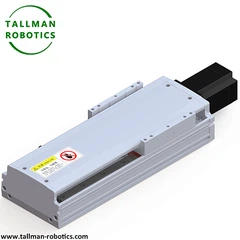


As a supplier of Three Axis Gantries, I've had the privilege of working with a wide array of control systems. These systems are the brains behind the operation of three - axis gantries, dictating how they move, position, and perform tasks. In this blog, I'll be sharing the commonly used control systems for three - axis gantries.
Programmable Logic Controllers (PLCs)
PLCs are like the workhorses of industrial control. They've been around for ages and are still one of the most popular choices for three - axis gantries. These controllers are incredibly versatile and can handle a variety of tasks, from simple movement sequences to complex automation processes.
One of the great things about PLCs is their reliability. They're designed to operate in harsh industrial environments, withstanding dust, heat, and electrical interference. This makes them perfect for three - axis gantries that are often used in manufacturing plants and warehouses.
PLCs also offer a high level of flexibility. You can program them to perform different tasks based on various inputs and conditions. For example, if you're using a three - axis gantry to pick and place items, the PLC can be programmed to adjust the gantry's movement based on the size and weight of the items.
If you want to learn more about the linear motion aspects related to gantries, check out Gantry Linear Motion. It provides some great insights into how gantries move and the technology behind it.
Motion Controllers
Motion controllers are another common choice for three - axis gantries. These controllers are specifically designed to manage the movement of motors and actuators. They can control the speed, acceleration, and position of the gantry's axes with high precision.
Motion controllers often come with advanced features like trajectory planning and servo control. Trajectory planning allows the gantry to move along a predefined path, which is useful for tasks like welding or cutting. Servo control, on the other hand, ensures that the gantry's motors respond accurately to the control signals, resulting in smooth and precise movement.
One of the advantages of motion controllers is their ability to handle complex motion profiles. They can be programmed to perform rapid movements, slow down for precise positioning, and even reverse direction quickly. This makes them ideal for applications where high - speed and high - precision movement is required.
If you're interested in multi - axis actuators, Multi Axis Actuator is a great resource. It explains how multi - axis actuators work and how they can be integrated with three - axis gantries.
PC - based Control Systems
PC - based control systems are becoming increasingly popular for three - axis gantries. These systems use a personal computer as the control platform, running specialized software to manage the gantry's operation.
One of the main benefits of PC - based control systems is their flexibility. You can easily customize the software to meet your specific requirements. For example, you can add new features, modify existing functions, or integrate the gantry with other systems.
PC - based control systems also offer a user - friendly interface. Operators can use a graphical user interface (GUI) to monitor and control the gantry's operation. This makes it easier to set up, program, and troubleshoot the gantry.
However, PC - based control systems also have some drawbacks. They can be more vulnerable to software glitches and security threats compared to PLCs and motion controllers. Additionally, they may require more technical expertise to set up and maintain.
If you're looking for an XY Cartesian gantry system, XY Cartesian Gantry System has all the details you need. It shows how these systems work and the applications they're suitable for.
Human - Machine Interfaces (HMIs)
HMIs are an important part of the control system for three - axis gantries. They provide a way for operators to interact with the gantry and monitor its operation. HMIs can be in the form of touchscreens, control panels, or even mobile devices.
With an HMI, operators can easily set up the gantry's parameters, such as speed, position, and acceleration. They can also monitor the gantry's status, including its current position, temperature, and any error messages.


HMIs make it easier for operators to control the gantry and ensure that it's operating safely and efficiently. They can also provide real - time feedback, allowing operators to make adjustments quickly if needed.
Choosing the Right Control System
When choosing a control system for a three - axis gantry, there are several factors to consider. First, you need to think about the specific requirements of your application. For example, if you need high - precision movement, a motion controller or a PC - based control system might be the best choice. If you're operating in a harsh environment, a PLC might be more suitable.
You also need to consider the cost of the control system. PLCs are generally more affordable, while motion controllers and PC - based control systems can be more expensive. However, the cost should be balanced against the benefits and the long - term performance of the system.
Another important factor is the ease of use and maintenance. You want a control system that's easy for your operators to understand and use. It should also be easy to maintain and troubleshoot, to minimize downtime.
Conclusion
In conclusion, there are several control systems commonly used for three - axis gantries, each with its own advantages and disadvantages. PLCs offer reliability and versatility, motion controllers provide high - precision movement, PC - based control systems offer flexibility and a user - friendly interface, and HMIs make it easy for operators to interact with the gantry.
If you're in the market for a three - axis gantry and need help choosing the right control system, don't hesitate to reach out. We're here to assist you in finding the best solution for your specific needs. Whether you're a small business looking for a simple pick - and - place system or a large manufacturing plant in need of a high - speed, high - precision gantry, we can provide the expertise and support you need.
References
- General knowledge from years of experience in the three - axis gantry industry.
- Information from industry - related publications and technical documents.


