

Can linear motors be used in food processing equipment?
In the dynamic landscape of food processing, the pursuit of efficiency, precision, and hygiene has always been at the forefront. As a supplier of linear motors, I am often asked whether these advanced pieces of technology can be effectively employed in food processing equipment. The short answer is a resounding yes, and in this blog post, I'll delve into the details of why linear motors are not only suitable but also a game - changer in the food processing industry.
Understanding Linear Motors
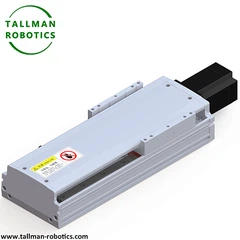
Before we explore their applications in food processing, it's essential to understand what linear motors are. A linear motor is a type of electric motor that produces a linear force instead of a rotational one. Unlike traditional rotary motors that require additional mechanisms such as belts, gears, or lead screws to convert rotational motion into linear motion, linear motors provide a direct, efficient, and precise linear movement.
There are different types of linear motors available, each with its unique characteristics. For instance, the Electromagnetic Direct Drive is known for its high - speed and high - force capabilities. It operates based on the principle of electromagnetic induction, where a magnetic field interacts with a current - carrying conductor to generate a linear force. This type of motor can achieve very high acceleration and deceleration rates, making it suitable for applications that require rapid movement.
The Linear Drive Motor is another popular option. It offers a more compact and cost - effective solution for linear motion. With its simple design and reliable performance, it can be easily integrated into various types of equipment.
The Force Controlled Smart Linear Motor is a cutting - edge technology that provides precise force control. This feature is particularly useful in applications where a specific amount of force needs to be applied, such as in food packaging or cutting operations.


Advantages of Using Linear Motors in Food Processing Equipment
Precision
Precision is crucial in food processing, whether it's portioning ingredients, filling containers, or cutting food products. Linear motors offer extremely high positioning accuracy, often within a few micrometers. This level of precision ensures that each food item is processed uniformly, resulting in consistent product quality. For example, in a food filling machine, a linear motor can precisely control the amount of liquid or solid food being dispensed into each container, reducing waste and improving the overall efficiency of the production line.
Speed
Food processing is a high - volume industry, and speed is of the essence. Linear motors can achieve much higher speeds compared to traditional mechanical systems. Their direct drive nature eliminates the need for intermediate transmission components, which reduces mechanical losses and allows for faster acceleration and deceleration. This means that food processing equipment can operate at a higher throughput, increasing the overall productivity of the factory.
Hygiene
Hygiene is a top priority in the food industry. Linear motors have a relatively simple design with fewer moving parts compared to traditional motors. This reduces the accumulation of dirt, dust, and food particles, making them easier to clean and maintain. Additionally, many linear motors can be designed with a smooth, sealed surface, which is resistant to corrosion and can withstand frequent cleaning with harsh chemicals. This helps to prevent the growth of bacteria and other microorganisms, ensuring the safety of the food products.
Flexibility
Food processing requirements can vary widely depending on the type of product being processed. Linear motors offer great flexibility in terms of motion control. They can be easily programmed to perform different types of linear movements, such as reciprocating, continuous, or intermittent motion. This allows food processing equipment to be easily adapted to different production requirements, whether it's processing different sizes and shapes of food products or changing the production speed.
Applications of Linear Motors in Food Processing Equipment
Conveyor Systems
Conveyor systems are an integral part of food processing plants. Linear motors can be used to drive conveyor belts, providing smooth and precise movement. They can easily adjust the speed of the conveyor according to the production requirements, ensuring that food products are transported at the right pace. In addition, linear motors can be used to create multiple conveyor zones with independent speed control, allowing for more complex material handling operations.
Filling and Packaging Machines
In filling and packaging machines, linear motors play a crucial role in accurately dispensing food products into containers. They can control the movement of the filling nozzles with high precision, ensuring that each container is filled to the correct level. Linear motors are also used in the sealing and labeling processes of packaging machines. They can precisely position the sealing heads and labeling devices, ensuring a tight seal and accurate labeling of the food products.
Cutting and Slicing Machines
Cutting and slicing are common operations in food processing. Linear motors can provide the necessary force and precision for these operations. They can drive the cutting blades with high speed and accuracy, ensuring clean and uniform cuts. For example, in a meat slicing machine, a linear motor can control the movement of the blade to slice the meat into thin, consistent slices.
Sorting and Inspection Systems
Sorting and inspection systems are used to separate defective or sub - standard food products from the good ones. Linear motors can be used to move the food products along the inspection line at a constant speed. They can also be used to control the movement of sensors and cameras, ensuring that each food item is thoroughly inspected. In addition, linear motors can be used to sort the food products based on their size, shape, or other characteristics, by precisely moving them to different collection bins.
Challenges and Considerations
While linear motors offer many advantages in food processing equipment, there are also some challenges and considerations that need to be addressed.
Cost
Linear motors can be more expensive than traditional motors. However, it's important to consider the long - term benefits. The increased productivity, precision, and reduced maintenance costs associated with linear motors can often offset the initial investment.
Integration
Integrating linear motors into existing food processing equipment can be a complex task. It requires careful design and engineering to ensure that the motor is compatible with the rest of the system. Additionally, proper programming and control systems need to be implemented to ensure the smooth operation of the equipment.
Safety
Safety is always a concern in industrial environments. Linear motors can generate high forces and speeds, and appropriate safety measures need to be in place to prevent accidents. This includes installing safety guards, emergency stop buttons, and proper control systems to ensure that the motor stops immediately in case of an emergency.
Conclusion
In conclusion, linear motors have significant potential in the food processing industry. Their precision, speed, hygiene, and flexibility make them an ideal choice for a wide range of food processing equipment. As a supplier of linear motors, I am confident that our products can help food processing companies improve their production efficiency, product quality, and overall competitiveness.
If you are interested in exploring the use of linear motors in your food processing equipment, I encourage you to contact us for more information. We have a team of experts who can provide you with professional advice and solutions tailored to your specific needs. Let's work together to take your food processing operations to the next level.
References
- Electromagnetic Direct Drive
- Linear Drive Motor
- Force Controlled Smart Linear Motor
- Industry reports on food processing technology and linear motor applications.