


What's up, folks! As a supplier of Intermittent Cam Indexers, I often get asked about the accuracy of these nifty devices. So, I thought I'd take some time to break it down for you and give you a clear picture of what to expect.
First off, let's understand what an Intermittent Cam Indexer is. It's a mechanical device that converts continuous rotational motion into intermittent motion. In simpler terms, it can make something turn in steps, rather than just spinning non - stop. This has a wide range of applications, from packaging machines to printing presses, and even in high - precision manufacturing processes.
Now, onto the big question: what is the accuracy of an Intermittent Cam Indexer? The accuracy of an Intermittent Cam Indexer is typically measured in several ways. One of the most important metrics is angular accuracy. This refers to how precisely the indexer can stop at the desired angular position. For high - quality indexers, the angular accuracy can be as high as ±0.01 degrees. That's incredibly precise! It means that the indexer can stop at the exact position it's supposed to, within a very small margin of error.
But angular accuracy isn't the only thing that matters. There's also repeatability. Repeatability is about how consistently the indexer can achieve the same angular position over multiple cycles. A good Intermittent Cam Indexer should have a high repeatability rate, often within ±0.005 degrees. This means that every time it makes a stop, it's going to be in almost the exact same position as the last time. This consistency is crucial in applications where precision is key, like in the production of micro - electronics or medical devices.
The accuracy of an Intermittent Cam Indexer is affected by several factors. One of the main factors is the quality of the manufacturing process. Indexers that are made with high - precision machining and high - grade materials tend to have better accuracy. For example, if the cam and the follower are not machined to very tight tolerances, it can lead to inaccuracies in the indexing motion.
Another factor is the load on the indexer. If the indexer is carrying a heavy load, it can affect its accuracy. The weight and the inertia of the load can cause the indexer to overshoot or undershoot the desired position. That's why it's important to choose an indexer that's properly sized for the load it will be carrying.
The speed at which the indexer operates also plays a role in its accuracy. Generally, the slower the indexer runs, the more accurate it will be. At high speeds, there's more vibration and mechanical stress, which can lead to errors in the indexing motion. However, modern indexers are designed to maintain a good level of accuracy even at relatively high speeds.
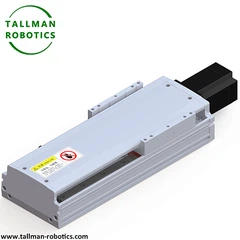
Let's talk about the different types of Intermittent Cam Indexers available out there. We have the Ultrathin Table Cam Indexer, which is great for applications where space is limited. Despite its thin design, it can still offer high accuracy and smooth operation.
Then there's the Mechanical Cam Indexer. This is a classic type of indexer that uses mechanical components to achieve the intermittent motion. It's known for its reliability and long - term accuracy.
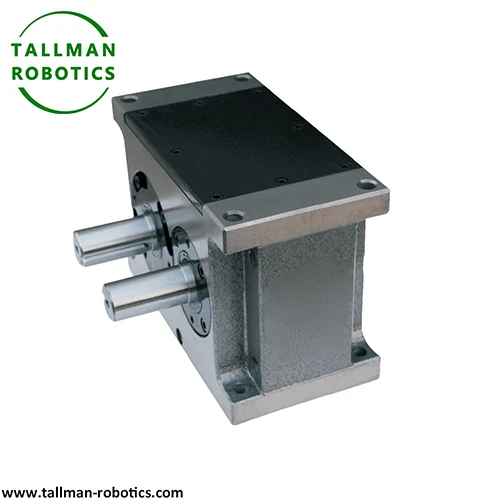
And for those who need a specific type of motion transfer, the PU Parallel Shaft Cam Indexer is a great option. It's designed to handle parallel shaft arrangements and can provide precise and efficient indexing.
So, how do you ensure that you're getting the best accuracy from your Intermittent Cam Indexer? First, make sure to do regular maintenance. Just like any other mechanical device, an indexer needs to be lubricated, and its components should be checked for wear and tear. If a part is starting to wear out, it can affect the accuracy of the indexer.
Second, choose the right indexer for your application. Consider factors like the load, the speed, and the required accuracy. If you need extremely high precision, you might want to invest in a high - end indexer. But if your application doesn't require such tight tolerances, a more economical option might be sufficient.
Finally, work closely with your supplier. As a supplier myself, I know that we can provide valuable advice on choosing the right indexer and maintaining its accuracy. We have the expertise and the experience to help you get the most out of your indexer.
If you're in the market for an Intermittent Cam Indexer, don't hesitate to reach out. We're here to answer any questions you might have and help you find the perfect solution for your needs. Whether you're a small - scale manufacturer or a large - scale industrial operation, we've got the right indexer for you.
In conclusion, the accuracy of an Intermittent Cam Indexer is a crucial factor in its performance. With high - quality manufacturing, proper sizing, and regular maintenance, you can ensure that your indexer provides the precision and reliability you need for your applications. So, if you're looking to improve the efficiency and accuracy of your production processes, an Intermittent Cam Indexer might be just what you need.
References:

- "Mechanical Design Handbook", various authors.
- Manufacturer's specifications and technical documents for Intermittent Cam Indexers.


