

The resolution of a three - axis gantry's motion control system is a critical parameter that significantly impacts the performance and applicability of the system. As a three - axis gantry supplier, understanding and being able to communicate this concept effectively to our customers is of utmost importance.
Understanding Motion Control System Resolution
Resolution in the context of a three - axis gantry's motion control system refers to the smallest increment of movement that the system can accurately achieve. It is often measured in units such as millimeters or micrometers. A high - resolution system can make very fine and precise movements, while a low - resolution system has larger step sizes between movements.
For example, if a three - axis gantry has a resolution of 0.01 mm, it means that the gantry can move in steps as small as 0.01 mm along each of its three axes (usually the X, Y, and Z axes). This level of precision is crucial in applications where accurate positioning is required, such as in semiconductor manufacturing, precision machining, and 3D printing.
Factors Affecting Resolution
Encoder Accuracy
Encoders are devices that provide feedback on the position of the gantry's axes. The accuracy of the encoder directly affects the system's resolution. High - quality encoders with a large number of pulses per revolution can detect very small changes in position, allowing for a higher resolution. For instance, an encoder with 10,000 pulses per revolution can provide more precise position information compared to one with only 1,000 pulses per revolution.
Motor and Drive System
The motor and drive system also play a significant role in determining the resolution. Stepper motors and servo motors are commonly used in three - axis gantries. Servo motors, in particular, are known for their high precision and ability to achieve fine movements. The drive system that controls the motor must be able to accurately translate the control signals into motor movements. A well - designed drive system can minimize errors and improve the overall resolution of the system.


Mechanical Design
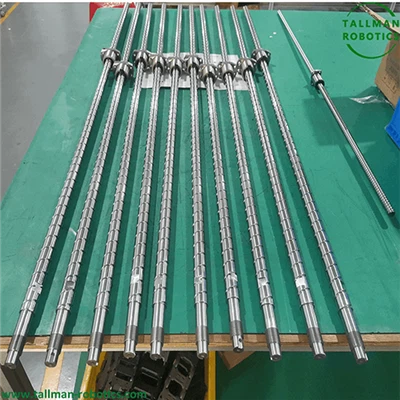
The mechanical components of the gantry, such as the linear guides, ball screws, and belts, can impact the resolution. High - quality linear guides with low friction and high rigidity can ensure smooth and precise movement. Ball screws with a fine pitch can provide more accurate linear motion, which in turn contributes to a higher resolution. Any backlash or play in the mechanical system can reduce the resolution, as it can cause inaccuracies in the position of the gantry.
Importance of Resolution in Different Applications
Semiconductor Manufacturing
In semiconductor manufacturing, the resolution of the three - axis gantry is crucial for processes such as wafer positioning and chip bonding. Semiconductor chips are extremely small, and even the slightest misalignment can lead to defective products. A high - resolution gantry can ensure that the chips are placed exactly where they need to be, improving the yield and quality of the manufacturing process.
Precision Machining
Precision machining requires accurate control of the cutting tool's position. A three - axis gantry with a high resolution can produce complex and detailed parts with tight tolerances. For example, in the aerospace industry, components such as turbine blades need to be machined with extremely high precision to ensure optimal performance. A gantry with a high resolution can achieve the necessary accuracy in these applications.
3D Printing
In 3D printing, the resolution of the gantry affects the level of detail and surface finish of the printed object. A higher resolution allows for finer layers and more detailed features. This is particularly important in applications such as jewelry making and dental model printing, where fine details are essential.
Our Three - Axis Gantry Solutions
As a three - axis gantry supplier, we offer a range of products with different resolutions to meet the diverse needs of our customers. Our gantries are equipped with high - quality encoders, servo motors, and precision mechanical components to ensure optimal performance.
We understand that different applications have different requirements for resolution. For customers in the semiconductor industry, we can provide gantries with extremely high resolutions, down to the micrometer level. These gantries are designed to meet the strictest accuracy standards and ensure reliable operation in cleanroom environments.
For customers in precision machining, our gantries offer a balance between high resolution and high - speed performance. They are capable of making rapid and precise movements, allowing for efficient machining processes.
In the field of 3D printing, our gantries can provide the necessary resolution to produce high - quality printed objects. We offer customizable solutions to meet the specific needs of different 3D printing technologies, such as Fused Deposition Modeling (FDM) and Stereolithography (SLA).
Related Products and Technologies
If you are interested in exploring more advanced multi - axis motion solutions, we recommend checking out our Multi Axis Linear System and Multi Axis Linear Robot. These products offer enhanced functionality and performance for complex applications.
Our Gantry Linear Motion solutions are also designed to provide high - precision and reliable motion control. They are suitable for a wide range of industries, including automotive, electronics, and food processing.
Contact Us for Procurement
If you are looking for a high - quality three - axis gantry with the right resolution for your application, we are here to help. Our team of experts can provide you with detailed information about our products and assist you in selecting the most suitable solution for your needs. Whether you are a small - scale manufacturer or a large - scale industrial enterprise, we can offer customized solutions to meet your specific requirements.
Please feel free to contact us to start a procurement discussion. We are committed to providing you with the best products and services to ensure the success of your projects.
References
- "Motion Control Handbook", published by Industrial Press Inc.
- "Precision Engineering: Fundamentals and Applications", by A. Shamoto and Y. Moriwaki.
- Technical documents from leading encoder, motor, and linear guide manufacturers.