
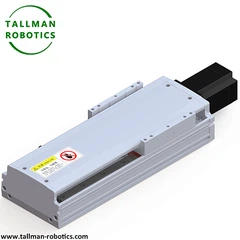


Hey there! As a supplier of Rotating Electric Grippers, I often get asked about the heat dissipation method of these nifty devices. So, I thought I'd take a few minutes to break it down for you.
First off, let's talk about why heat dissipation is important. When a rotating electric gripper is in operation, it generates heat. If this heat isn't properly dissipated, it can lead to a whole host of problems. For one, it can reduce the efficiency of the gripper. The more heat there is, the harder the motor has to work, which can lead to increased energy consumption and shorter lifespan of the components. Additionally, excessive heat can cause the materials inside the gripper to expand, which can lead to mechanical stress and potential failure.
So, how do we dissipate the heat in a rotating electric gripper? Well, there are a few different methods, and I'll go over each of them in detail.
1. Natural Convection
Natural convection is one of the simplest and most common methods of heat dissipation. It works based on the principle that hot air rises. Inside the rotating electric gripper, as the components heat up, the air around them also gets heated. This hot air rises and is replaced by cooler air from the surroundings. The gripper is designed with vents or openings that allow this air to flow in and out.


For example, we design our grippers with strategically placed vents on the housing. These vents are sized and positioned in such a way that they promote the natural flow of air. As the hot air inside the gripper rises, it escapes through the upper vents, and cooler air is drawn in through the lower vents. This continuous flow of air helps to carry away the heat generated by the motor and other components.
2. Heat Sinks
Heat sinks are another important component in the heat dissipation process. A heat sink is a passive device that is designed to absorb and dissipate heat. It usually consists of a metal block with fins or ridges that increase the surface area.
In our rotating electric grippers, we use high - quality aluminum heat sinks. Aluminum is a great choice because it has good thermal conductivity, which means it can quickly transfer heat from the source (like the motor) to the surrounding air. The fins on the heat sink increase the surface area, allowing for more efficient heat transfer.
When the motor generates heat, it is transferred to the heat sink. The large surface area of the heat sink then allows the heat to radiate into the air more effectively. This helps to keep the temperature of the motor and other components within a safe operating range.
3. Forced Air Cooling
In some cases, natural convection and heat sinks may not be enough to dissipate the heat, especially if the gripper is operating under heavy loads or for extended periods of time. That's where forced air cooling comes in.
Forced air cooling involves using a fan to blow air over the components. We integrate small fans into our rotating electric grippers to provide this forced air cooling. The fan blows air directly over the heat sink and other heat - generating components, increasing the rate of heat transfer.
The fan can be controlled based on the temperature of the gripper. For example, if the temperature starts to rise above a certain threshold, the fan can be turned on to increase the cooling effect. This ensures that the gripper stays at a safe temperature even under demanding conditions.
The Role of Other Components in Heat Dissipation
It's not just the heat dissipation methods themselves that are important. Other components in the rotating electric gripper also play a role in managing heat.
For instance, the motor design is crucial. A well - designed motor will generate less heat in the first place. We use high - efficiency motors in our grippers, which are designed to convert electrical energy into mechanical energy with minimal heat loss.
The wiring and electrical connections also need to be properly designed. Poorly designed wiring can lead to increased resistance, which in turn generates more heat. We use high - quality wires and ensure proper connections to minimize heat generation.
Related Products and Their Impact on Heat Dissipation
Now, let's talk about some related products that can work in conjunction with our rotating electric grippers and also have an impact on heat dissipation.
The Linear Leadscrew Actuator is one such product. When used with our rotating electric grippers, it can help to distribute the load more evenly. This reduces the stress on the gripper and the motor, which in turn reduces the amount of heat generated. The actuator is designed to move the gripper smoothly and efficiently, and its own heat dissipation mechanisms also contribute to the overall thermal management of the system.
The IP65 Waterproof Circular Conveyor can also be used in combination with our grippers. The conveyor can move the objects to and from the gripper, reducing the time the gripper has to hold the load. This can help to reduce the heat generated by the gripper, as it is not constantly under load.
The Linear Translation Stage is another useful product. It can be used to position the gripper accurately, which can improve the efficiency of the gripping operation. By reducing the time and effort required for the gripper to perform its task, it can also help to reduce heat generation.
Why Our Rotating Electric Grippers are a Great Choice
Our rotating electric grippers are designed with all these heat dissipation methods in mind. We've spent a lot of time and effort researching and developing the best ways to keep our grippers cool. This means that our grippers are more reliable, have a longer lifespan, and are more energy - efficient.
Whether you're using our grippers in a small - scale manufacturing operation or a large - scale industrial setting, you can be confident that they will perform well under a variety of conditions. The heat dissipation methods we've implemented ensure that the grippers can handle heavy loads and long - term use without overheating.
Let's Connect!
If you're in the market for a rotating electric gripper, I'd love to talk to you. Whether you have questions about heat dissipation, or you're just looking for more information about our products, don't hesitate to reach out. We're here to help you find the right solution for your needs.
References
- Engineering textbooks on thermal management in electrical devices
- Industry research papers on heat dissipation in robotic components


