
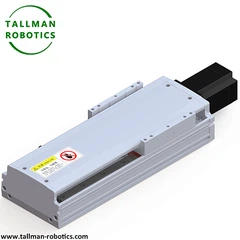


Yo, folks! As a supplier of Parallel Electric Grippers, I get asked a bunch of questions all the time. One that pops up more often than I'd expect is, "What's the minimum speed at which a parallel electric gripper can operate?" Let's dive into this topic and break it down.
First off, let's understand what a parallel electric gripper is. It's a device used in robotics and automation, mainly for grabbing, holding, and manipulating objects. These grippers are powered by electricity, which gives them a bunch of advantages over their pneumatic counterparts, like better control, precision, and the ability to adjust the gripping force.
Now, getting to the minimum operating speed. The minimum speed of a parallel electric gripper isn't a one - size - fits - all number. It depends on several factors.
Factors Affecting the Minimum Operating Speed
1. Motor Specifications
The motor is the heart of an electric gripper. Different motors have different torque - speed characteristics. A motor with a high starting torque can potentially operate at a lower minimum speed. For example, a stepper motor might have a different minimum speed range compared to a servo motor. Stepper motors are known for their ability to hold a position precisely at low speeds, but they might have limitations in terms of smooth operation at extremely slow rates. Servo motors, on the other hand, can offer more flexibility in speed control and can often operate at very low speeds while maintaining good torque.
2. Load and Friction
The weight and size of the object being gripped play a huge role. If you're trying to grip a heavy object, the gripper needs to generate enough force to hold it securely. This might require a certain minimum speed to build up the necessary torque. Also, the friction between the gripper jaws and the object matters. High - friction surfaces can allow for slower operation as the object is less likely to slip. For instance, if you're gripping a rubber - coated part, you might be able to operate the gripper at a slower speed compared to a smooth metal object.
3. Control System
The control system of the gripper is another crucial factor. A more advanced control system can regulate the motor speed more precisely, allowing for lower minimum operating speeds. For example, a gripper with closed - loop control, where the position and speed of the jaws are continuously monitored and adjusted, can achieve better performance at low speeds compared to a simple open - loop system.
Typical Minimum Operating Speeds
In general, parallel electric grippers can operate at speeds as low as a few millimeters per second. Some high - precision grippers can even go down to less than 1 mm/s. However, it's important to note that these low speeds are often achieved under specific conditions.
Let's say you're using a gripper for a delicate assembly task, like placing tiny electronic components on a circuit board. In this case, you might want to operate the gripper at a very low speed to ensure accurate positioning. The minimum speed here could be 1 - 2 mm/s. On the other hand, if you're using the gripper for a more robust handling task, like moving large metal parts in a manufacturing plant, the minimum speed might be higher, say 5 - 10 mm/s, because of the higher load and the need for faster throughput.
Applications and Their Minimum Speed Requirements
1. Electronics Manufacturing
In the electronics industry, precision is key. When handling small components like microchips or resistors, parallel electric grippers need to operate at extremely low speeds. This is because any sudden movement can cause damage to the delicate parts. A speed of 0.5 - 3 mm/s is common in this application. You can check out our Micro Rotary Servo Gripper which is great for these kinds of high - precision tasks.
2. Food Packaging
In the food industry, the grippers need to handle products gently to avoid damage. For tasks like picking up individual pieces of food or placing them in packaging, a minimum speed of 3 - 8 mm/s is often sufficient. Our Collaborative Robot Gripper can be a great choice for food packaging applications as it offers good control at low speeds.
3. Heavy - Duty Manufacturing
When dealing with large and heavy objects, the grippers need to generate enough force to hold them. This usually means a higher minimum operating speed. In heavy - duty manufacturing, speeds of 10 - 20 mm/s or more might be required. Our Tri Proof Electric Gripper is designed to handle these tough applications with ease.
How to Determine the Right Minimum Speed for Your Application
If you're trying to figure out the minimum speed for your specific application, here are some steps you can take:
- Understand the Object: Know the weight, size, and surface properties of the object you'll be gripping. This will help you estimate the force required and the potential for slippage.
- Analyze the Task: Consider the task requirements, such as precision, throughput, and safety. For example, if you need high precision, you'll likely need a lower speed.
- Test and Optimize: Conduct some tests with your gripper and the actual objects. Start at a relatively low speed and gradually increase or decrease it based on how the gripper performs.
Conclusion
So, there you have it. The minimum speed at which a parallel electric gripper can operate depends on a variety of factors, including the motor, load, friction, and control system. Different applications have different minimum speed requirements, and it's essential to choose the right speed for your specific needs.


If you're in the market for a parallel electric gripper and want to discuss the minimum speed requirements for your application, don't hesitate to reach out. We're here to help you find the perfect solution for your automation needs. Whether it's for electronics manufacturing, food packaging, or heavy - duty tasks, our range of grippers can offer the performance you're looking for. Let's start a conversation about how we can make your automation processes more efficient and reliable!
References
- Robotics and Automation Handbook
- Electric Gripper Manufacturer's Technical Documentation
- Industry Research Papers on Automation and Robotics


