
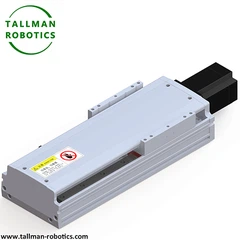


A planetary reduction drive, also known as a planetary gearbox, is a sophisticated mechanical device widely used in various industries for its high torque transmission, compact size, and efficient power transfer capabilities. As a leading supplier of planetary reduction drives, I am often asked about the materials used in their construction. In this blog post, I will delve into the key materials that make up a planetary reduction drive and explain why they are crucial for its performance and durability.
Gears
Gears are the heart of a planetary reduction drive, responsible for transmitting torque and changing the speed ratio. The most common materials used for gears are steel, cast iron, and bronze.
Steel
Steel is the most widely used material for gears due to its high strength, hardness, and wear resistance. It can withstand heavy loads and high speeds, making it ideal for applications that require high torque transmission. Different types of steel are used depending on the specific requirements of the gearbox. For example, alloy steels such as 4140 and 4340 are commonly used for high-performance gears because they offer excellent strength and toughness. These steels are often heat-treated to further enhance their properties, such as through carburizing or nitriding, which increases the surface hardness and wear resistance.
Cast Iron
Cast iron is another popular material for gears, especially in applications where cost is a major factor. It has good castability, which allows for the production of complex gear shapes with relatively low manufacturing costs. Cast iron gears are also known for their damping properties, which can help reduce noise and vibration during operation. However, cast iron is not as strong as steel, so it is typically used in applications with lower load requirements. Gray cast iron is the most common type of cast iron used for gears, while ductile cast iron can be used for applications that require higher strength and toughness.
Bronze
Bronze is a copper-based alloy that is often used for gears in applications where corrosion resistance and low friction are important. It has good self-lubricating properties, which can reduce wear and extend the lifespan of the gears. Bronze gears are commonly used in marine applications, food processing equipment, and other environments where exposure to moisture or chemicals is a concern. Phosphor bronze is a popular choice for gears due to its high strength, wear resistance, and good corrosion resistance.
Planetary Gear Carrier
The planetary gear carrier is a key component of a planetary reduction drive that holds the planetary gears in place and allows them to rotate around the sun gear. It is typically made of steel or aluminum.
Steel
Steel is a common material for planetary gear carriers because of its high strength and durability. It can withstand the high loads and forces generated during operation, ensuring the reliable performance of the gearbox. Steel carriers are often heat-treated to improve their mechanical properties, such as through quenching and tempering, which increases the hardness and toughness of the material.
Aluminum
Aluminum is a lightweight material that is increasingly being used for planetary gear carriers in applications where weight reduction is a priority. It has good corrosion resistance and thermal conductivity, which can help dissipate heat generated during operation. Aluminum carriers are typically made through casting or machining processes, and they can be anodized to further enhance their surface hardness and corrosion resistance. However, aluminum is not as strong as steel, so it may not be suitable for applications with high load requirements.
Shafts
Shafts are used to transmit torque between the input and output of the planetary reduction drive. They are typically made of steel, which offers high strength and stiffness.
Steel
Steel shafts are commonly used in planetary reduction drives because they can withstand the high torsional and bending forces generated during operation. Different types of steel are used depending on the specific requirements of the shaft. For example, carbon steel is often used for general-purpose shafts, while alloy steels such as 4140 and 4340 are used for high-performance shafts that require higher strength and toughness. Shafts are often heat-treated to improve their mechanical properties, such as through quenching and tempering, which increases the hardness and strength of the material.
Bearings
Bearings are used to support the rotating components of the planetary reduction drive and reduce friction. The most common types of bearings used in planetary reduction drives are ball bearings and roller bearings.


Ball Bearings
Ball bearings are widely used in planetary reduction drives because they offer low friction, high speed capabilities, and good radial and axial load support. They are typically made of steel, with the inner and outer races and the balls being heat-treated to improve their hardness and wear resistance. Ball bearings are available in various sizes and configurations to meet the specific requirements of the gearbox.
Roller Bearings
Roller bearings are used in applications where higher load capacities are required. They can support both radial and axial loads and are available in different types, such as cylindrical roller bearings, tapered roller bearings, and spherical roller bearings. Roller bearings are typically made of steel, and the rollers and races are heat-treated to improve their mechanical properties.
Housing
The housing of a planetary reduction drive provides protection for the internal components and helps to dissipate heat. It is typically made of cast iron, aluminum, or steel.
Cast Iron
Cast iron is a common material for gearbox housings because of its good castability, high strength, and excellent damping properties. It can help reduce noise and vibration during operation and provide a stable platform for the internal components. Cast iron housings are often used in heavy-duty applications where durability and reliability are essential.
Aluminum
Aluminum is a lightweight material that is increasingly being used for gearbox housings in applications where weight reduction is a priority. It has good corrosion resistance and thermal conductivity, which can help dissipate heat generated during operation. Aluminum housings are typically made through casting or machining processes, and they can be anodized to further enhance their surface hardness and corrosion resistance.
Steel
Steel is a strong and durable material that is used for gearbox housings in applications where high strength and rigidity are required. Steel housings are often used in heavy-duty applications such as industrial machinery and construction equipment. They can be fabricated through welding or machining processes, and they can be coated with paint or other protective coatings to prevent corrosion.
Lubricants
Lubricants play a crucial role in the performance and durability of a planetary reduction drive. They help to reduce friction, wear, and heat generation, and they also protect the internal components from corrosion. The most common types of lubricants used in planetary reduction drives are mineral oils, synthetic oils, and greases.
Mineral Oils
Mineral oils are derived from crude oil and are the most commonly used lubricants in planetary reduction drives. They offer good lubrication properties and are relatively inexpensive. Mineral oils are available in different viscosities to meet the specific requirements of the gearbox. However, they have limited oxidation resistance and may require more frequent changes compared to synthetic oils.
Synthetic Oils
Synthetic oils are chemically engineered lubricants that offer superior performance compared to mineral oils. They have better oxidation resistance, thermal stability, and viscosity index, which allows them to maintain their lubrication properties over a wider range of temperatures and operating conditions. Synthetic oils also offer better wear protection and can extend the lifespan of the gearbox. However, they are more expensive than mineral oils.
Greases
Greases are semi-solid lubricants that are used in applications where oil leakage is a concern or where continuous lubrication is not required. They are typically made by mixing a thickening agent with a base oil. Greases offer good adhesion and can provide long-term lubrication in low-speed applications. However, they have limited heat dissipation capabilities compared to oils and may require more frequent re-lubrication.
Conclusion
In conclusion, the materials used in the construction of a planetary reduction drive play a crucial role in its performance, durability, and reliability. Each component of the gearbox is carefully selected based on its specific requirements and the operating conditions of the application. As a supplier of planetary reduction drives, we understand the importance of using high-quality materials to ensure the best possible performance of our products. If you are in the market for a planetary reduction drive or have any questions about the materials used in their construction, please feel free to [initiate a contact for procurement and negotiation]. We are here to help you find the right solution for your needs.
References
- Budynas, R. G., & Nisbett, J. K. (2011). Shigley's Mechanical Engineering Design. McGraw-Hill.
- Norton, R. L. (2006). Design of Machinery: An Introduction to the Synthesis and Analysis of Mechanisms and Machines. McGraw-Hill.
- Mott, R. L. (2006). Machine Elements in Mechanical Design. Pearson Prentice Hall.


