
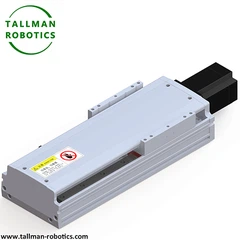


Hey there! As a supplier of Indexers With Cam Drive, I've been getting a lot of questions lately about the control methods for these nifty devices. So, I thought I'd put together this blog post to break it all down for you in a simple and easy-to-understand way.
First off, what exactly is an Indexer With Cam Drive? Well, it's a mechanical device that uses a cam to convert continuous rotary motion into intermittent motion. This is super useful in a whole bunch of industrial applications, like packaging, assembly, and machining. It allows for precise positioning and indexing, which is crucial for getting the job done right.
Now, let's dive into the control methods. There are a few different ways you can control an Indexer With Cam Drive, and each has its own pros and cons.
Manual Control
The most basic way to control an indexer is through manual control. This involves physically turning a handle or using a lever to move the indexer to the desired position. It's a simple and straightforward method, but it's also pretty limited. Manual control is best suited for applications where you don't need a high degree of precision or where you only need to make occasional adjustments.
One of the main advantages of manual control is its simplicity. There's no need for any complicated electrical or electronic components, which means it's less likely to break down. It's also relatively inexpensive, making it a good option for small-scale operations or hobbyists.
However, manual control has its drawbacks. It's not very efficient, as it requires a lot of physical effort to operate. It's also difficult to achieve consistent results, especially when you need to make multiple indexing movements. And let's face it, in today's fast-paced industrial world, manual control just doesn't cut it for most applications.
Electrical Control
Electrical control is a more advanced method of controlling an indexer with a cam drive. This involves using an electric motor to power the indexer and a control system to regulate its movement. There are several types of electrical control systems, including relay logic, programmable logic controllers (PLCs), and servo drives.
Relay Logic
Relay logic is one of the oldest and simplest forms of electrical control. It uses a series of relays to control the flow of electricity to the motor. Each relay is wired to a specific input or output, and when a certain condition is met, the relay switches on or off, sending a signal to the motor to start or stop.
Relay logic is relatively easy to understand and implement, and it's also very reliable. However, it's not very flexible, as it's difficult to change the control sequence without rewiring the entire system. It's also not well-suited for applications that require a high degree of precision.
Programmable Logic Controllers (PLCs)
PLCs are a more modern and versatile form of electrical control. They use a programmable microprocessor to control the movement of the indexer. You can program the PLC to perform a specific sequence of operations, and it will execute those operations automatically.
PLCs offer a high degree of flexibility, as you can easily change the control sequence by modifying the program. They're also very reliable and can handle complex control tasks. However, they can be more expensive than relay logic systems, and they require some programming knowledge to operate.
Servo Drives
Servo drives are the most advanced form of electrical control for indexers with cam drives. They use a servo motor and a feedback system to provide precise control of the indexer's position, speed, and torque. The feedback system continuously monitors the position of the indexer and sends a signal to the servo drive, which adjusts the motor's output to maintain the desired position.
Servo drives offer the highest level of precision and performance, making them ideal for applications that require accurate positioning and high-speed operation. They're also very flexible, as you can easily adjust the control parameters to suit different applications. However, they're also the most expensive and complex form of control, and they require a high level of technical expertise to install and operate.
Pneumatic Control
Pneumatic control is another option for controlling an indexer with a cam drive. This involves using compressed air to power the indexer and a pneumatic control system to regulate its movement. Pneumatic control systems are similar to electrical control systems, but they use air pressure instead of electricity to operate the valves and cylinders.
One of the main advantages of pneumatic control is its simplicity. Pneumatic systems are relatively easy to install and maintain, and they're also very reliable. They're also well-suited for applications that require a high degree of speed and force, as compressed air can provide a lot of power.
However, pneumatic control also has its drawbacks. It's not as precise as electrical control, as air pressure can be affected by factors like temperature and humidity. It's also not very energy-efficient, as compressed air requires a lot of energy to produce.
Hydraulic Control
Hydraulic control is similar to pneumatic control, but it uses hydraulic fluid instead of compressed air to power the indexer. Hydraulic control systems are more powerful than pneumatic systems, and they can provide a higher degree of precision and control.
One of the main advantages of hydraulic control is its high power density. Hydraulic systems can provide a lot of force in a relatively small package, making them ideal for applications that require a lot of power. They're also very reliable and can handle heavy loads.
However, hydraulic control also has its drawbacks. It's more complex and expensive than pneumatic or electrical control, as it requires a hydraulic pump, valves, and cylinders. It's also more difficult to maintain, as hydraulic fluid can be messy and can cause environmental problems if it leaks.


Conclusion
So, there you have it! Those are the main control methods for an Indexer With Cam Drive. Each method has its own advantages and disadvantages, and the best method for you will depend on your specific application requirements.
If you're looking for a simple and inexpensive solution, manual control might be the way to go. If you need more precision and flexibility, electrical control is probably your best bet. And if you need a lot of power and force, pneumatic or hydraulic control might be the right choice.
As a supplier of Indexers With Cam Drive, I can help you choose the right control method for your application. I have a wide range of products to choose from, including Rotary Cam Indexer, Rigid Cam Indexing Unit, Repeatable Cam Indexing Device, Globoidal Cam Indexer, and Flange Shaft Cam Indexer.
If you're interested in learning more about our products or have any questions about control methods, don't hesitate to contact me. I'd be happy to help you find the perfect solution for your needs.
References
- Machinery's Handbook, 31st Edition, Industrial Press Inc.
- Mechatronics: An Integrated Approach, by David Crolla.


