
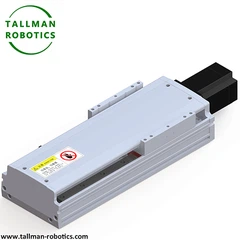


Linear electric cylinders are a crucial component in many industrial applications, offering precise control and efficient operation. As a supplier of linear electric cylinders, I am excited to delve into how these devices work, their benefits, and how they can meet your industrial needs.
Basic Structure and Components
Linear electric cylinders are designed to convert electrical energy into linear motion. At the heart of a linear electric cylinder is an electric motor. This motor can be a servo motor or a stepper motor, depending on the specific requirements of the application. The motor is connected to a drive mechanism, which is responsible for translating the rotational motion of the motor into linear motion.
One common drive mechanism is the ball screw. A ball screw consists of a screw shaft and a nut that contains ball bearings. As the motor rotates the screw shaft, the ball bearings in the nut roll along the threads of the screw, causing the nut to move linearly along the shaft. This linear motion is then transferred to the actuator rod, which extends or retracts as the nut moves.
Another type of drive mechanism is the belt drive. In a belt-driven linear electric cylinder, the motor drives a pulley, which is connected to a belt. The belt is attached to the actuator rod, and as the pulley rotates, the belt moves, causing the actuator rod to move linearly.
Working Principle
The working principle of a linear electric cylinder can be understood by considering the interaction between the motor, drive mechanism, and control system. When an electrical signal is sent to the motor, it starts to rotate. The rotation of the motor is then transferred to the drive mechanism, which converts it into linear motion.
The control system plays a crucial role in the operation of a linear electric cylinder. It allows the user to precisely control the speed, position, and force of the actuator rod. For example, in a servo electric cylinder, the control system continuously monitors the position of the actuator rod and adjusts the motor's output to ensure that the rod moves to the desired position accurately.


Advantages of Linear Electric Cylinders
Linear electric cylinders offer several advantages over traditional pneumatic or hydraulic cylinders. One of the main advantages is their high precision. Electric cylinders can achieve very accurate positioning, with repeatability in the range of a few micrometers. This makes them ideal for applications that require precise control, such as semiconductor manufacturing, robotics, and medical equipment.
Another advantage is their energy efficiency. Electric cylinders only consume energy when they are in motion, unlike pneumatic and hydraulic cylinders, which require a continuous supply of compressed air or hydraulic fluid. This can result in significant energy savings over time.
Linear electric cylinders also offer better control and flexibility. They can be easily programmed to perform complex motion profiles, such as variable speed, acceleration, and deceleration. This makes them suitable for a wide range of applications, from simple pick-and-place operations to more complex automated processes.
Applications of Linear Electric Cylinders
Linear electric cylinders are used in a variety of industries and applications. In the manufacturing industry, they are used for tasks such as assembly, material handling, and packaging. For example, in an assembly line, linear electric cylinders can be used to precisely position components and perform tasks such as screwing, riveting, and welding.
In the automotive industry, linear electric cylinders are used in vehicle manufacturing processes, such as body assembly and paint spraying. They can also be used in automotive testing equipment to simulate various driving conditions.
In the medical industry, linear electric cylinders are used in medical devices such as surgical robots, patient positioning systems, and diagnostic equipment. Their high precision and reliability make them essential for ensuring the safety and effectiveness of these devices.
Types of Linear Electric Cylinders
There are several types of linear electric cylinders available on the market, each with its own features and applications.
- Electric Linear Cylinder: This is the most common type of linear electric cylinder. It typically consists of a motor, a ball screw or belt drive, and an actuator rod. Electric linear cylinders are available in various sizes and load capacities, making them suitable for a wide range of applications.
- Linear Electric Drive: A linear electric drive is a more advanced type of linear electric cylinder that uses a linear motor. Linear motors offer several advantages over traditional rotary motors, such as higher speed, acceleration, and precision. They are often used in high-performance applications, such as semiconductor manufacturing and high-speed automation.
- Electric Cylinder: This term is often used interchangeably with electric linear cylinder. Electric cylinders can be either rod-style or rodless, depending on the design. Rod-style electric cylinders have an actuator rod that extends and retracts, while rodless electric cylinders use a carriage that moves along a guide rail.
- Electric Rod Actuator: An electric rod actuator is a type of linear electric cylinder that is designed for applications that require a long stroke length. It typically consists of a motor, a ball screw, and an actuator rod that can extend up to several meters.
- Servo Electric Cylinder: A servo electric cylinder uses a servo motor to provide precise control of the actuator rod. Servo motors are capable of high torque and speed, and they can be easily programmed to perform complex motion profiles. Servo electric cylinders are often used in applications that require high precision and dynamic performance, such as robotics and automation.
Selection Considerations
When selecting a linear electric cylinder for your application, there are several factors to consider.
- Load Capacity: The load capacity of the linear electric cylinder is the maximum force that it can exert. It is important to choose a cylinder with a load capacity that is sufficient for your application.
- Stroke Length: The stroke length is the maximum distance that the actuator rod can extend. You need to choose a cylinder with a stroke length that is appropriate for your application.
- Speed and Acceleration: The speed and acceleration of the linear electric cylinder determine how quickly it can move the load. You need to choose a cylinder with a speed and acceleration that are suitable for your application.
- Precision and Repeatability: The precision and repeatability of the linear electric cylinder are important for applications that require accurate positioning. You need to choose a cylinder with a high level of precision and repeatability.
- Environment: The environment in which the linear electric cylinder will be used is also an important consideration. For example, if the cylinder will be used in a dirty or dusty environment, you need to choose a cylinder that is protected against contamination.
Conclusion
Linear electric cylinders are a versatile and efficient solution for a wide range of industrial applications. Their high precision, energy efficiency, and flexibility make them an ideal choice for applications that require precise control and reliable operation. As a supplier of linear electric cylinders, we are committed to providing our customers with high-quality products and excellent customer service.
If you are interested in learning more about our linear electric cylinders or have any questions about how they can be used in your application, please feel free to contact us. We would be happy to discuss your requirements and help you choose the right product for your needs.
References
- "Linear Motion Technology Handbook", published by various industry experts.
- Manufacturer's technical documentation for linear electric cylinders.


