
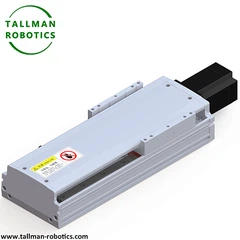


Circular Conveyor Module is a specially designed mechanical component or system primarily used for achieving continuous circular, arc-shaped transportation of materials, products, or components in industrial automation, manufacturing, or logistics processes.
Circular Conveyor Module is a modular designed circular material conveying system that achieves continuous circulation, precise positioning, and process integration of items through a programmable closed-loop track. It is the core component of flexible production lines and automated logistics systems.
About our Circular Conveyor Lines, you can see categories, production pictures,videos of test as follows:
|
Chain Drive Circular Conveyor |
|
|
|
|
Belt Drive Circular Conveyor |
|
|
|
|
Rectangle Circular Conveyor |
|
|
|
|
Oval Circular Conveyor |
|
|
|
|
Vertical Circular Conveyor |
|
|
|
|
Dust Proof Circular Conveyor |
|
|
|
|
IP65 Waterproof Circular Conveyor |
|
|
|
|
Ring Circular Conveyor System |
|
|
|


Also You are welcome to watch more projects or visit our video gallery by Youtube: https://www.youtube.com/@tallmanrobotics
Packing and Delivery for Circular Conveyor Systems:


Circular Conveyor Module | Closed-Loop Circulating Motion Unit for Industrial Automation
1. Working Principle of Circular Conveyor Module
Circular conveyor module forms a closed-loop circulating conveying system for automated production. First, precision arc rails and linear rails splice into integrated loop tracks. Then, servo drive units power internal transmission components to push carriage movement. Thus, the circular conveyor module supports continuous cyclic workpiece transportation. Meanwhile, integrated positioning structures stabilize carriage stop and docking actions. This closed-loop layout realizes uninterrupted multi-station circular conveying circulation.
2. Core Technical Features of Circular Conveyor Module
Modular circular conveyor unit supports flexible oval and rectangular track layouts. Besides, precision circular conveyor system maintains stable low-vibration cyclic motion status. Furthermore, enclosed circular conveyor rail structure blocks workshop dust and debris. In addition, synchronous-driven circular conveyor carriage ensures consistent motion synchronization. Durable circular conveying module adapts to long-cycle continuous automated operation scenarios.
3. Structural Composition of Circular Conveyor Module
Standard circular conveyor module includes precision circular guide rails and movable carriages. It also equips synchronous transmission belts and dedicated servo drive assemblies. Moreover, built-in positioning sensors provide real-time motion feedback signals. All structural parts adopt modular assembly for quick equipment integration. This integrated design simplifies layout deployment for automated circulating production lines.
4. Practical Industrial Application Case
An electronic component assembly line adopts standard circular conveyor module for station circulation. The circular conveyor unit carries workpieces to complete looping assembly and testing processes. It keeps steady docking precision during repeated cyclic station switching. Additionally, the compact circular conveyor layout saves production floor space effectively. It delivers reliable circulating conveying performance for high-frequency automated assembly procedures.
FAQ:
1.How long does it take for on-site installation?
The complete on-site installation process typically requires 15 to 22 working days, broken down into three distinct phases.
Foundation preparation takes 3 to 5 days. During this phase, technicians prepare the concrete base with proper leveling and anchor bolt placement. They must allow adequate curing time before proceeding to mechanical installation.
Mechanical installation requires 7 to 10 days. This includes positioning and aligning the main equipment, securing all mounting bolts to specified torque values, connecting auxiliary components, and performing initial alignment checks. Precision alignment of critical components demands careful attention during this stage.
Electrical debugging spans 5 to 7 days. Technicians complete all wiring connections, verify power supply compatibility, configure control systems, and conduct functional testing. This phase includes I/O checks, parameter tuning, safety device verification, and trial operation under no-load conditions before proceeding to full-load testing.
Several factors can affect this timeline, including equipment complexity, site accessibility, and the availability of skilled personnel. Proper planning and coordination between mechanical and electrical teams help ensure the installation stays on schedule.
2. Do you need specialized installation tools?
Yes, proper installation requires specialized precision tools.
Laser collimator serves as the primary alignment tool for precision equipment. It provides real-time visual feedback of alignment status with micron-level accuracy. This tool enables technicians to detect misalignment quickly and achieve proper shaft and component alignment.
Torque wrench is essential for fastening bolts to manufacturer specifications. Different bolts require specific torque values ranging from small M6 bolts to large anchor bolts. Using a torque wrench prevents both under-tightening, which causes loosening during operation, and over-tightening, which can damage threads or distort components.
Precision level with 0.02 mm/m accuracy ensures proper horizontal and vertical alignment. Technicians place the level on reference surfaces to verify flatness and parallelism across the equipment base.
Additional necessary tools include dial indicators for measuring runout and deflection, feeler gauges for checking gaps, hydraulic pullers for component installation, and infrared thermometers for monitoring temperature during trial operation.
Having these specialized tools available before starting installation significantly reduces setup time and ensures the equipment operates within design specifications.
For further Technical parameters, Industries, Tec labrary, Projects, News, please check www.tallman-robotics.com or Connect with TallMan Robotics: YouTube · TikTok · Facebook · LinkedIn
Hot Tags: circular conveyor modules, China circular conveyor modules manufacturers, suppliers, factory, Circular Oval Conveyor, Belt Driven Loop Conveyor, Circular Conveyor Sections, Vertical Circular Transport Conveyor, Circular Conveyor Units, Belt Drive Circular Conveyor


