Linear Handling System

Linear Handling System

Details
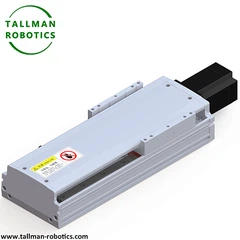
Linear Handling System is an integrated automated material handling solution that achieves precise positioning, gripping, movement, and placement of workpieces or products on the production line through linear motion mechanisms (such as rails, modules, and drive units) and control systems. Its core goal is to replace manual or traditional conveying equipment, improve production efficiency, flexibility, and accuracy, and be suitable for fast-paced industrial automation scenarios.
Category
Ball Screw Linear Modules
Share to
Send Inquiry
Description
Technical Parameters

Linear Handling System is an integrated automated material handling solution that achieves precise positioning, gripping, movement, and placement of workpieces or products on the production line through linear motion mechanisms (such as rails, modules, and drive units) and control systems. Its core goal is to replace manual or traditional conveying equipment, improve production efficiency, flexibility, and accuracy, and be suitable for fast-paced industrial automation scenarios.


Linear Handling System is a system that uses linear motion as its core trajectory to achieve automated handling, conveying, positioning, and circulation of materials, workpieces, or loads. It is widely used in industrial automation production lines, logistics warehousing, precision manufacturing, and other scenarios, and is a key link connecting different processes, workstations, or equipment.


Core components and functions of Linear Handling System

The linear handling system is usually a modular combination system, with core components including:

Drive unit: provides power, such as servo motors, stepper motors, pneumatic/hydraulic drive devices, etc., to control the speed and direction of motion;

Transmission and guidance components: such as linear modules, linear guides, ball screws, synchronous belts or chain transmission mechanisms, to ensure stable movement of loads along linear trajectories;

Carrying and transferring devices: such as transfer platforms, sliders, mechanical grippers, or pallets, which directly contact and fix the load;

Control system: Through PLC, motion controller, or industrial robot system, programming and linkage control of handling path, speed, and positioning points are achieved;

Auxiliary functional components: such as sensors (for position detection, load recognition), safety protection devices (such as emergency stop switches, protective barriers), dust/dirt prevention structures, etc., to enhance system safety and reliability.

Its core function is to efficiently and accurately transfer the load from point A along a straight line (or an approximate straight path) to target positions such as point B and point C. It can cooperate with other devices to complete composite actions such as grabbing, placing, and flipping, and supports single station round-trip or multi station continuous flow.


Typical application scenarios of Linear Handling System

Automotive manufacturing industry: linear handling and positioning of components between assembly stations (such as the transfer of car doors and engine parts);

Electronic industry: precise transfer of PCB boards and display screens between inspection, soldering, packaging and other processes;

Logistics warehousing: straight-line handling of materials between shelves (in conjunction with stacker cranes for storage and retrieval);

Medical devices: Automated linear transfer and positioning of laboratory samples and drugs;

Food packaging: The step-by-step handling of packaging boxes between filling, sealing, labeling, and other workstations.


You are welcome to watch more projects or visit our video gallery by Youtube: https://www.youtube.com/@tallmanrobotics


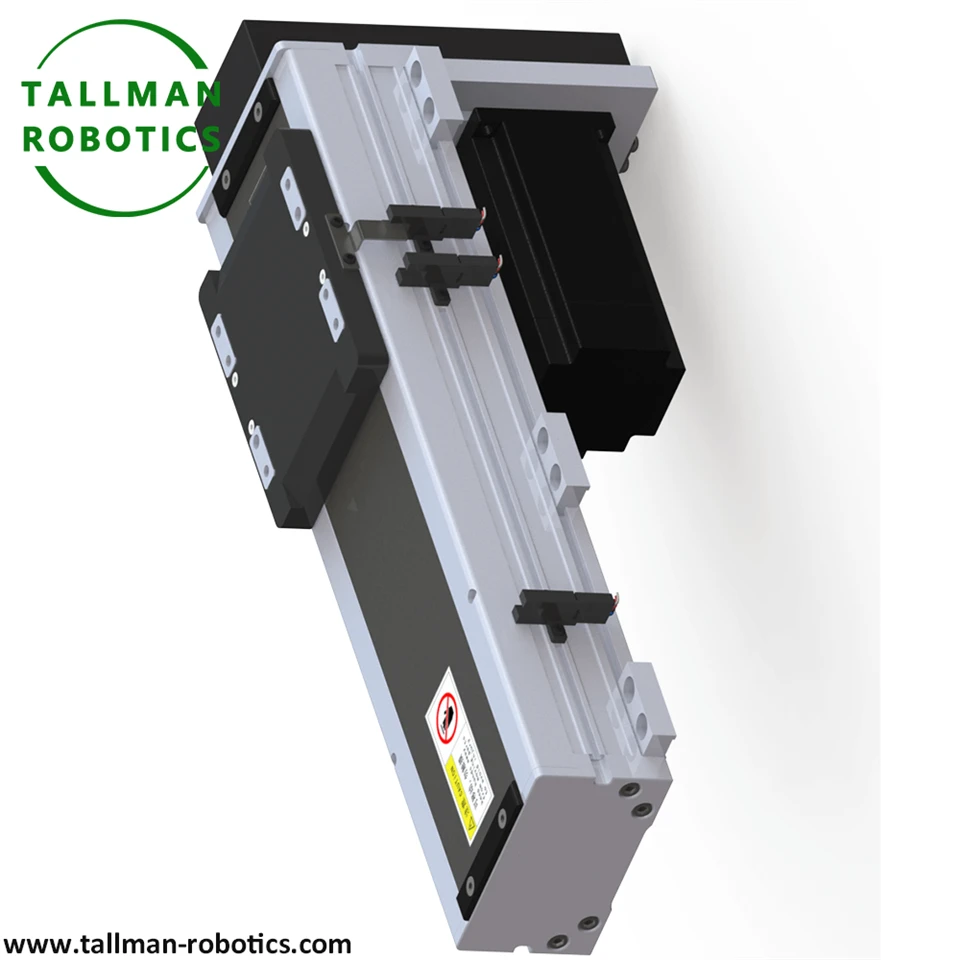
Here, we introduce Linear Handling System by Fully Sealed Screw drive linear Modules for Clean Environment from Tallman Robot,with following series TMS-CR.

102

79

81


31
32
33
34
35
36
37
38


key features of Linear Handling System

Flexibility and scalability: It can be spliced into straight paths of different lengths according to needs, supporting single track, double track or multi track combinations, and adapting to different site layouts;

Balance between accuracy and efficiency: It can meet the positioning requirements of ± 0.1mm level in precision manufacturing (such as electronic component handling), as well as achieve high-speed continuous conveying in logistics scenarios (such as material flow of tens of meters per minute);

Multi functional integration: It can not only complete simple "handling", but also integrate additional actions such as sorting, flipping, lifting (in conjunction with vertical axis), adapting to complex process connections;

Automated linkage: It can seamlessly integrate with robots, conveyor belts, processing equipment, etc., and achieve unmanned operation throughout the entire process through the control system.


Differences from Similar Systems

Compared with Conveyor System, Linear Conveyor System focuses more on "precise positioning and handling" rather than simply "continuous conveying", suitable for scenarios that require precise stopping, grasping or processing in the middle (such as workpiece positioning and placement on assembly lines), while Conveyor System is more inclined towards continuous flow of large quantities and long distances (such as logistics sorting lines);

Compared with the Linear Transfer Unit, the Linear Transfer System is an "integrated system", while the Linear Transfer Unit is a single functional component (which can be part of the system). The former includes complete modules such as control and sensing, while Linear Handling System is only responsible for local transfer actions;

Compared with the Robotic Handling System, the former has a "straight trajectory" as its core and a more fixed motion path, making it suitable for rule-based and highly repetitive handling; The latter (such as multi axis robots) can achieve complex spatial trajectories, but at a higher cost, while linear handling systems are more cost-effective in linear scenarios.


In summary, Linear Handling System provides an efficient, flexible, and customizable automation solution for material handling on linear trajectories by integrating drive, transmission, control, and auxiliary functions. It is the core equipment for achieving process connection and improving flow efficiency in industrial production and logistics systems. Linear Handling System achieves more precise, flexible, and efficient material handling capabilities than traditional conveying equipment through standardized modules and intelligent control, and is a core component of Industry 4.0 smart factories.


Hot Tags: linear handling system, China linear handling system manufacturers, suppliers, factory, Automated Linear System, Crossed Roller Stage, Mechanical Stage, Motorized Lead Screw Assembly, Repeatable Positioning, Ball Screw Driven Linear Stage

Send Inquiry
Contact us

You can either contact us via phone, email or online form below. Our specialist will contact you back shortly.

Contact now!