
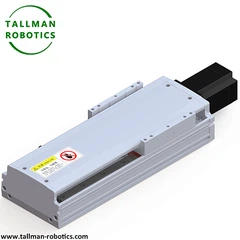


What is Linear Gantry Robot?
A linear gantry robot is an automated positioning system that uses purely linear (straight-line) motion axes-arranged in an overhead bridge or frame configuration-to move an end-effector across a defined work envelope, without rotary joints. The term "linear" emphasizes that all axes achieve motion through translational (sliding) movement along guide rails, distinguishing it from articulated robots that rely on rotary joints for positioning.
Structure
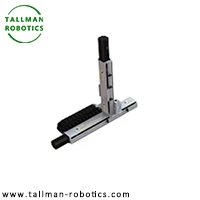
The robot consists of a rigid overhead frame supporting parallel rails for the primary (X) axis, a bridge or carriage spanning the rails that carries the secondary (Y) axis, and typically a vertical (Z) axis mounted on the carriage for up-down tool movement. Each axis is driven by rack-and-pinion, ball screw, belt-drive, or linear motor mechanisms paired with servo motors, guided along linear bearings or rails, with encoders on each axis providing closed-loop feedback to a central motion controller.
Selection Considerations
Key factors include travel range per axis, payload capacity, positioning accuracy and repeatability, maximum speed and acceleration, drive type (rack-pinion for long travel/high thrust, ball screw for precision, linear motor for high dynamics), and structural rigidity to minimize deflection under load across extended spans. Multi-axis synchronization requirements should be verified for wide-span applications requiring dual-drive gantry configurations.
Applications
Linear gantry robots are used in CNC machining, palletizing, large-format 3D printing, material handling, welding, and pick-and-place operations where extended travel range, high payload capacity, and precise straight-line multi-axis coordination are required across large work areas.
Installation Considerations
The overhead frame and rail structure must be installed level, square, and rigidly anchored to prevent deflection or misalignment under dynamic loads. Rail parallelism should be verified across the full travel length, and dual-drive synchronization (if applicable) should be tuned and tested. Cable management systems must be properly routed to prevent interference, with full-axis motion testing confirming smooth, accurate positioning before production use.
You are welcome to watch more projects or visit our video gallery by Youtube: https://www.youtube.com/@tallmanrobotics
|
|
|
|
|
|
TM-FA |
TM-FB |
TM-FB2Z2 |
TM-FBZ2 |
|
|
|
|
|
|
TM-FC |
TM-FCZ |
TM-FD |
TM-FDZ |
|
|
|
|
|
|
TM-FE |
TM-FEZ |
TM-FF |
TM-FFZ |
|
|
|
|
|
|
TM-FG |
TM-FF2 |
TM-FGZ |
TM-FBZ2 |




|
Model of Each Axis |
Model of Each Axis |
Model of Each Axis |
||||||
|
X Axis |
Y Axis |
Z Axis |
X Axis |
Y Axis |
Z Axis |
X Axis |
Y Axis |
Z Axis |
|
TM100 |
TM45 |
TM135 |
TM100 |
TM100 |
TM150 |
TM135 |
TM135 |
|
|
TM100 |
TM62 |
TM135 |
TM135 |
TM100 |
TM200 |
TM100 |
TM62 |
|
|
TM100 |
TM100 |
TM45 |
TM135 |
TM135 |
TM135 |
TM200 |
TM100 |
TM100 |
|
TM100 |
TM100 |
TM62 |
TM150 |
TM62 |
TM200 |
TM135 |
TM100 |
|
|
TM100 |
TM100 |
TM100 |
TM150 |
TM100 |
TM62 |
TM200 |
TM150 |
TM100 |
|
TM135 |
TM62 |
TM150 |
TM100 |
TM100 |
TM200 |
TM150 |
TM135 |
|
|
TM135 |
TM100 |
TM62 |
TM150 |
TM135 |
TM100 |
|||
|
Model of Each Axis |
Model of Each Axis |
Model of Each Axis |
|||||||
|
X Axis |
Y Axis |
Z Axis |
X Axis |
Y Axis |
Z Axis |
X Axis |
Y Axis |
Z Axis |
|
|
TM100 |
TM45 |
TM135 |
TM100 |
TM100 |
TM150 |
TM135 |
TM135 |
||
|
TM100 |
TM62 |
TM135 |
TM135 |
TM100 |
TM200 |
TM100 |
TM62 |
||
|
TM100 |
TM100 |
TM45 |
TM135 |
TM135 |
TM135 |
TM200 |
TM100 |
TM100 |
|
|
TM100 |
TM100 |
TM62 |
TM150 |
TM62 |
TM200 |
TM135 |
TM100 |
||
|
TM100 |
TM100 |
TM100 |
TM150 |
TM100 |
TM62 |
TM200 |
TM150 |
TM100 |
|
|
TM135 |
TM62 |
TM150 |
TM100 |
TM100 |
TM200 |
TM150 |
TM135 |
||


FAQ
What's the difference between a linear gantry robot and an articulated robot?
A linear gantry robot moves exclusively along straight-line axes for simpler, more accurate positioning, while an articulated robot uses rotary joints for greater flexibility and reach in complex, non-linear motion paths.
What drive types are commonly used in linear gantry robots?
Rack-and-pinion drives suit long travel and high thrust applications, ball screws offer high precision for shorter to medium spans, and linear motors provide high speed and dynamics for demanding cycle times.
How large can a linear gantry robot's work envelope be?
Work envelopes can range from small benchtop units to very large industrial spans covering entire production lines, since linear rail and drive technology scales well with modular rack segments and extended guide rails.
Do linear gantry robots require dual-motor drive on wide spans?
Yes, wide-span axes often use dual-motor synchronized drives on both sides of the bridge to prevent racking or skew that a single-sided drive would introduce over long distances.
What maintenance is required for a linear gantry robot?
Routine maintenance includes lubrication of rails, screws, or racks, inspection of belts or couplings for wear, encoder and limit switch checks, and periodic verification of backlash and positioning accuracy.
Hot Tags: linear gantry robot, China linear gantry robot manufacturers, suppliers, factory, Multi Axis Linear Motion Stage, Multi Axis Linear Platform System, 3 Axis Gantry Platform, Multi Axis Linear Positioning System, Multi Axis Linear Actuator Module, Triaxial Gantry Manipulator


