
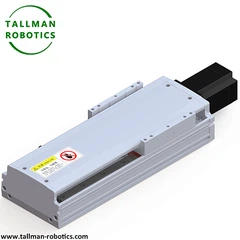


What is Linear Belt Drive Actuator?
A linear belt drive actuator is a dedicated linear motion component for industrial automation. Specifically, it converts motor rotary motion into continuous straight-line movement via timing belt transmission. Unlike screw-driven models, it delivers ultra-fast linear travel with flexible stroke adaptability. Furthermore, it supports programmable positioning for dynamic industrial motion tasks. This integrated unit realizes stable high-speed motion for automated equipment.
Integrated Structural Composition
First, this actuator adopts a compact modular frame for universal industrial mounting. It features a reinforced timing belt as the core transmission medium. Meanwhile, paired drive and idler pulleys ensure even belt tension during operation.
In addition, a precision linear guide restricts carriage movement for stable tracks. Moreover, a rigid aluminum housing reinforces structural rigidity. Lastly, a standard motor mounting base simplifies power assembly and equipment matching.
Here we introduce EU Standard Belt Driven Actuators to you as follows:
You are welcome to watch more projects or visit our video gallery by Youtube: https://www.youtube.com/@tallmanrobotics
|
Model No |
Motor Power(W) |
Body Width (mm) |
Repeatability (mm) |
Timing Belt Specs |
Max Load (kgs) |
Max Stroke (mm) at max speed (mm/s) |
Rated Thrust |
Linear guide rail |
|||
|
Width (mm) |
Deceleration ration |
Lead (mm) |
Horizontal |
Vertical |
|||||||
|
TMEB65-CR |
200W |
65 |
±0.1 |
32 |
3:1 |
50 |
4 |
2 |
5500mm at 2500mm/S |
59 |
15×12.5-1 |
|
5:1 |
30 |
12 |
5 |
5500mm at 1500mm/S |
99 |
||||||
|
7:1 |
21.43 |
25 |
9 |
5500mm at 1071.5mm/S |
139 |
||||||
|
10:1 |
15 |
50 |
14 |
5500mm at 750mm/S |
199 |
||||||
|
400W |
3:1 |
50 |
12 |
7 |
5500mm at 2500mm/S |
159 |
|||||
|
5:1 |
30 |
34 |
15 |
5500mm at 1500mm/S |
265 |
||||||
|
7:1 |
21.43 |
65 |
24 |
5500mm at 1071.5mm/S |
372 |
||||||
|
10:1 |
15 |
65 |
38 |
5500mm at 750mm/S |
531 |
||||||
|
750W |
3:1 |
50 |
23 |
13 |
5500mm at 2500mm/S |
300 |
|||||
|
5:1 |
30 |
65 |
28 |
5500mm at 1500mm/S |
500 |
||||||
|
7:1 |
21.43 |
65 |
45 |
5500mm at 1071.5mm/S |
700 |
||||||
|
10:1 |
15 |
65 |
65 |
5500mm at 750mm/S |
1000 |
||||||
|
TMEB85-CR |
200W |
80 |
±0.1 |
45 |
3:1 |
66.66 |
2 |
1 |
5500mm at 3333mm/S |
44 |
20×15.5-1 |
|
5:1 |
40 |
7 |
3 |
5500mm at 2000mm/S |
74 |
||||||
|
7:1 |
28.5 |
14 |
6 |
5500mm at 1425mm/S |
104 |
||||||
|
10:1 |
20 |
28 |
9 |
5500mm at 1000mm/S |
149 |
||||||
|
400W |
3:1 |
66.66 |
7 |
4 |
5500mm at 3333mm/S |
120 |
|||||
|
5:1 |
40 |
19 |
10 |
5500mm at 2000mm/S |
199 |
||||||
|
7:1 |
28.5 |
38 |
16 |
5500mm at 1425mm/S |
279 |
||||||
|
10:1 |
20 |
76 |
26 |
5500mm at 1000mm/S |
398 |
||||||
|
750W |
3:1 |
66.66 |
13 |
8 |
5500mm at 3333mm/S |
225 |
|||||
|
5:1 |
40 |
36 |
18 |
5500mm at 2000mm/S |
375 |
||||||
|
7:1 |
28.5 |
71 |
30 |
5500mm at 1425mm/S |
525 |
||||||
|
10:1 |
20 |
80 |
50 |
5500mm at 1000mm/S |
750 |
||||||


Technical Features & Functional Advantages
|
Item |
Technical Feature |
Core Function |
Application Advantage |
|---|---|---|---|
|
Motion Performance |
High-speed dynamic linear movement |
Shorten equipment positioning cycle |
Fit high-frequency automated handling tasks |
|
Stroke Capacity |
Customizable long-stroke travel |
Support long-distance linear shifting |
Adapt large-range automation working areas |
|
Transmission Performance |
Low-friction belt transmission |
Maintain smooth continuous motion |
Reduce mechanical vibration during operation |
|
Structural Design |
Integrated modular carriage structure |
Carry and transfer industrial workpieces |
Simplify on-site equipment integration |
Frequently Asked Questions
Q1: What core strengths does a linear belt drive actuator have over screw-driven actuators?
It delivers faster linear motion and supports longer customizable strokes. It runs with lower mechanical resistance and vibration. It suits high-cycle, long-distance automation scenarios that screw actuators cannot adapt to.
Q2: Can this actuator maintain stable precision during long-term high-speed operation?
Yes. The reinforced timing belt and tension-balanced pulley structure prevent loose transmission. The matched linear guide keeps consistent motion tracks. It maintains reliable positioning stability for long-duration industrial operation.
Q3: What working scenarios are not suitable for belt drive linear actuators?
It does not fit ultra-high precision micro-positioning or heavy-load pressing tasks. Belt transmission cannot reach the rigid precision of screw structures for extreme accuracy industrial processes.
Q4: What motor types can match this linear belt drive actuator?
It supports mainstream stepper motors and servo motors. Users can select matched motors based on motion speed and load demands. The universal mounting base fits most standard automation power components.
Q5: How to maintain the actuator's long-term transmission stability?
Regularly check timing belt tension to avoid deviation. Clean guide rail dust to reduce friction resistance. Inspect pulley rotation flexibility periodically. Simple daily maintenance ensures lasting stable motion performance.
Hot Tags: linear belt drive actuator, China linear belt drive actuator manufacturers, suppliers, factory, Endless Belt Linear Unit, Belt Drive Linear Stage, Servo Belt Actuator, Linear Belt Drive Actuator, Fast Acting Linear Module

