
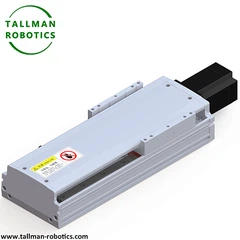


Single Axis Robot is an automated device with a single degree of freedom in motion, which achieves precise linear or rotational motion through mechanical transmission and control systems. Its structure is simple and its cost is controllable. It can independently complete specific tasks and also serve as a basic unit to construct complex multi axis systems, playing an indispensable role in the fields of industrial manufacturing and automation.
Single Axis Robot is the most fundamental and widely used linear motion execution units in the field of industrial automation, referring to integrated electromechanical devices that can only perform precise positioning and reciprocating motion along a single spatial coordinate axis. As the "basic motion joint" of automation equipment, it provides the most fundamental motion solution for various industrial applications by converting the rotational motion of the motor into precise linear motion, and is the core basic component of modern intelligent manufacturing.
Single Axis Robot adopts a highly integrated modular design, and its typical structure includes five core subsystems:
Drive system: using servo motors or stepper motors as power sources to ensure controllability and accuracy of motion
Transmission system: Choose the ball screw (high-precision, high rigidity) or synchronous belt (high-speed, long stroke) transmission mode according to the needs
Guidance system: using high-precision linear guide rails or precision grinding guide rails to ensure smooth movement and load support capacity
Structural body: Made of high-strength aluminum alloy profiles or steel base, providing a stable installation foundation
Control system: Integrated limit switch, origin sensor interface, seamlessly integrated with external controller
This modular design makes single axis robots a true "plug and play" product, where users do not need to perform complex mechanical design and precision calibration. They only need to complete simple installation, fixation, and electrical connections to quickly obtain a stable and reliable linear motion unit.
According to different transmission methods, Single Axis Robot is mainly divided into two types:
Ball screw type single axis robot has the characteristics of high thrust, high rigidity, and high positioning accuracy. The repeated positioning accuracy can reach ± 0.01mm, making it particularly suitable for precision assembly, CNC machining, and other high-precision applications.
Synchronous belt type single axis robots have speed advantages, with a movement speed of up to 3-5 m/s and the ability to easily achieve ultra long strokes of more than 3 meters. They are widely used in fields such as laser processing, material handling, packaging and sorting that require high efficiency.
You are welcome to watch more projects or visit our video gallery by Youtube: https://www.youtube.com/@tallmanrobotics
Aluminum type: Guide Rail Built-in Linear Modules.
|
Model No |
Body Width (mm) |
Max Payload (kgs) |
Max Stroke (mm) |
Repeatability (mm) |
Drive |
Motor Power (W) |
Application Environment |
|
TM-TH5 |
54 |
30 |
800 |
±0.01/±0.005 |
screw |
100/200/400 |
Clean environment |
|
TM-TH8 |
82 |
50 |
1050 |
±0.01/±0.005 |
screw |
100/200/400 |
Clean environment |
|
TM-TH12 |
120 |
110 |
1250 |
±0.01/±0.005 |
screw |
200/400/750 |
Clean environment |
Steel Type: Guide Rail Built-in Linear Modules.
|
Model No |
Body Width (mm) |
Lead (mm) |
Rail Length(mm) |
Repeatability (mm) |
Walking parallelism(mm) |
Speed (mm/sec) |
Application Environment |
|
TM-K60 |
60 |
5/10 |
150~600 |
±0.003/±0.005 |
0.01/0.015 |
Max: 600 |
General/ Dust and Waterproof with Organ Cover |
|
TM-K86 |
86 |
10/20 |
340~940 |
±0.003/±0.005 |
0.015/0.03 |
Max: 1220 |

|
Model No |
Motor Power(W) |
Body Width (mm) |
Repeatability (mm) |
Ball Screw Rod (C7) |
Max Load (kgs) |
Stroke (mm) at Max speed (mm/s) |
Speed (mm/s) at Max stroke (mm) |
Rated Thrust |
||
|
Out dia (mm) |
Lead (mm) |
Horizontal |
Vertical |
|||||||
|
TMTH5 |
100W |
54 |
±0.01 ±0.005 |
12 |
2 |
23 |
10 |
600mm at 100mm/S |
60mm/S at 800mm |
854 |
|
5 |
30 |
10 |
600mm at 250mm/S |
150mm/S at 800mm |
341 |
|||||
|
10 |
15 |
5 |
600mm at 500mm/S |
300mm/S at 800mm |
170 |
|||||
|
20 |
10 |
2.5 |
600mm at 1000mm/S |
600mm/S at 800mm |
85 |
|||||
|
200W |
2 |
30 |
10 |
600mm at 100mm/S |
60mm/S at 800mm |
170 |
||||
|
5 |
30 |
10 |
600mm at 250mm/S |
150mm/S at 800mm |
682 |
|||||
|
10 |
28 |
8 |
600mm at 500mm/S |
300mm/S at 800mm |
340 |
|||||
|
20 |
15 |
5 |
600mm at 1000mm/S |
600mm/S at 800mm |
170 |
|||||
|
400W |
2 |
30 |
10 |
600mm at 100mm/S |
60mm/S at 800mm |
3389 |
||||
|
5 |
30 |
10 |
600mm at 250mm/S |
150mm/S at 800mm |
1353 |
|||||
|
10 |
30 |
10 |
600mm at 500mm/S |
300mm/S at 800mm |
674 |
|||||
|
20 |
22 |
8 |
600mm at 1000mm/S |
600mm/S at 800mm |
337 |
|||||
|
TMTH8 |
100W |
82 |
±0.01 ±0.005 |
16 |
5 |
30 |
10 |
750mm at 250mm/S |
75mm/S at 1100mm |
341 |
|
10 |
15 |
5 |
750mm at 500mm/S |
150mm/S at 1100mm |
170 |
|||||
|
20 |
10 |
2.5 |
750mm at 1000mm/S |
300mm/S at 1100mm |
85 |
|||||
|
200W |
5 |
50 |
15 |
750mm at 250mm/S |
75mm/S at 1100mm |
682 |
||||
|
10 |
30 |
8 |
750mm at 500mm/S |
150mm/S at 1100mm |
340 |
|||||
|
20 |
18 |
3 |
750mm at 1000mm/S |
300mm/S at 1100mm |
170 |
|||||
|
400W |
5 |
50 |
15 |
750mm at 250mm/S |
75mm/S at 1100mm |
1353 |
||||
|
10 |
40 |
12 |
750mm at 500mm/S |
150mm/S at 1100mm |
674 |
|||||
|
20 |
22 |
5 |
750mm at 1000mm/S |
300mm/S at 1100mm |
337 |
|||||
|
TMTH12 |
200W |
120 |
±0.1 ±0.005 |
16 |
5 |
95 |
27 |
800mm at 250mm/S |
117mm/S at 1250mm |
683 |
|
10 |
70 |
18 |
800mm at 500mm/S |
233mm/S at 1250mm |
341 |
|||||
|
20 |
20 |
6 |
800mm at 1000mm/S |
467mm/S at 1250mm |
174 |
|||||
|
32 |
10 |
- |
800mm at 1600mm/S |
747mm/S at 1250mm |
108 |
|||||
|
400W |
5 |
110 |
33 |
800mm at 250mm/S |
117mm/S at 1250mm |
1388 |
||||
|
10 |
88 |
33 |
800mm at 500mm/S |
233mm/S at 1250mm |
694 |
|||||
|
20 |
40 |
10 |
800mm at 1000mm/S |
467mm/S at 1250mm |
347 |
|||||
|
32 |
30 |
8 |
800mm at 1600mm/S |
747mm/S at 1250mm |
216 |
|||||
|
750W |
5 |
110 |
33 |
800mm at 250mm/S |
117mm/S at 1250mm |
2100 |
||||
|
10 |
110 |
33 |
800mm at 500mm/S |
233mm/S at 1250mm |
1050 |
|||||
|
20 |
60 |
16 |
800mm at 1000mm/S |
467mm/S at 1250mm |
528 |
|||||
|
32 |
50 |
10 |
800mm at 1600mm/S |
747mm/S at 1250mm |
380 |
|||||


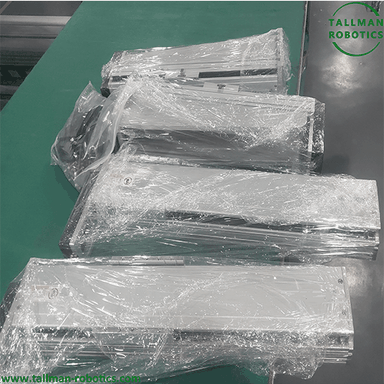
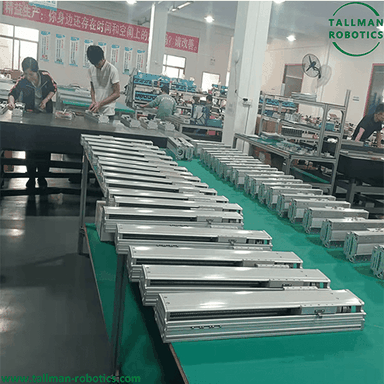
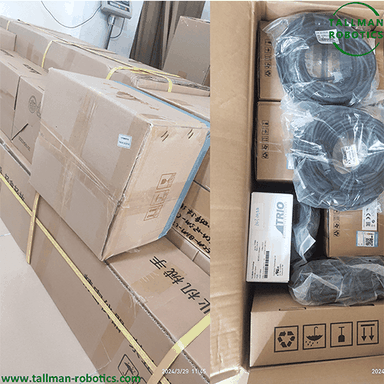
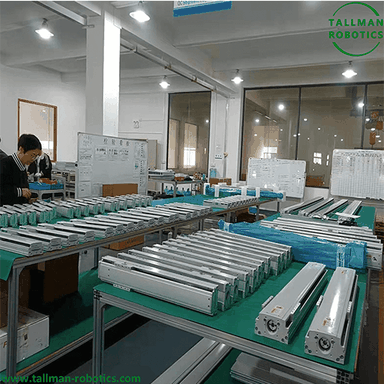
The core advantages of Single Axis Robot is reflected in four aspects: firstly, it greatly simplifies the mechanical design process, transforming complex motion system design into simple selection work; Secondly, modular design ensures excellent reliability and consistency, significantly improving equipment stability; Thirdly, it has excellent scalability and can be easily combined into a multi axis Cartesian coordinate robot; Finally, significantly shorten the equipment development cycle and reduce overall costs.
At present, Single Axis Robot has been widely used in many fields such as semiconductor equipment, electronic manufacturing, new energy equipment, automotive parts processing, food packaging, medical equipment, etc. It can not only serve as an independent execution mechanism to complete simple linear transfer tasks, but also as a standardized basic module for building complex automation systems. In the field of electronic manufacturing, single axis robots are used for chip packaging and circuit board placement to improve production efficiency through high-speed and precise motion; In the automotive industry, rotary single axis robots are responsible for screw tightening and component pressing tasks to ensure assembly quality; In the logistics and warehousing scenario, linear single axis robots serve as the core transmission unit of AGVs, achieving efficient handling and sorting of goods; In the manufacturing of medical equipment, its high-precision characteristics meet the strict requirements for syringe filling and drug sorting. In addition, single axis robots are widely used in fields such as 3D printing, laser cutting, and scientific research experiments, becoming a key support for automation upgrades.
With the deepening of Industry 4.0 and intelligent manufacturing, Single Axis Robot is developing towards higher precision, speed, and intelligence. Intelligent single axis robots that integrate force control sensors, vision systems, and next-generation communication interfaces will become a future development trend, providing key technical support for the transformation and upgrading of the manufacturing industry.
Hot Tags: single axis robot, China single axis robot manufacturers, suppliers, factory, Belt Drive Linear Actuator, Belt Driven Linear Motion Actuator, Compact Linear Actuation Module, Linear Servo Actuator System, Precision Belt Linear Stage, Single Axis Linear Drive Modules


