
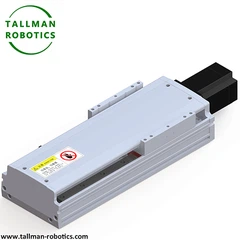


What is Telescopic Manipulator?
A telescopic manipulator is a mechanical handling device that uses nested, extending sections along one or more axes to reach into confined or hazardous spaces, grasp or move a payload, and withdraw it-combining linear reach with a manipulation function (gripping, tilting, rotating) at the working end. Unlike a simple telescopic transfer arm built around basic pick-and-place motion, a manipulator typically emphasizes operator or programmed control over multiple degrees of freedom at the tool tip, often for handling irregular, hazardous, or delicate loads.
Structure
The manipulator consists of a base mount, a telescoping boom or arm made of nested tube or beam sections extended via hydraulic cylinder, electric screw drive, or cable-and-pulley mechanism, and an end-effector-such as a gripper, hook, or specialized tool-mounted on a wrist assembly that may add rotation or tilt at the tip. Control can be manual (joystick/lever for operator-driven manipulators in hazardous material handling) or fully automated via a control module coordinating extension, wrist orientation, and gripper actuation.
Selection Considerations
Key factors include maximum reach and retracted stowage length, payload capacity through the full extension range, number of degrees of freedom at the tool tip, control method (manual, semi-automated, fully programmable), drive power type, and environmental resistance (for hazardous, radioactive, or extreme-temperature environments). Precision and repeatability requirements should be weighed against reach and payload, since longer extension generally increases tip deflection and reduces positioning accuracy.
Applications
Telescopic manipulators are used in nuclear material handling (hot cells), hazardous waste management, foundry and forging operations, heavy equipment loading, undersea/ROV tooling, and warehouse retrieval systems where a payload must be reached, grasped, and withdrawn from a space inaccessible or unsafe for direct human handling.
Installation Considerations
The base mount must be anchored to a structure rigid enough to resist reaction forces and moments generated at full extension under load. Clearance along the full extend/retract and wrist rotation path must be verified against surrounding equipment or enclosure walls. Control system calibration, safety interlocks, and emergency-stop functions should be tested, and full-reach load testing should confirm acceptable deflection before operational use.
Here we introduce Telescopic Manipulator to you as follows:
You are welcome to watch more projects or visit our video gallery by Youtube: https://www.youtube.com/@tallmanrobotics
|
Model No |
Motor Power(W) |
Body Width (mm) |
Repeatability (mm) |
Ball Screw Rod (C7) |
Max Load (kgs) |
Stroke (mm) at Max speed (mm/s) |
Speed (mm/s) at Max stroke (mm) |
Rated Thrust |
||
|
Out dia (mm) |
Lead (mm) |
Horizontal |
Vertical |
|||||||
|
TMTH12 |
200W |
120 |
±0.1 ±0.005 |
16 |
5 |
95 |
27 |
800mm at 250mm/S |
117mm/S at 1250mm |
683 |
|
10 |
70 |
18 |
800mm at 500mm/S |
233mm/S at 1250mm |
341 |
|||||
|
20 |
20 |
6 |
800mm at 1000mm/S |
467mm/S at 1250mm |
174 |
|||||
|
32 |
10 |
- |
800mm at 1600mm/S |
747mm/S at 1250mm |
108 |
|||||
|
400W |
5 |
110 |
33 |
800mm at 250mm/S |
117mm/S at 1250mm |
1388 |
||||
|
10 |
88 |
33 |
800mm at 500mm/S |
233mm/S at 1250mm |
694 |
|||||
|
20 |
40 |
10 |
800mm at 1000mm/S |
467mm/S at 1250mm |
347 |
|||||
|
32 |
30 |
8 |
800mm at 1600mm/S |
747mm/S at 1250mm |
216 |
|||||
|
750W |
5 |
110 |
33 |
800mm at 250mm/S |
117mm/S at 1250mm |
2100 |
||||
|
10 |
110 |
33 |
800mm at 500mm/S |
233mm/S at 1250mm |
1050 |
|||||
|
20 |
60 |
16 |
800mm at 1000mm/S |
467mm/S at 1250mm |
528 |
|||||
|
32 |
50 |
10 |
800mm at 1600mm/S |
747mm/S at 1250mm |
380 |
|||||


FAQ
What's the difference between a telescopic manipulator and a telescopic transfer arm?
A telescopic manipulator typically adds multi-degree-of-freedom control at the tool tip (gripping, rotating, tilting) for handling irregular or hazardous loads, while a transfer arm is generally simpler, built around straightforward reach-pick-retract motion for standardized parts.
Are telescopic manipulators manually operated or automated?
Both exist-manually operated units use joysticks or levers for direct operator control in applications like hazardous material handling, while automated versions follow programmed motion sequences for repetitive industrial tasks.
How is payload capacity affected by manipulator reach?
Payload capacity typically decreases as the manipulator extends further, since the boom experiences greater bending moment and deflection at full reach compared to when retracted.
What industries commonly use telescopic manipulators for hazardous material handling?
Nuclear power, radioactive waste processing, and chemical handling industries commonly use telescopic manipulators to keep operators at a safe distance from hazardous materials during handling tasks.
What safety systems are typically integrated into telescopic manipulators?
Common safety systems include emergency stops, overload/force sensors to prevent excessive strain, travel limit switches, and interlocks that prevent operation outside verified safe parameters.
Hot Tags: telescopic manipulator, China telescopic manipulator manufacturers, suppliers, factory, Endless Belt Linear Unit, Belt Drive Linear Stage, Servo Belt Actuator, Linear Belt Drive Actuator, Fast Acting Linear Module


