
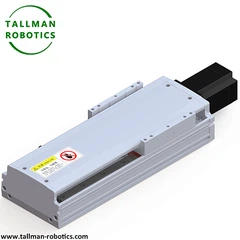


Linear Ball Screw Assembly is an integrated precision linear transmission component, consisting of a ball screw shaft, ball nuts, ball circulators, dust-proof structures, and supporting bearings. It is widely used in precision machine tools, automation equipment, medical instruments, and other scenarios. Its working principle is that when the motor drives the screw shaft to rotate, the ball inside the nut rolls along the screw raceway, converting the rotational motion into linear motion of the nut. The cycler realizes the recycling of the ball, and the dust-proof structure reduces the intrusion of impurities, ensuring stable transmission.


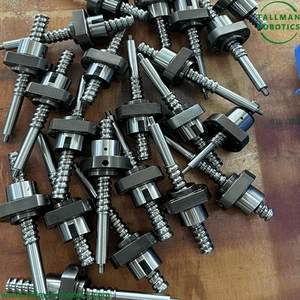
What precautions should be taken for the installation and maintenance of linear ball screw components?
1, Installation precautions
Priority for accuracy calibration: Before installation, the straightness of the screw shaft should be checked (deviation should be controlled within 0.1mm/m), and the parallelism between the screw and the guide rail should be calibrated using a dial gauge to avoid running lag or accuracy degradation caused by parallelism deviation (recommended ≤ 0.02mm/m); When fixing the bearing seat, the bolts should be tightened evenly to prevent excessive local stress and deformation.
Avoid overload installation: When installing the nut seat, it is forbidden to forcefully strike or push it. Special tools should be used to guide the nut to smoothly fit into the screw to prevent the ball from falling off or scratching the raceway; When installing the coupling at the extended end of the screw shaft, it is necessary to ensure coaxiality (recommended ≤ 0.01mm) to avoid bearing wear caused by radial forces.
Environmental adaptation protection: If there are impurities such as dust and cutting fluid in the application scenario, it is necessary to install a telescopic protective cover or dust cover synchronously, and the protective cover should reserve sufficient travel allowance to avoid damage caused by pulling during operation; In humid environments, anti rust coated screw components should be selected, and anti rust grease should be applied after installation.
2, Maintenance precautions
Regular lubrication and maintenance: Depending on the operating conditions (such as speed and load), special lubricating grease (recommended lithium based grease) should be added every 100-200 hours of operation. When adding grease, the screw should be rotated to ensure that the grease evenly covers the raceway, avoiding wear caused by dry friction; Before long-term shutdown, it is necessary to thoroughly clean and apply lubricating grease to prevent rusting.
Cleaning and condition inspection: Clean up impurities attached to the dust-proof structure every week and check if the protective cover is damaged; Use a dial gauge to check the positioning accuracy of the screw every month. If the deviation exceeds 0.05mm, it should be calibrated in a timely manner; Disassemble and inspect the ball bearings and circulators quarterly for cracks or wear, and replace them immediately if any problems are found.
Avoid abnormal working conditions: Do not operate the screw under radial force (such as lateral impact) to prevent the screw from bending or bearing damage; The load should be controlled within 80% of the rated value to avoid deformation of the raceway caused by overload, which may affect transmission accuracy and service life.


