
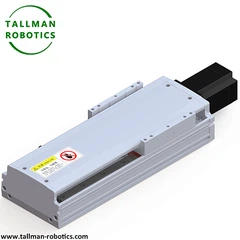


Linear Motion Ball Screws, also known as ball screws, are a critical mechanical transmission component that efficiently converts rotational motion into linear motion. By replacing traditional sliding friction with rolling friction in their design, Linear Motion Ball Screws serve as a core high-precision transmission element in industrial applications. These screws are widely used in various equipment where high positioning accuracy and transmission efficiency are required, significantly impacting the performance and stability of mechanical systems.
The structure of Linear Motion Ball Screws is not overly complex, with its core consisting of four main components: the screw, nut, balls, and ball return device. The screw surface features precision spiral grooves, while the nut interior contains matching ball tracks. Balls are positioned within the gap between the screw and nut, and the ball return device is crucial for ensuring continuous operation. It connects both ends of the nut via channels, allowing the balls to circulate back when they reach the end of the nut's travel, preventing detachment and maintaining uninterrupted transmission. Some miniature ball screws are further optimized for compact space applications, employing more refined ball return designs.


Compared to conventional lead screws, Linear Motion Ball Screws offer outstanding advantages.
Firstly, Linear Motion Ball Screws exhibit extremely high transmission efficiency-up to 90%-98% due to the rolling action of the balls, far exceeding the 50% or less efficiency of sliding lead screws. At the same thrust, the required driving force is only one-third of that for traditional lead screws, significantly improving energy efficiency.
Secondly, Linear Motion Ball Screws deliver exceptional positioning accuracy. Through precision grinding or rolling processes, combined with preloading techniques, backlash can be greatly reduced to meet micro-feed requirements, making them suitable for transmission scenarios with frequent direction changes.
Thirdly, Linear Motion Ball Screws boast a long service life, with minimal wear and heat generation from rolling friction, which not only reduces maintenance costs but also enables operation under special conditions such as high temperatures or vacuum.
Additionally,Linear Motion Ball Screws feature high rigidity, allowing for negative axial clearance after preloading to stably withstand heavy loads.
Leveraging these advantages, ball screw applications span multiple high-end fields.
In industrial manufacturing, it serves as a core component in CNC machine tools, precisely controlling the feed motion of cutting tools.
In robotics, it is used for joint actuation, ensuring smooth and accurate movement of robotic arms. Within semiconductor manufacturing equipment, its high-precision characteristics meet the micron-level positioning requirements for chip processing.
In the medical field, positioning systems for imaging devices like CT and MRI scanners rely on it to maintain imaging accuracy.
Additionally, ball screws are indispensable in aerospace applications such as satellite attitude adjustment, aircraft control systems, and laboratory precision instruments, owing to their reliable transmission capabilities.
You are welcome to watch more projects or visit our website to check other series or load down e-catalogues for further technical data.
Youtube: https://www.youtube.com/@tallmanrobotics
Facebook: https://www.facebook.com/tallmanrobotics
Linkedin: https://www.linkedin.com/in/tallman-robotics


