
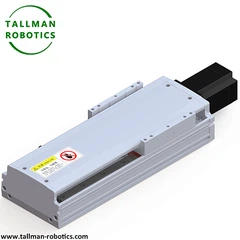


Multi Axis Linear Stages is an automated device that integrates multiple orthogonal linear motion axes (commonly X, Y, Z, and can be extended to 4-6 axes), and achieves high-precision displacement, positioning, and trajectory control of loads in three-dimensional space through motor drive. Its core advantage lies in the synchronization and precision of multi axis collaborative motion. The transmission components often use ball screws and linear guides, with positioning accuracy ranging from micrometers to nanometers, which can meet the multidimensional motion requirements in complex scenarios.

The key features of a multi axis linear platform are reflected in three aspects:
Multi axis integration: Based on X/Y/Z three-axis, rotation axis (θ axis), tilt axis, etc. can be added according to needs to form a multi-dimensional motion system, realizing composite actions such as translation and rotation of loads in space.
High precision collaboration: By using a numerical control system to uniformly control the motion of each axis, the synchronization of multi axis actions is ensured, avoiding the accumulation of single axis errors that affect overall accuracy. It is suitable for scenarios with strict requirements for motion trajectories.
Modular design: Each motion axis can be flexibly combined or disassembled, supporting customization according to load weight, motion stroke, and precision requirements, and adapting to diverse applications in different industries.
Its applications cover high-precision manufacturing and scientific research fields, with typical scenarios including:
Precision manufacturing: Achieving high-precision machining and assembly of complex components in semiconductor chip packaging (multi axis collaborative chip alignment and soldering) and medical device production (such as multidimensional cutting for artificial joint processing).
Research experiments: Cell microscopy in the biomedical field (multi axis control of microscope lens and sample stage coordinated movement), thin film deposition in materials science (precise control of multidimensional motion of samples in vacuum environment).
Automated detection: In optical detection equipment, the driving detection probe performs multidimensional scanning with the sample to complete tasks such as surface defect detection and size measurement of products, improving detection efficiency and accuracy.
Indian customers need to pay special attention to three points when selecting and using:
Power supply and compatibility: The industrial electricity standard in India is 230V/50Hz. It is necessary to confirm whether the power parameters of the platform motor and controller match, and at the same time check whether the equipment interfaces (such as RS485, EtherCAT) are compatible with the local commonly used control system to avoid communication failures.
Environmental protection: In some areas of India, where temperatures can reach over 45 ℃ in summer, humidity is high and there is a lot of dust, it is necessary to choose models with a protection level of ≥ IP54, or install cooling fans and dust covers to prevent transmission components from being worn or short circuited due to environmental factors.
After sales and training: Priority should be given to brands with branches or authorized after-sales points in India to ensure quick response in case of equipment failure; At the same time, suppliers are required to provide English/Hindi operation manuals and online training to help local operators quickly master equipment usage and maintenance skills.


