
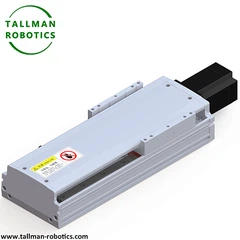


Low-Profile Rotary Table Models, also known as thin-type rotary tables, are high-precision rotating positioning devices characterized by their low axial height and compact structure. They are primarily used for multi-station rotation and precise indexing of workpieces in automated production processes.


Its core features are concentrated on the "thin-type" design and functional adaptability:
1. Compact Structure: The axial height is significantly lower than traditional rotary tables, saving equipment installation space and particularly suitable for scenarios with strict height restrictions, such as automated production lines and machine tools.
2. High-Precision Positioning: Driven by servo or stepper motors, combined with components such as harmonic reducers and ball screws, the repeat positioning accuracy can reach the level of ±0.001mm, meeting the requirements for precision machining, inspection, and other applications.
3. Strong adaptability: It supports load types ranging from light to medium, with worktable dimensions varying from tens of millimeters to several meters. The workpiece can be quickly secured via structures such as flanges and T-slots, making it compatible with multiple fields including mechanical processing, electronic assembly, and laser marking.
In practical applications, it often serves as a core component of automated systems, such as enabling multi-face machining of workpieces in CNC machining centers, achieving 360° full-angle inspection in testing equipment, or facilitating workpiece station rotation on assembly lines, significantly enhancing production efficiency and machining accuracy.


