

Hey there! As a ball screw supplier, I'm super stoked to chat about how ball screws are used in the communication industry. Ball screws are like the unsung heroes in many high - tech fields, and the communication industry is no exception.
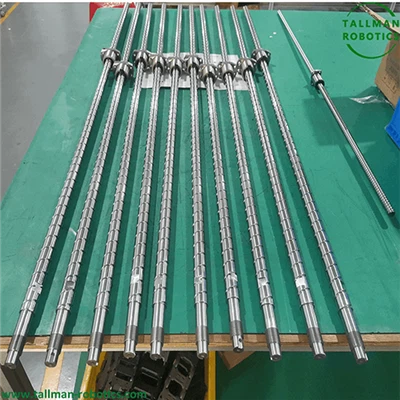
Let's start with the basics. Ball screws are mechanical linear actuators that convert rotational motion into linear motion with high efficiency. They consist of a screw shaft, a nut, and a series of balls that roll between the screw and the nut. This design allows for smooth, precise, and low - friction movement, which is crucial in many communication applications.
One of the key areas in the communication industry where ball screws shine is in antenna positioning systems. Antennas need to be precisely oriented to communicate effectively with satellites, other antennas, or ground stations. Ball screws are used to adjust the position, elevation, and azimuth of antennas. For example, in a satellite communication dish, a Linear Motion Ball Screw can be used to move the dish horizontally or vertically. This precise movement ensures that the antenna is always pointed in the right direction, maximizing the signal strength and quality.
The accuracy of ball screws is a game - changer here. Even a small misalignment can lead to significant signal loss. With ball screws, we can achieve positioning accuracies within a few micrometers. This level of precision is essential for modern communication systems that rely on high - frequency signals and narrow beamwidths.
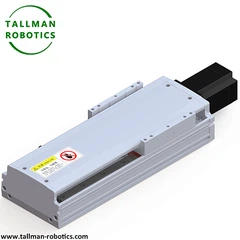
Another important application is in the manufacturing of communication equipment. When it comes to assembling circuit boards, for instance, pick - and - place machines use ball screws for their linear motion. These machines need to accurately pick up components from a feeder and place them on the circuit board. A Ball Screw Drive provides the high - speed and precise linear movement required for this task. It ensures that components are placed in the exact right position, which is crucial for the proper functioning of the communication device.
In the field of fiber - optic communication, ball screws also play a vital role. Fiber - optic cables need to be spliced with extreme precision. Splicing machines use ball screws to move the fiber ends together with high accuracy. A Linear Actuation Ball Screw can provide the smooth and controlled movement needed to align the fiber cores perfectly. This alignment is critical because even a slight misalignment can cause significant signal attenuation.
Ball screws are also used in the testing and calibration of communication devices. Test equipment often needs to move sensors or probes precisely to different positions on a device under test. Ball screws enable this precise movement, allowing for accurate measurements of signal strength, frequency, and other parameters.


Now, let's talk about the benefits of using ball screws in the communication industry. First off, they have a long service life. The rolling - element design of ball screws reduces friction compared to other types of linear actuators. This means less wear and tear, and the ball screws can operate for a long time without needing frequent replacements.
They also offer high efficiency. The low friction in ball screws means that less energy is wasted during operation. This is important in the communication industry, where energy efficiency is a major concern, especially for devices that are powered by batteries or in large - scale data centers.
In addition, ball screws are highly reliable. They can withstand harsh operating conditions, such as high temperatures, vibrations, and dust. This reliability is crucial in communication systems that need to operate continuously without interruption.
When it comes to choosing the right ball screw for a communication application, there are a few factors to consider. The load capacity is important. Different applications have different load requirements. For example, an antenna positioning system for a large satellite dish may require a ball screw with a higher load capacity compared to a pick - and - place machine.
The lead of the ball screw also matters. The lead determines the linear speed of the nut for a given rotational speed of the screw. In applications where high - speed movement is required, a ball screw with a larger lead may be more suitable.
The accuracy class is another critical factor. For applications that demand extremely high precision, such as fiber - optic splicing, a ball screw with a high accuracy class should be chosen.
As a ball screw supplier, we understand the unique needs of the communication industry. We offer a wide range of ball screws with different specifications to meet these diverse requirements. Whether you need a ball screw for antenna positioning, equipment manufacturing, or fiber - optic splicing, we've got you covered.
Our ball screws are made from high - quality materials and are manufactured using the latest technologies. We perform rigorous quality control tests to ensure that each ball screw meets the highest standards of performance and reliability.
If you're in the communication industry and are looking for a reliable ball screw supplier, we'd love to hear from you. Whether you're working on a small - scale project or a large - scale communication infrastructure, we can provide the right ball screws for your needs. Contact us to start a conversation about your requirements, and let's work together to find the perfect ball screw solution for your communication applications.
References
- "Precision Linear Motion Technology" by Linear Motion Association
- "Handbook of Mechanical Engineering" by McGraw - Hill
- Industry reports on communication equipment manufacturing and technology trends