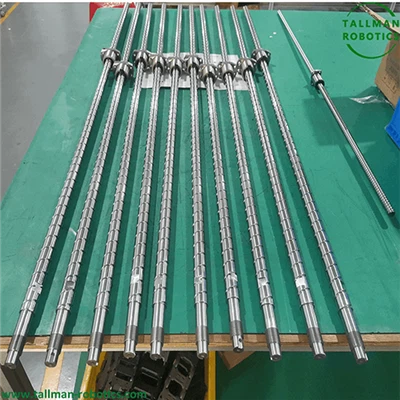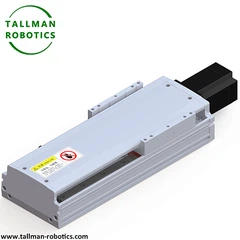


In the realm of industrial automation and mechanical engineering, linear electric cylinders have emerged as a pivotal innovation, offering precise, reliable, and efficient linear motion solutions. As a leading supplier of linear electric cylinders, I am thrilled to delve into the various control modes that make these devices so versatile and indispensable in a wide range of applications.
1. Open - Loop Control
Open - loop control is one of the most basic yet widely used control modes for linear electric cylinders. In an open - loop system, the controller sends a signal to the linear electric cylinder without receiving feedback about the actual position or performance of the cylinder.
The simplicity of open - loop control is its primary advantage. It is easy to set up and requires minimal components, which makes it cost - effective. For example, in applications where the load is relatively constant and the required precision is not extremely high, such as simple conveyor belt systems or basic material handling tasks, open - loop control can be an ideal choice.
However, open - loop control also has its limitations. Since there is no feedback, any external disturbances or changes in the load can cause errors in the positioning of the linear electric cylinder. For instance, if the friction in the system increases over time, the cylinder may not reach the desired position accurately.
2. Closed - Loop Control
Closed - loop control addresses the limitations of open - loop control by incorporating feedback mechanisms. In a closed - loop system, sensors such as encoders or potentiometers are used to measure the actual position, velocity, or force of the linear electric cylinder. The controller then compares this measured value with the desired setpoint and adjusts the input signal accordingly to minimize the error.
Position Control
Position control is a common type of closed - loop control for linear electric cylinders. It ensures that the cylinder moves to and maintains a specific position accurately. This is crucial in applications such as CNC machining, where precise positioning of tools is required for high - quality manufacturing. Our Motorized Linear Actuator Cylinder is well - suited for position - controlled applications, thanks to its high - precision encoder feedback and advanced control algorithms.
Velocity Control
Velocity control focuses on maintaining a constant speed of the linear electric cylinder. This is useful in applications like assembly lines, where consistent movement speed is necessary for efficient production. By using velocity control, the linear electric cylinder can adjust its speed in real - time to compensate for changes in the load or other external factors.


Force Control
Force control is another important aspect of closed - loop control. In some applications, such as pressing or clamping operations, it is essential to apply a specific amount of force. Force sensors are used to measure the actual force exerted by the linear electric cylinder, and the controller adjusts the input to maintain the desired force level. Our Linear Electric Drive offers excellent force - control capabilities, making it suitable for a variety of force - sensitive applications.
3. Programmable Logic Controller (PLC) Control
PLCs are widely used in industrial automation to control linear electric cylinders. A PLC is a digital computer that can be programmed to execute a sequence of control instructions. It can communicate with the linear electric cylinder's controller and other devices in the system, allowing for complex and coordinated operations.
With PLC control, users can easily program different motion profiles, such as multi - step positioning, speed changes, and force variations. This flexibility makes it suitable for a wide range of applications, from simple pick - and - place operations to complex robotic systems. PLCs also offer features like fault detection and diagnostic capabilities, which enhance the reliability and maintainability of the system.
4. Human - Machine Interface (HMI) Control
HMIs provide a user - friendly way to interact with and control linear electric cylinders. An HMI is a device that allows operators to monitor and adjust the parameters of the cylinder, such as position, speed, and force, using a graphical interface.
HMIs can display real - time data about the cylinder's performance, such as its current position, velocity, and any error messages. This enables operators to quickly identify and troubleshoot issues. They can also be used to program different operating modes and motion profiles, providing a convenient way to customize the operation of the linear electric cylinder according to specific application requirements. Our Electric Push Pull Device can be easily integrated with HMIs, offering a seamless user experience.
5. Network - Based Control
In modern industrial environments, network - based control has become increasingly popular. Linear electric cylinders can be connected to a network, such as Ethernet or Profibus, allowing for remote monitoring and control.
Network - based control enables centralized management of multiple linear electric cylinders in a large - scale system. It also facilitates data exchange between different devices in the network, which can be used for advanced analytics and optimization. For example, data from multiple cylinders can be collected and analyzed to identify patterns and improve overall system efficiency.
Conclusion
The control modes of linear electric cylinders play a crucial role in determining their performance and suitability for different applications. Whether it's the simplicity of open - loop control, the precision of closed - loop control, the flexibility of PLC control, the user - friendliness of HMI control, or the advanced capabilities of network - based control, each mode offers unique advantages.
As a supplier of linear electric cylinders, we are committed to providing high - quality products with advanced control features to meet the diverse needs of our customers. Our products are designed to be reliable, efficient, and easy to integrate into various systems.
If you are looking for linear electric cylinders for your application, we invite you to contact us for a detailed discussion. Our team of experts will work closely with you to understand your requirements and recommend the most suitable control mode and product for your specific needs. Let's work together to achieve optimal performance and efficiency in your industrial processes.
References
- Niemann, G., Winter, H., & Loewen, G. (2004). Machine Elements in Mechanical Design. McGraw - Hill.
- Dorf, R. C., & Bishop, R. H. (2016). Modern Control Systems. Pearson.
- VDI/VDE 3686:2011 - 08, Linear actuators for industrial applications - Requirements and test methods.