
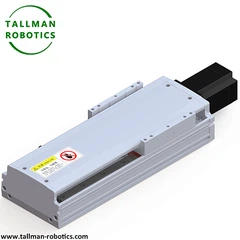


Ball screws are essential components in many precision mechanical systems, offering high efficiency and accurate positioning. As a ball screw supplier, I understand the critical role these components play in various applications, from industrial machinery to automotive systems. Recognizing the signs of wear in ball screws is crucial for maintaining the performance and longevity of the equipment. In this blog, I will discuss the primary signs of wear in ball screws and why it's important to address them promptly.
1. Increased Noise
One of the most obvious signs of wear in ball screws is an increase in noise during operation. When a ball screw is in good condition, it operates smoothly and quietly. However, as wear occurs, the smooth interaction between the balls, nut, and screw shaft can be disrupted. This disruption leads to vibrations and rattling noises. For example, if you hear a grinding or clicking sound while the ball screw is in motion, it could indicate that the balls are wearing down or that there is debris in the raceways.
The noise is often a result of the balls losing their roundness or the raceways becoming pitted. As the balls roll along the worn raceways, they create uneven contact, which generates vibrations. These vibrations are then transmitted through the system, producing audible noise. If you notice an increase in noise from a ball screw, it's important to inspect it as soon as possible to prevent further damage. You can learn more about the mechanics of ball screw operation on our Ball Screw Drive page.
2. Decreased Efficiency
Wear in ball screws can also lead to a decrease in efficiency. Ball screws are designed to convert rotational motion into linear motion with minimal energy loss. However, as wear occurs, the friction between the components increases. This increased friction requires more energy to drive the ball screw, resulting in decreased efficiency.
For instance, if a machine that uses a ball screw to move a heavy load suddenly requires more power to operate, it could be a sign of wear. The extra power is needed to overcome the increased friction caused by the worn components. Decreased efficiency not only leads to higher energy costs but can also cause the system to overheat, which can further damage the ball screw and other components. To understand how to optimize the efficiency of ball screws, visit our Linear Actuation Ball Screw page.
3. Reduced Precision
Precision is one of the key advantages of ball screws. They are used in applications where accurate positioning is crucial, such as in CNC machines and robotics. However, wear can significantly reduce the precision of a ball screw. As the balls and raceways wear, the clearance between them increases. This increased clearance leads to backlash, which is the amount of play or movement in the system when the direction of motion is reversed.
Backlash can cause inaccuracies in positioning, as the ball screw may not move precisely when the direction is changed. For example, in a CNC machine, a small amount of backlash can result in a noticeable error in the finished product. If you notice that the positioning accuracy of a machine using a ball screw has decreased, it's likely that the ball screw is worn. Our Ball Screw Transmission page provides more information on the factors affecting precision in ball screws.
4. Increased Clearance
Another sign of wear in ball screws is increased clearance. As the balls and raceways wear, the space between them expands. This increased clearance can cause the ball screw to become loose, leading to instability and reduced performance. You can detect increased clearance by manually checking the movement of the nut on the screw shaft. If you can feel a significant amount of play or movement, it's a sign that the ball screw is worn.


Increased clearance can also affect the preload of the ball screw. Preload is the initial force applied to the balls in the screw to eliminate clearance and improve rigidity. When the clearance increases due to wear, the preload may be reduced, which can further affect the performance and accuracy of the ball screw. Monitoring the clearance of ball screws regularly is essential for ensuring their proper operation.
5. Visible Damage
In some cases, wear in ball screws can be visually detected. Inspecting the ball screw for visible damage, such as scratches, dents, or corrosion, is an important part of maintenance. Scratches on the balls or raceways can indicate abrasive wear, which is often caused by the presence of contaminants in the system. Dents may be the result of impact or overloading, which can also lead to premature wear.
Corrosion is another form of visible damage that can affect ball screws. If the ball screw is exposed to a humid or corrosive environment, rust can form on the surface of the components. Corrosion weakens the structure of the ball screw and can cause it to fail prematurely. Regularly inspecting the ball screw for visible damage can help you identify potential problems early and take appropriate action.
Why Prompt Action is Important
When signs of wear are detected in ball screws, it's crucial to take prompt action. Ignoring the signs can lead to more severe damage and eventually, the complete failure of the ball screw. A failed ball screw can cause significant downtime in industrial applications, resulting in lost productivity and increased costs.
Replacing a worn ball screw in a timely manner can prevent further damage to the system and ensure the continued smooth operation of the equipment. Additionally, regular maintenance and inspection can extend the lifespan of ball screws, reducing the overall cost of ownership.
Contact Us for Your Ball Screw Needs
As a leading ball screw supplier, we offer a wide range of high-quality ball screws suitable for various applications. Our team of experts can provide you with professional advice on ball screw selection, installation, and maintenance. If you suspect that your ball screw is showing signs of wear or if you are in the market for a new ball screw, we encourage you to contact us for a purchase consultation. We will work with you to find the best solution for your specific requirements.
References
- Thompson, J. (2018). "The Basics of Ball Screws and Their Applications." Mechanical Engineering Journal.
- Davis, R. (2020). "Maintenance and Troubleshooting of Ball Screws." Industrial Machinery Handbook.
- Wilson, S. (2021). "Wear Mechanisms in Ball Screws." Tribology Research Report.


