
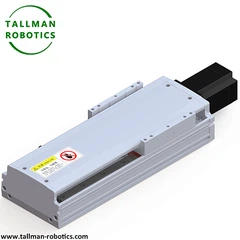


Hey there! As a supplier of smart electric grippers, I often get asked about the material requirements for the objects these grippers can handle. It's a super important topic, especially for those looking to integrate these grippers into their automation processes. So, let's dive right in and explore what materials work best with our smart electric grippers.
General Considerations
First off, when it comes to the materials our smart electric grippers can handle, there are a few general factors to keep in mind. The gripper's design, force capabilities, and the type of gripping mechanism all play a role in determining what materials it can effectively grasp. For instance, our grippers are designed with precision in mind, allowing them to handle a wide range of objects, but the material properties of those objects still matter.
Rigid Materials
One of the most common types of materials our smart electric grippers can handle is rigid materials. These include metals like steel, aluminum, and brass. Metals are often used in manufacturing processes, and our grippers are well-suited to handle them. The high strength and durability of metals mean that they can withstand the gripping force exerted by our grippers without deforming.
For example, in automotive manufacturing, our Rotating Electric Gripper can be used to handle metal parts during assembly. The gripper's precise control allows it to pick up and place these parts with accuracy, ensuring a smooth and efficient production process.
Plastics are another type of rigid material that our grippers can handle. There are many different types of plastics, each with its own properties. Some plastics, like polycarbonate and acrylic, are strong and rigid, making them easy for our grippers to grasp. Others, like polyethylene and polypropylene, are more flexible but can still be handled effectively with the right gripping force.
In the electronics industry, our MultiFunctional Electric Gripper can be used to handle plastic components such as circuit boards and casings. The gripper's ability to adjust its gripping force allows it to handle these delicate plastic parts without causing damage.
Flexible Materials
While rigid materials are relatively easy to handle, flexible materials present a different challenge. Materials like rubber, fabric, and foam require a different approach. Our smart electric grippers are designed to handle these materials by using a combination of gentle gripping force and specialized gripping surfaces.


Rubber is a common flexible material used in many industries, including automotive and aerospace. Our grippers can handle rubber parts by using a soft gripping surface that conforms to the shape of the rubber. This helps to prevent the rubber from slipping out of the gripper during handling.
Fabric is another flexible material that our grippers can handle. In the textile industry, our grippers can be used to handle fabric pieces during the cutting and sewing process. The gripper's ability to adjust its gripping force allows it to handle the delicate fabric without tearing or stretching it.
Foam is a lightweight and flexible material that is often used in packaging and insulation. Our Tri Proof Electric Gripper can handle foam materials by using a gentle gripping force and a soft gripping surface. This ensures that the foam is not damaged during handling.
Fragile Materials
Fragile materials, such as glass and ceramics, require special care when being handled. Our smart electric grippers are designed to handle these materials by using a low gripping force and a soft gripping surface.
Glass is a common fragile material used in many industries, including electronics and automotive. Our grippers can handle glass parts by using a soft gripping surface that conforms to the shape of the glass. This helps to prevent the glass from cracking or breaking during handling.
Ceramics are another fragile material that our grippers can handle. In the pottery industry, our grippers can be used to handle ceramic pieces during the firing and glazing process. The gripper's ability to adjust its gripping force allows it to handle these delicate ceramic pieces without causing damage.
Surface Conditions
In addition to the material properties, the surface conditions of the objects also play a role in determining whether our smart electric grippers can handle them. Smooth surfaces are generally easier to handle than rough or textured surfaces.
For smooth surfaces, our grippers can use a simple friction-based gripping mechanism. The gripping force is applied directly to the surface of the object, and the friction between the gripper and the object holds it in place.
For rough or textured surfaces, our grippers may need to use a different gripping mechanism. For example, our grippers can be equipped with specialized gripping surfaces that have a high coefficient of friction. This helps to increase the gripping force and prevent the object from slipping out of the gripper.
Conclusion
In conclusion, our smart electric grippers are designed to handle a wide range of materials, including rigid materials, flexible materials, fragile materials, and materials with different surface conditions. Whether you're in the automotive, electronics, textile, or any other industry, our grippers can provide a reliable and efficient solution for your material handling needs.
If you're interested in learning more about our smart electric grippers or have specific material handling requirements, please don't hesitate to reach out. We'd be happy to discuss your needs and help you find the right gripper for your application. Let's work together to take your automation processes to the next level!
References
- Some general knowledge about material properties and handling in the field of robotics and automation.
- Product specifications and design concepts of our smart electric grippers.


