
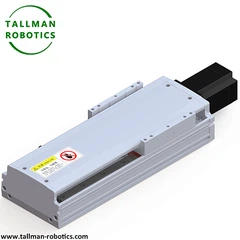


As a trusted supplier of Intermittent Cam Indexers, I often receive inquiries about various technical aspects of our products. One question that frequently comes up is about the phase angle adjustment of an Intermittent Cam Indexer. In this blog post, I'll delve into what phase angle adjustment is, why it's important, and how it impacts the performance of our cam indexers.
Understanding the Basics of an Intermittent Cam Indexer
Before we jump into phase angle adjustment, let's briefly review what an Intermittent Cam Indexer is. An Intermittent Cam Indexer is a mechanical device that converts continuous rotational motion into intermittent or step - by - step motion. It consists of a cam and a follower. The cam has a specially designed profile that, as it rotates, causes the follower to move in a precise, intermittent pattern. This makes it ideal for applications such as automated assembly lines, packaging machinery, and printing presses, where precise positioning and intermittent motion are required.
What is Phase Angle Adjustment?
The phase angle of an Intermittent Cam Indexer refers to the relative position between the input cam and the output mechanism at a given point in time. Phase angle adjustment is the process of fine - tuning this relative position to optimize the performance of the indexer.
In a practical sense, phase angle adjustment can be thought of as aligning the start and stop positions of the output motion with the requirements of the specific application. For example, in an assembly line, you might need the output platform to stop at a particular position for a component to be accurately placed. By adjusting the phase angle, you can ensure that the output motion stops exactly where it needs to, with high precision.
Why is Phase Angle Adjustment Important?
Precision and Accuracy
One of the primary reasons for phase angle adjustment is to achieve high levels of precision and accuracy in the output motion. In many industrial applications, even a small deviation in the stop position can lead to defective products or inefficiencies in the production process. By carefully adjusting the phase angle, we can minimize these errors and ensure that the indexer performs with the highest level of accuracy possible.
Synchronization
In multi - station applications, synchronization between different indexers or between the indexer and other components of the machinery is crucial. Phase angle adjustment allows us to synchronize the motion of multiple indexers or to align the indexer's motion with other parts of the system. For instance, in a packaging machine with multiple filling stations, the phase angle adjustment ensures that each station operates in harmony, filling the packages at the right time and in the correct sequence.
Reducing Wear and Tear
Proper phase angle adjustment can also reduce wear and tear on the indexer components. When the phase angle is not correctly set, the cam and follower may experience excessive stress during the motion cycle. This can lead to premature wear of the components, increased maintenance costs, and a shorter lifespan of the indexer. By adjusting the phase angle, we can distribute the load evenly across the components, reducing stress and extending the life of the indexer.
How to Perform Phase Angle Adjustment
The process of phase angle adjustment typically involves the following steps:
Initial Setup
First, the indexer needs to be installed correctly according to the manufacturer's specifications. This includes proper alignment of the input and output shafts, mounting the indexer securely, and ensuring that all connections are tight.
Measuring the Current Phase Angle
Specialized tools, such as angle gauges or encoders, can be used to measure the current phase angle between the input cam and the output mechanism. This provides a baseline for the adjustment process.
Making Adjustments
Depending on the type of indexer, there are different methods for making phase angle adjustments. Some indexers have adjustable mounting plates or couplings that allow for fine - tuning of the relative position between the input and output. In other cases, shims or spacers can be used to change the position of the components.
Testing and Verification
After making an adjustment, the indexer should be tested to ensure that the desired phase angle has been achieved. This may involve running the indexer through several cycles and checking the stop positions of the output mechanism using precision measuring tools. If necessary, further adjustments can be made until the optimal phase angle is reached.
Impact of Phase Angle Adjustment on Different Types of Intermittent Cam Indexers
DF Cam Indexer
The DF Cam Indexer is known for its high - speed and high - precision performance. Phase angle adjustment in a DF Cam Indexer is critical for maintaining its accuracy at high speeds. A small error in the phase angle can cause significant deviations in the stop positions, especially when the indexer is operating at high rotational speeds. By carefully adjusting the phase angle, we can ensure that the DF Cam Indexer delivers consistent and precise performance, even under demanding conditions.
Gear Driven Cam Indexer
The Gear Driven Cam Indexer offers high torque capacity and smooth operation. Phase angle adjustment in a gear - driven cam indexer helps to optimize the power transmission between the gears and the cam mechanism. This ensures that the indexer can handle heavy loads without experiencing excessive vibration or noise. Additionally, proper phase angle adjustment can improve the overall efficiency of the gear - driven system, reducing energy consumption and extending the life of the gears.
Modular Cam Indexing Unit
The Modular Cam Indexing Unit provides flexibility in design and installation. Phase angle adjustment in a modular cam indexing unit allows for easy customization to meet the specific requirements of different applications. Whether it's adjusting the phase angle to synchronize multiple modules or to align the unit with other components in a complex system, this adjustment feature makes the modular cam indexing unit a versatile solution for a wide range of industrial applications.
Conclusion
Phase angle adjustment is a crucial aspect of optimizing the performance of an Intermittent Cam Indexer. It plays a vital role in achieving precision, synchronization, and durability in various industrial applications. As a supplier of Intermittent Cam Indexers, we understand the importance of providing our customers with high - quality products and the technical support needed to make the most of these devices.


If you're in the market for an Intermittent Cam Indexer or need assistance with phase angle adjustment or any other technical aspect of our products, we're here to help. Our team of experts has extensive experience in the field and can provide you with the guidance and support you need to select the right indexer for your application and ensure its optimal performance. Contact us today to start a discussion about your specific requirements and explore how our Intermittent Cam Indexers can enhance your production processes.
References
- Cam Indexer Handbook, published by a leading industry association.
- Technical papers on mechanical motion control and cam indexer technology from academic journals.


