
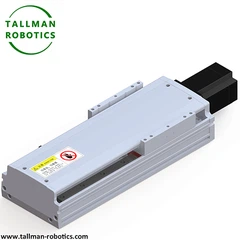


As a supplier of Indexers With Cam Drive, I often encounter questions from customers about various technical aspects of our products. One of the most frequently asked questions is about the starting torque of an Indexer With Cam Drive. In this blog post, I will delve into what starting torque is, its significance in the context of Indexers With Cam Drive, and how it impacts the performance of our products.
Understanding Starting Torque
Starting torque, in simple terms, is the torque required to initiate the movement of a mechanical system from a stationary position. It is a crucial parameter in the design and operation of any rotating machinery, including Indexers With Cam Drive. When an indexer is at rest, there are various forces acting against its movement, such as friction in the bearings, the inertia of the moving parts, and any external loads applied to the system. The starting torque must be sufficient to overcome these forces and set the indexer in motion.
The starting torque is typically higher than the running torque, which is the torque required to keep the system moving at a constant speed. This is because, at the start, the static friction between the moving parts is higher than the dynamic friction during motion. Additionally, the inertia of the system needs to be overcome to accelerate the moving parts from rest to the desired speed.
Significance of Starting Torque in Indexers With Cam Drive
In an Indexer With Cam Drive, the starting torque plays a vital role in determining the overall performance and reliability of the system. Here are some key aspects where starting torque is significant:
1. System Responsiveness
A higher starting torque allows the indexer to respond quickly to the input signal and start moving without any delay. This is particularly important in applications where precise and rapid indexing is required, such as in automated assembly lines, packaging machines, and CNC machining centers. A low starting torque may result in a sluggish response, leading to inaccurate indexing and reduced productivity.
2. Load Handling Capacity
The starting torque determines the maximum load that the indexer can handle at the start of the motion. If the starting torque is insufficient, the indexer may not be able to move the load, or it may experience stalling or jerky motion. This can cause damage to the indexer and the connected equipment, as well as affect the quality of the finished product. Therefore, it is essential to select an indexer with a starting torque that is appropriate for the expected load.
3. System Durability
A proper starting torque helps to ensure the long-term durability of the indexer. When the starting torque is too low, the indexer may have to work harder to overcome the initial resistance, which can lead to increased wear and tear on the components. On the other hand, if the starting torque is too high, it can cause excessive stress on the system, leading to premature failure of the bearings, gears, and other moving parts.
Factors Affecting the Starting Torque of an Indexer With Cam Drive
Several factors can influence the starting torque of an Indexer With Cam Drive. Understanding these factors can help in selecting the right indexer for a specific application and optimizing its performance. Here are some of the key factors:
1. Cam Profile
The shape and design of the cam profile have a significant impact on the starting torque. A well-designed cam profile can minimize the initial resistance and provide a smooth transition from rest to motion. Different cam profiles, such as the modified sine curve, modified trapezoidal curve, and cycloidal curve, have different characteristics in terms of starting torque and motion characteristics.
2. Load Inertia
The inertia of the load attached to the indexer is another important factor. A higher load inertia requires a higher starting torque to accelerate the load from rest. Therefore, it is essential to accurately calculate the load inertia and select an indexer with a starting torque that can handle the expected load.
3. Friction in the System
Friction in the bearings, gears, and other moving parts of the indexer can increase the starting torque. Proper lubrication and maintenance of the indexer can help to reduce friction and lower the starting torque. Additionally, the quality of the bearings and other components can also affect the friction in the system.
4. Drive System
The type of drive system used to power the indexer can also influence the starting torque. For example, a servo motor can provide a high starting torque and precise control, while a stepper motor may have a lower starting torque but is more cost-effective. The choice of the drive system depends on the specific requirements of the application.
Calculating the Starting Torque
Calculating the starting torque of an Indexer With Cam Drive can be a complex process, as it involves considering multiple factors such as the cam profile, load inertia, friction, and drive system. However, a simplified approach can be used to estimate the starting torque.
The starting torque (T_start) can be calculated using the following formula:
T_start = T_friction + T_inertia + T_load
Where:


- T_friction is the torque required to overcome the friction in the system.
- T_inertia is the torque required to accelerate the load inertia.
- T_load is the torque required to overcome the external load.
The friction torque (T_friction) can be estimated based on the coefficient of friction, the normal force, and the radius of the moving parts. The inertia torque (T_inertia) can be calculated using the moment of inertia of the load and the desired acceleration. The load torque (T_load) depends on the nature of the external load, such as the weight of the load or the resistance to motion.
It is important to note that this is a simplified formula, and in practice, the starting torque may be affected by other factors such as the elasticity of the components and the dynamic behavior of the system. Therefore, it is recommended to consult the manufacturer's specifications and guidelines for accurate starting torque calculations.
Our Indexer With Cam Drive Products
At our company, we offer a wide range of Indexers With Cam Drive to meet the diverse needs of our customers. Our products are designed with high-quality materials and advanced manufacturing techniques to ensure reliable performance and long service life.
Here are some of our popular Indexer With Cam Drive products:
- DE Cam Indexer: This indexer features a compact design and high precision, making it suitable for applications where space is limited and accurate indexing is required.
- DS Indexer With Cam Actuation: The DS indexer offers a high starting torque and smooth motion, making it ideal for heavy-duty applications with high load inertia.
- Parallel Axis Cam Indexer: This indexer is designed with a parallel axis configuration, providing a compact and efficient solution for various indexing applications.
Each of our indexers is carefully engineered to provide the optimal starting torque for the intended application. Our technical team can assist you in selecting the right indexer based on your specific requirements and provide detailed information about the starting torque and other performance parameters.
Contact Us for Procurement
If you are interested in our Indexers With Cam Drive products or have any questions about starting torque or other technical aspects, please feel free to contact us. Our sales team is ready to assist you with procurement and provide you with the best solutions for your application. We look forward to working with you and helping you achieve your production goals.
References
- Machinery's Handbook, 31st Edition
- Design of Machine Elements, 4th Edition
- Cam Design and Manufacturing Handbook, 2nd Edition


