
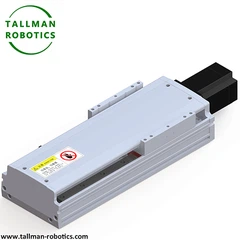


Hey there! As a supplier of Intermittent Cam Indexers, I've been getting a lot of questions lately about how the load affects the indexing time of these nifty devices. So, I thought I'd take a deep dive into this topic and share what I've learned over the years.
First off, let's quickly go over what an Intermittent Cam Indexer is. It's a mechanical device that converts continuous rotary motion into intermittent motion. In simpler terms, it makes things move in steps, which is super useful in a bunch of industries, like packaging, printing, and automation.
Now, let's talk about load. The load on an Intermittent Cam Indexer can come from various sources. It could be the weight of the parts that the indexer is moving, the friction in the system, or even the resistance from the process it's involved in. And this load can have a pretty significant impact on the indexing time.
When the load on the indexer is light, things are generally smooth sailing. The indexer can move the parts quickly and accurately, and the indexing time is relatively short. This is because there's less resistance for the indexer to overcome. For example, if you're using an indexer to move small, lightweight components in a packaging line, it can zip through the indexing process without breaking a sweat.
But when the load gets heavier, things start to get a bit more complicated. A heavier load means more resistance, and the indexer has to work harder to move the parts. This can lead to an increase in the indexing time. The indexer might need to slow down to ensure that it can move the load accurately and without causing any damage.
Let's take a look at an example. Suppose you're using an Indexing Cam Mechanism to move a heavy assembly in a manufacturing process. The increased load from the assembly means that the indexer has to use more force to move it. As a result, the indexing time might double or even triple compared to when it was moving a lighter load.
Another factor to consider is the type of load. There are two main types: static load and dynamic load. A static load is a constant load that doesn't change over time, like the weight of a stationary object. A dynamic load, on the other hand, changes over time, like the force exerted by a moving part.
Dynamic loads can be particularly tricky for an Intermittent Cam Indexer. They can cause sudden changes in the load, which can make it difficult for the indexer to maintain a consistent indexing time. For example, if a part suddenly accelerates or decelerates during the indexing process, the indexer has to adjust quickly to keep up. This can lead to variations in the indexing time and potentially affect the overall performance of the system.
Now, how can we deal with these load-related issues? One option is to choose the right indexer for the job. Different types of Intermittent Cam Indexers are designed to handle different loads. For instance, a Compact Cam Indexer might be suitable for light loads, while a DS Cam Indexer can handle heavier loads.


It's also important to properly maintain the indexer. Regular lubrication, inspection, and adjustment can help ensure that the indexer is operating at its best. This can reduce the impact of the load on the indexing time and extend the lifespan of the indexer.
In addition, we can use other techniques to reduce the load on the indexer. For example, we can use bearings or guides to reduce friction, or we can optimize the design of the system to minimize the weight of the parts being moved.
As a supplier, I've seen firsthand how the load can affect the indexing time of an Intermittent Cam Indexer. That's why I always work closely with my customers to understand their specific needs and recommend the right solution. Whether you're dealing with a light load or a heavy one, there's an indexer out there that can meet your requirements.
If you're in the market for an Intermittent Cam Indexer, or if you have any questions about how the load might affect your indexing time, don't hesitate to reach out. We're here to help you make the right choice and ensure that your system runs smoothly. Whether you need a Cam Actuated Indexer or a Rigid Cam Indexing Unit, we've got you covered.
So, if you're ready to take your automation process to the next level, let's have a chat. We can discuss your load requirements, your indexing time goals, and find the perfect Intermittent Cam Indexer for your application.
References:
- Mechanical Engineering textbooks on cam mechanisms and motion control.
- Industry reports on the performance of Intermittent Cam Indexers under different loads.


