


Hey there! As a supplier of linear motors, I often get asked if these nifty devices can be used in metalworking machinery. Well, let's dive right into it and explore the ins and outs of using linear motors in the world of metalworking.
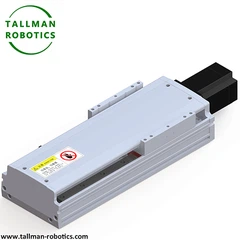
First off, what exactly are linear motors? In simple terms, a linear motor is a type of electric motor that produces linear motion instead of the traditional rotary motion. It's like taking a regular motor, unrolling it, and making it move in a straight line. There are different types of linear motors, such as the Force Controlled Smart Linear Motor, Linear Motor, Linear Induction Motor, Linear Electric Motor Actuator, and Industrial Linear Motor System. Each type has its own unique features and benefits, which can be a great fit for various metalworking applications.
Now, let's talk about why linear motors can be a game-changer in metalworking machinery. One of the biggest advantages is their precision. Metalworking often requires extremely accurate movements, whether it's cutting, grinding, or shaping metal parts. Linear motors can provide high levels of precision and repeatability, which means you can get consistent results every time. This is crucial in industries where even the slightest deviation can lead to defective products.
Another benefit is speed. Linear motors can achieve high speeds of motion, which can significantly increase the production efficiency of metalworking machinery. Faster movements mean more parts can be processed in a shorter amount of time, leading to higher productivity and potentially lower costs. For example, in a CNC machining center, a linear motor can quickly move the cutting tool to the desired position, reducing the idle time between operations.
In addition to precision and speed, linear motors also offer smooth and quiet operation. Unlike traditional mechanical drive systems, which can be noisy and prone to vibration, linear motors provide a more stable and quiet working environment. This not only improves the comfort of the operators but also reduces the wear and tear on the machinery, leading to longer service life and lower maintenance costs.
So, where in metalworking machinery can linear motors be used? One common application is in CNC (Computer Numerical Control) machines. These machines are widely used in the metalworking industry for precise machining operations. Linear motors can be used to drive the axes of the CNC machine, providing fast and accurate positioning of the cutting tool. This allows for complex machining operations to be carried out with ease, such as milling, turning, and drilling.
Another area is in metal stamping and forming machines. Linear motors can be used to drive the slides or rams of these machines, providing precise control over the stamping or forming process. This can result in better quality parts and higher production speeds. In addition, linear motors can be used in metal cutting machines, such as saws and lasers, to provide accurate and fast movement of the cutting blade or laser beam.


However, like any technology, linear motors also have some limitations. One of the main challenges is the cost. Linear motors can be more expensive than traditional mechanical drive systems, which can be a barrier for some small and medium-sized metalworking companies. In addition, linear motors require a more sophisticated control system, which also adds to the overall cost.
Another limitation is the heat generation. Linear motors can generate a significant amount of heat during operation, which can affect the performance and lifespan of the motor. To address this issue, proper cooling systems need to be installed to ensure the motor operates within a safe temperature range.
Despite these limitations, the benefits of using linear motors in metalworking machinery far outweigh the drawbacks. As technology continues to advance, the cost of linear motors is expected to decrease, making them more accessible to a wider range of metalworking companies. In addition, improvements in cooling technology and control systems are also making linear motors more reliable and efficient.
In conclusion, linear motors can definitely be used in metalworking machinery, and they offer many advantages over traditional mechanical drive systems. Their precision, speed, smooth operation, and quiet performance make them an ideal choice for a variety of metalworking applications. If you're in the metalworking industry and looking to improve the performance and efficiency of your machinery, I highly recommend considering linear motors.
If you're interested in learning more about our linear motors or have any questions about using them in your metalworking machinery, feel free to reach out. We're here to help you find the best solution for your specific needs. Let's start a conversation and see how our linear motors can take your metalworking operations to the next level.
References
- Various industry reports on linear motor applications in manufacturing
- Technical documentation from linear motor manufacturers


